

 实景预览
实景预览
 发送
发送 分享
分享
 详情
详情 指南
指南

 下载图片
下载图片
 相似作品
相似作品 X射线
X射线 幻灯片播放
幻灯片播放 统计数据
统计数据Calm Sea
 Acrylic On Canvas
- WallArt
- Dutch Golden Age
 1645
1645 38.0 x 45.0 cm
 大都会艺术博物馆
 阅读全文
阅读全文
手工油画复制品
由我们的艺术家按需定制,为您提供您所选尺寸及画框的布面手工油画。 ( 切换至版画销售渠道 切换至数字图像销售渠道)




P118B ¥10

P118H ¥10

P118W ¥10

P438Z ¥10

P508JH ¥12

P508YH ¥12

P805H ¥10

P805Z ¥10

P919BZ ¥10

P919G ¥10

P919XJ ¥10

P959ZH ¥10

P968JZ ¥12

W106C ¥8

W218G ¥10

W218JH ¥8

W218Y ¥10

W307PJ ¥10

W316G ¥10

W316PJ ¥8

W316Y ¥10

W398PJ ¥8

W4111J ¥10

W500HY ¥15

W500JH ¥15

W692G ¥12

W849H ¥8

W940BG ¥15

W953PJ ¥8




您可以从与原作比例一致的预设尺寸中进行选择。

请输入您需要的宽度和高度,以适配您的画框或墙面。由于作品为手工绘制,若您选择不同的尺寸比例,艺术家可能会在画面边缘多画一些或稍作裁剪 —— 由您决定。在开始绘画之前,我们会为您发送一份数字效果图供您确认。本页面上展示的图片并非最终实物 —— 只有效果图才能反映真实结果。
下单后,OriginalUniqueArt.com 团队将通过电子邮件联系客户获取具体要求,并提供效果预览图


 玻璃选项仅适用于110厘米以下的尺寸。

Calm Sea
复制品材质
复刻品尺寸说明
-


总计金额
¥ 2017
A Moment Frozen in Time: Exploring Simon de Vlieger’s “Calm Sea”
“Calm Sea,” painted by Simon de Vlieger around 1645–50, stands as a testament to the burgeoning realism of Dutch Golden Age maritime art. More than just a depiction of seafaring life, it embodies a profound contemplation on nature's power and humanity’s place within its vast expanse—a sentiment keenly felt during an era defined by exploration, trade, and religious fervor. The painting captures a tranquil harbor scene, dominated by two vessels: a larger sailboat with its sail furled downwards, signaling readiness for rest or mooring, and a smaller rowing boat gliding purposefully across the choppy waters. The artist’s meticulous attention to detail elevates “Calm Sea” beyond mere representation. De Vlieger skillfully employs a technique characterized by layered brushstrokes—a departure from the monochrome palettes favored by predecessors like Jan Porcellis and Willem van de Velde, the elder—to achieve remarkable textural accuracy. The artist painstakingly rendered the intricate rigging of the sailboat, capturing the subtle nuances of ropework and canvas tension with impressive precision. Furthermore, he meticulously portrays the reflections shimmering on the water’s surface, mirroring the overcast sky above and creating a harmonious visual unity. This dedication to realism wasn't merely stylistic; it reflected a broader intellectual curiosity about understanding the natural world through observation and scientific inquiry—a hallmark of the Dutch Renaissance. Beyond its technical prowess, “Calm Sea” resonates with symbolic significance. The expansive sky, rendered in muted blues and grays, serves as a backdrop for the vessel’s activity, emphasizing the dominance of nature over human endeavor. The inclusion of the Dutch flag atop the larger sailboat subtly underscores the nation's maritime ambitions during this period of colonial expansion—a visual declaration of confidence and purpose amidst uncertainty. Yet, despite the implied dynamism of seafaring commerce, the overall mood is one of serenity and quiet contemplation. Perhaps it speaks to a yearning for stability in turbulent times, or perhaps it simply celebrates the beauty inherent in undisturbed natural landscapes. The painting’s muted color palette—primarily earthy tones—contributes significantly to its emotional impact. Rather than striving for dramatic visual spectacle, De Vlieger opted for subtlety and nuance, fostering an atmosphere of contemplative stillness. This restrained approach aligns perfectly with the artistic sensibilities of the time, reflecting a humanist preoccupation with inner experience alongside intellectual pursuits. “Calm Sea” remains a captivating artwork not only for its masterful execution but also for its ability to transport viewers back to 17th-century Holland—a moment frozen in time where art served as both a reflection of and an impetus for understanding the world around us. Its enduring appeal lies in its capacity to inspire awe at the grandeur of nature and to provoke introspection on the human condition.问答详情
西蒙·德·弗里格 的《Calm Sea》 描绘了怎样的场景,又传达了怎样的意境?
西蒙·德·弗里格 的《Calm Sea》 将 maritime painting, shipbuilding, harbour scene, dutch flag, stormy sky, detailed rigging, realistic colour palette 与 Serene 的氛围完美融合。
"Calm Sea" 是否体现了 西蒙·德·弗里格 一贯的创作风格?
在西蒙·德·弗里格已记录的主题——porcellis style, dutch tradition, religious symbolism, shipwreck narrative, artist reputation——之中,"Calm Sea" 则将焦点转向了maritime painting, shipbuilding, harbour scene, dutch flag, stormy sky, detailed rigging, realistic colour palette。
西蒙·德·弗里格 的《Calm Sea》 传达了怎样的情感?
艺术家简介
荷兰黄金时代的早年生活与艺术启蒙
西蒙·德·弗里格(Simon de Vlieger)大约出生于1601年的鹿特丹,他正值荷兰黄金时代的巅峰时期——那是一个由前所未有的繁荣、海上霸权和艺术盛世共同定义的时代。尽管关于他早期训练的具体细节仍难以考证,但可以肯定的是,他的艺术旅程始于家乡那充满活力的社会环境之中。这座繁忙的港口城市为这位初露锋芒的画家提供了最直接且引人入止的创作题材:船只。与许多最初通过风俗画或肖像画来磨炼技艺的艺术家不同,德·弗里格似乎从很年轻时起就几乎全身心地投入到了海洋题材中,这暗示了他对大海及其航行器物有着一种与生俱来的痴迷。
他的初始风格很可能受到了早期海洋画家如扬·波塞利斯(Jan Porcellis)的启发,后者的作品常以戏剧性且汹涌澎湃的海景为特色。然而,德·弗里格很快便通过摆脱前辈们所青睐的单色调画风,开始展现出自己的独特魅力。他在描绘中追求更高程度的写实感与明亮度,力求精准地呈现光线在水面上的反射,以及船只构造中那些错综复杂的细节。
穿梭于代尔夫特与阿姆斯特丹的艺术生涯
德·弗里格的职业生涯在荷兰的几座关键城市中展开,每一处都促进了他的艺术蜕变。1627年,他迎娶了安娜·格里茨·范·威利格(Anna Gerridts van Willige),这段婚姻为他在事业建立初期提供了稳定的后盾。1634年,他加入了代尔夫特的圣路加行会,这标志着他正式被主流艺术界所接纳。在这一时期,他不断精进技艺,并因捕捉荷兰海洋生活的精髓而逐渐声名鹊起。
大约在1638年,德·弗里格迁居至阿姆斯特丹,这里是荷兰艺术市场的核心,也是造船与贸易的重要中心。在这里,他遇到了更广阔的受众和更多的机遇。尽管他在1650年最终定居于阿姆斯特丹附近的韦斯普(Weesp)之前,一直都在鹿特丹保留住所,但阿姆斯特丹已然成为了他的主要创作基地。正是在这段时期,德·弗里格真正巩固了其作为那个时代顶尖海洋画家之一的地位。
艺术创新与风格演变
德·弗里格的艺术创新在于他对细节近乎严苛的关注以及对色彩的大师级运用。他的创作超越了单纯描绘海上船只的范畴;他试图捕捉一种身处水上的真实感受——浪花的飞溅、阳光在帆布上的闪烁,以及船只上复杂的索具。他的画作以极其详尽的造船构造表现为特征,反映出他对船舶建筑学深厚的理解。
他不仅仅是船只的记录者,更是海洋生活的诠释者。他描绘了港口中的静谧、晴天下的航行,以及在狂风暴雨中挣扎的景象。他的风暴海景画尤为动人心魄,既传达了大自然的力量,又表现了人类努力在自然面前的脆弱。除了绘画,德·船还展现了惊人的多才多艺,他曾为阿姆斯特丹的新教堂设计挂毯、蚀刻版画,甚至还为鹿特丹的圣劳伦斯教堂设计过彩绘玻璃窗和管风琴屏风。
海洋绘画的传承与深远影响
西蒙·德·弗里格对后世海洋画家产生了深远的影响。他培养了多位弟子,其中包括威廉·范·德·费尔德(Willem van de Velde the Younger)、阿德里安·范·德·费尔德(Adriaen van de Velde)以及扬·范·德·卡佩勒(Jan van der Cappelle),这些人后来都在各自的领域取得了显著的成就。尤其是范·德·卡佩勒,对德·弗里格推崇备至,其收藏中便拥有九幅大师的原作及超过1300幅版画。
即便在德·弗里格于1653年去世后,他的作品仍持续流传并激发灵感。他的工作室中留下了大量未完成的作品,这本身就是其艺术需求量巨大的有力证明。其中一幅描绘渔民在岸边拖网的画作,曾由范·德·卡佩勒出售给西蒙·范·德·斯泰尔(Simon van der Stel)之妻乔安娜·希克斯(Joanna Six),并被运往好望角,展示于范·德·斯泰尔家族的庄园——大康斯坦西亚庄园。这一事件不仅彰显了德·弗里格作品经久不衰的魅力,也体现了其与荷兰殖民扩张宏大背景之间的联系。
德·弗里格留下的遗产超越了他的技术造诣;他捕捉到了荷兰身份认同中至关重要的一环——人与海洋的关系。他的画作并非仅仅是美丽的船只写照,它们是通往一个由贸易、探索以及人类与自然之间永恒互动所定义的世界的窗口。作为海洋艺术史上的关键人物,他因其写实主义、光影的明亮度以及唤起荷兰黄金时代精神的持久能力而受人景仰。

西蒙·德·弗里格
1601 - 1653 , 荷兰
快速概览
- Artistic Movement Or Style: 巴洛克
- Artists Or Movements Influenced By This Artist: ['无已知']
- Artists Who Influenced This Artist:
- 圭切尔奇诺
- 圭多·雷尼
- Date Of Birth: 1601年
- Date Of Death: 1663年
- Full Name: 圭多·卡尼亚奇
- Nationality: 意大利
- Notable Artworks:
- 忏悔的抹大拉
- 各类宗教绘画
- Place Of Birth: 罗马涅,圣塔尔坎杰洛
相关文章

Golden Light & Dutch Skies: The Timeless Magic of Dutch Golden Age Landscapes
Discover the breathtaking beauty of Dutch Golden Age landscapes. Explore the mastery of light, chiaroscuro, and 17th-century realism through an expert art history lens, celebrating the enduring legacy of the Dutch Masters for discerning collectors and art lovers.
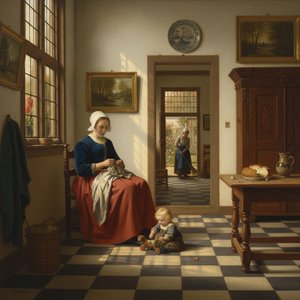
Pieter de Hooch: Illuminating Dutch Domestic Life & Golden Age Charm
Explore the captivating world of Pieter de Hooch, a master of Dutch Golden Age painting. Discover his innovative use of light, intimate domestic scenes, and lasting influence on art history. Learn more at OriginalUniqueArt.

Mastering Light & Shadow: A Journey Through the Dutch Golden Age's Luminous Legacy
Embark on a cultural journey through the Dutch Golden Age. Explore the masterful interplay of light and shadow in 17th-century masterpieces, from Rembrandt to Vermeer, and discover how this era of profound realism continues to inspire fine art collectors today.

荷兰黄金时代:十幅定义艺术史的巨作 | OriginalUniqueArt
探索荷兰黄金时代的艺术巅峰! 伦勃朗、维米尔等大师名作,带您领略巴洛克艺术的辉煌。高清画作、博物馆级品质,点亮您的家居空间。OriginalUniqueArt.com 提供精选艺术复制品和定制装饰方案。立即在线探索全系列!

Willem van de Velde the Elder: Master of Maritime Painting & Chronicler of the Dutch Golden Age
Discover the captivating maritime paintings of Willem van de Velde the Elder, a master chronicler of the Dutch Golden Age. Explore his unparalleled realism and lasting influence on naval art history.