
 效果预览
效果预览
 购买印刷品
购买印刷品 分享
分享 分享
分享
 详情
详情

 下载
下载
 相似作品
相似作品 X射线
X射线 幻灯片播放
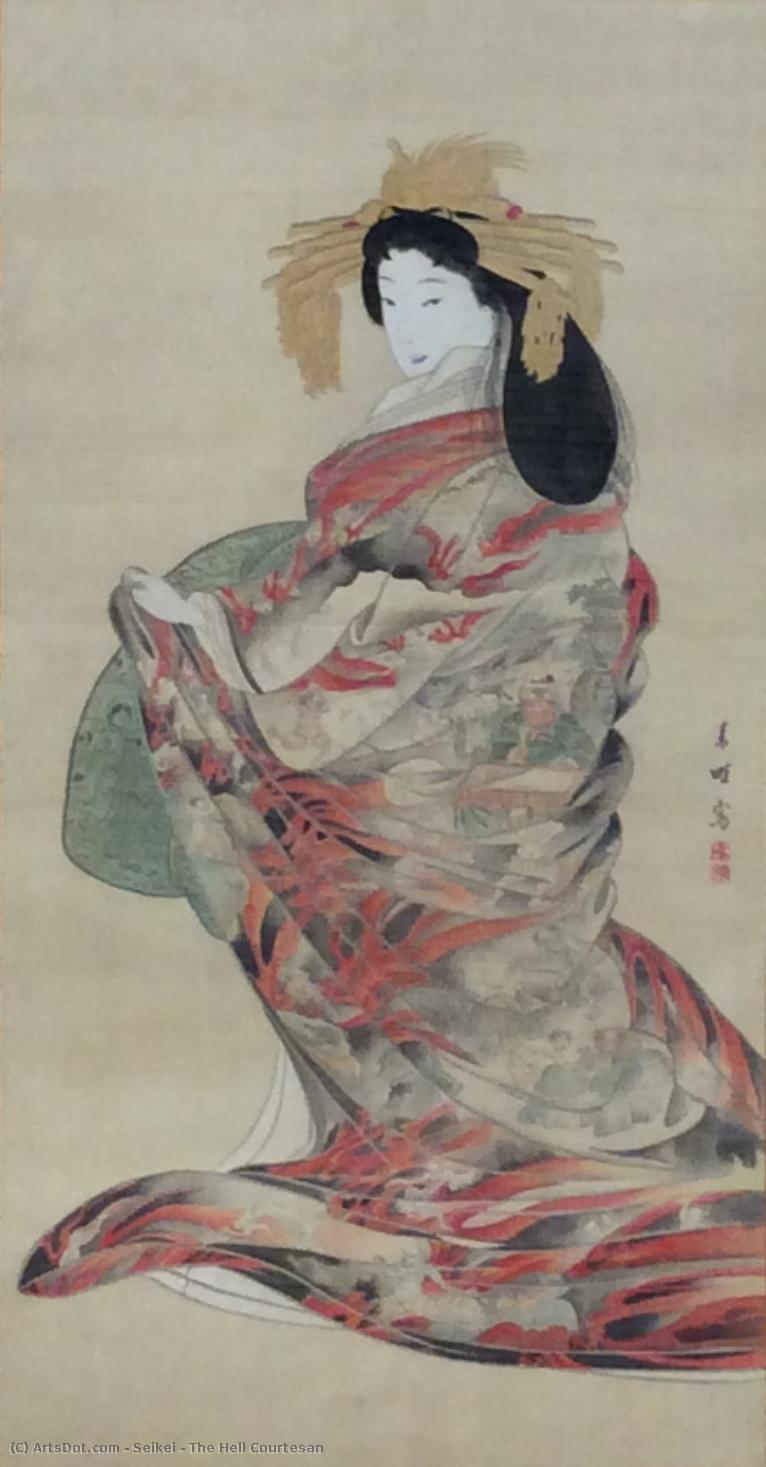
幻灯片播放The Hell Courtesan
 801
801 99.0cm x 51.0cm
 展开详情
展开详情
购买高分辨率增强版数字图像,其品质远超在线预览。
每一份文件都由我们的内部专家使用先进工具与专业的后期润色技术精心打造。我们确保每一张图像都具备卓越的清晰度、精准的色彩还原度以及细腻的细节表现。
最终文件将在 72 小时内通过电子邮件交付,并针对专业、编辑及印刷用途进行了优化。其品质与顶级设计工作室、出版社和画廊所信赖的标准完全一致。
每份数字图像订单均包含
专业数字图像交付,品质保障
选择 OriginalUniqueArt.com,您获得的不仅仅是一张图像——您收到的是经过专业级增强、精雕细琢的数字艺术作品,并享有满意保证。以下是您的订单中自动包含的所有内容:

邮件快速送达
您的高分辨率数字图像文件将在下单后 72 小时内通过电子邮件发送给您 —— 即可立即使用。

AI 增强型数字文件
您的艺术品经过专业优化,结合先进的 AI 技术与人工修饰,确保呈现极致的细节、清晰度与色彩准确度。

终身免费重发服务
不小心删除了文件或找不到了?没关系——我们将随时为您免费重发。

无需进口费用,始终如一
即刻拥有您的艺术作品,无需支付任何关税、税费或运费——数字下载始终免税。

色彩精准保证
我们通过专业工具与色彩管理技术,确保您的数字图像尽可能真实地还原原作色彩。

60天满意保证
如果您对所购买的数字图像不满意,我们将在60天内为您进行修改或退还100%的款项——无需任何解释。

100% 退款保证
如果不满意?在收到数字文件后的60天内,我们为您提供全额退款——无需任何理由。

批量订单优惠
购买 3 张图片可享 10% 折扣 - 购买 5 张可享 15% 折扣 - 购买 10+ 张可享 20% 折扣。非常适合创意项目、画廊和机构使用。
艺术家简介
The Architect of Light: The Life and Legacy of Seikei
In the transformative landscape of Meiji-era Japan, few figures cast as long or as luminous a shadow as Seikei, known to history by his birth name, Kuroda Seiki. Born in 1866 into the prestigious Shimazu clan of Kagoshima, he was a child of the samurai class, yet his destiny lay far beyond the traditional boundaries of his lineage. His journey was one of profound cultural synthesis, acting as a bridge between the ancient traditions of the East and the burgeoning modernism of the West. As a pioneer of the Yōga movement, Seikei did not merely adopt foreign techniques; he breathed new life into Japanese painting by infusing it with the light, color, and atmosphere of European Impressionism, forever altering the trajectory of Japanese art history.
The seeds of this artistic revolution were sown during his formative years in Japan, where a rigorous education under the guidance of his adoptive uncle, a key advisor to Emperor Meiji, provided him with both the discipline of a warrior and the curiosity of a scholar. His early mastery of English served as a gateway to the intellectual currents of the West, eventually leading him to Paris in 1884. While he initially traveled to France to study law, the magnetic pull of the Parisian art scene proved irresistible. Enrolling in the atelier of Louis-Joseph-Raphaël Collin, Seikei immersed himself in the traditions of academic painting while simultaneously being captivated by the radical innovations of the Impressionists. This period of apprenticeship was transformative; he moved away from rigid classical conventions toward a more fluid, plein air approach, learning to capture the ephemeral qualities of light and the subtle textures of the natural world.
A Synthesis of Styles and the Birth of Japanese Impressionism
Seikei’s time in France was marked by an intense period of experimentation and growth. Settling in the international artists' colony at Grez-sur-Loing, he found a community of expatriate painters that encouraged his exploration of light and color. His works from this era, such as the delicate Woman Reading and the vibrant Girl of Bréhat, reveal an artist finding his unique voice—one that balanced the meticulousness of French academic training with a newfound appreciation for spontaneous brushwork and atmospheric depth. He absorbed the philosophies of masters like Monet and Bastien-Lepage, integrating their use of vibrant palettes into a style that felt both modern and deeply personal.
Upon his return to Japan, Seikei faced the monumental task of introducing these Western concepts to a nation undergoing rapid modernization. He became a central figure in the development of Yōga (Western-style painting), championing the use of oil on canvas as a legitimate medium for high art. His courage was perhaps most evident in his presentation of the nude, a subject that challenged the social mores of the time but was essential to the Western artistic canon he sought to establish. Through his teaching and his leadership in various art societies, he nurtured a new generation of painters, ensuring that the techniques of light and shadow would become a permanent part of the Japanese visual vocabulary.
Historical Significance and Enduring Influence
The legacy of Seikei is not found merely in individual canvases, but in the very foundation of modern Japanese art education. Often revered as the "father of Western-style painting" in Japan, his influence permeated the institutions he helped shape, from the Tokyo School of Fine Arts to the broader cultural consciousness of the Meiji and Taisho periods. His ability to navigate the complexities of identity—being both a descendant of the samurai and a student of Paris—allowed him to create an art form that was uniquely Japanese yet globally relevant.
Reflecting on his life, several key pillars define his historical importance:
- Cultural Mediation: He successfully translated Western Impressionist techniques into a context that resonated with the Japanese aesthetic sensibility.
- Institutional Leadership: Through his roles in the House of Peers and various art academies, he provided the structural support necessary for the Yōga movement to flourish.
- Technical Innovation: He introduced the concept of plein air painting and a more painterly approach to texture and light, breaking away from the flat planes of traditional Japanese styles.
- A Lasting Legacy: His work remains a testament to the power of artistic cross-pollination, proving that true innovation often occurs at the intersection of disparate worlds.
Though he passed away in 1924, the brilliance of Seikei’s vision continues to illuminate the halls of art history. He remains an icon of transformation, a painter who looked toward the horizon of the West to bring a new dawn of light to the East.

seikei
Japan
基本信息
- Artistic Movement Or Style: Yōga
- Artists Or Movements Influenced By This Artist: ['Impressionism']
- Artists Who Influenced This Artist: ['Louis-Joseph-Raphaël Collin']
- Date Of Birth: August 9, 1866
- Date Of Death: July 15, 1924
- Full Name: Kuroda Kiyoteru
- Nationality: Japanese
- Notable Artworks:
- The Hell Courtesan
- Lakeside
- Place Of Birth: Takamibaba, Satsuma Domain (present day Kagoshima Prefecture)

