切换至版画销售渠道
 展开全文
展开全文







































 对于任何边长超过 105 厘米(约 41 英寸)的艺术品或复制品,画框将以拆解后的组件形式发货。此方法可确保安全送达并防止运输过程中的损坏。


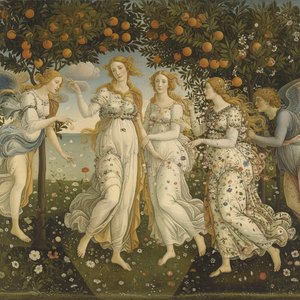
Primavera (detail) – A Renaissance Reverie
Sandro Botticelli’s “Primavera,” housed in the Uffizi Gallery of Florence, isn't merely a painting; it’s an invitation into a meticulously crafted dreamscape—a visual embodiment of rebirth and fecundity that continues to captivate audiences centuries later. Completed around 1482 during the height of Florentine artistic fervor under Lorenzo de’ Medici, this monumental panel depicts a vibrant celebration of spring, drawing heavily on classical mythology and humanist ideals.
Composition & Perspective: Orchestrating Beauty
The painting's genius lies in its masterful composition. Botticelli eschews traditional linear perspective, opting instead for a shallow depth that draws the viewer into the scene’s intimate embrace. Dominating the canvas are two figures—a woman adorned with flowers and surrounded by attendants—and a male nude embracing her. These central characters command attention, their intertwined hands symbolizing connection and perhaps hinting at the complexities of love. The surrounding foliage is rendered in dense detail, creating an illusion of lushness and movement that guides the eye across the expanse of the canvas.
Style & Technique: Delicate Flourishes of Color
Botticelli’s style is instantly recognizable—characterized by graceful lines, idealized forms, and a remarkable sensitivity to color. He employs sfumato techniques—a subtle blending of tones—to soften contours and create an ethereal atmosphere. Layers upon layers of thin glazes of oil paint achieve luminous effects, particularly noticeable on the skin tones and drapery fabrics. The artist’s meticulous brushwork contributes to a velvety texture that conveys both delicacy and grandeur.
Symbolism: Echoes of Classical Mythology & Renaissance Philosophy
"Primavera" is steeped in symbolism rooted in classical mythology and humanist philosophy. The figures represent Venus, Flora, Zephyr, Chloris, Mercury, and Cupid—each embodying virtues associated with springtime and fertility. Venus embodies beauty and love, while Flora represents the blossoming season. Zephyr, god of the west wind, brings warmth and vitality to the grove, and Chloris transforms into Flora, symbolizing regeneration. The inclusion of Cupid underscores the theme of desire and passion. Beyond these individual symbols, the painting speaks to broader concepts of harmony, balance, and the triumph of life over death—themes central to Renaissance thought.
Emotional Impact: Capturing a Moment of Transcendence
More than just aesthetically pleasing, “Primavera” evokes a profound emotional response. Its serene beauty and harmonious arrangement convey a sense of tranquility and wonder, transporting viewers back to the artistic milieu of Florence during its golden age. Botticelli’s masterful depiction of human form—particularly Venus—celebrates idealized femininity and embodies the humanist aspiration for perfection. The painting continues to inspire artists and collectors alike, serving as a testament to Botticelli's enduring legacy as one of the most influential painters of the Renaissance.
常见问题与解答
波蒂切利 的《Primavera (detail) (18)》 的版权情况是如何界定的?
波蒂切利 的作品《Primavera (detail) (18)》已进入 属于公有领域 —— 其版权已过期。版权期限自艺术家逝世之日起计算,波蒂切利 于 1510 年逝世。
"Primavera (detail) (18)" 的版画推荐用于何处?
波蒂切利 的《Primavera (detail) (18)》 的建议用途为 Accent,同时也适用于其他场景。
我可以在全屏幻灯片模式下观看“Primavera (detail) (18)”吗?
您可以在作品的幻灯片展示页面上观看“Primavera (detail) (18)”的幻灯片展示。
 实景预览
实景预览
 分享
分享 分享
分享
 详情
详情 指南
指南

 下载作品
下载作品
 相似作品
相似作品 X射线
X射线 幻灯片播放
幻灯片播放 Q&A
Q&A 统计数据
统计数据