

 实景预览
实景预览
 分享
分享 分享
分享
 详情
详情 指南
指南

 下载作品
下载作品
 相似作品
相似作品 X射线
X射线 幻灯片播放
幻灯片播放 Q&A
Q&A 统计数据
统计数据Landscape
 Impressionism
 1895
1895 31.0 x 25.0 cm
 Ben Uri Gallery - Museum
 展开全文
展开全文
艺术微喷/版画
博物馆级艺术微喷或帆布版画,制作高效,并提供多种饰面选择。 ( 订购纯手工绘制画作 切换至数字图像销售渠道)




































您可以从与原作比例一致的预设尺寸中进行选择。

请输入您所需的宽度和高度,以适配您的画框或墙面。由于印刷品只能进行裁剪,无法超出原图尺寸,因此若比例不一致,画面的一部分将会被裁切。在正式印刷之前,我们会为您发送一份数字效果图供您确认。本页面显示的图片并非最终裁剪后的效果——只有效果图才能展示真实的裁剪情况。


 玻璃选项仅适用于110厘米以下的尺寸。

Landscape
艺术微喷/版画
复刻品尺寸
-


最终结算价
¥ 537
艺术家简介
Samuel Hirszenberg: Life and Legacy
Early Life and Education
- Samuel (Shmuel) Hirszenberg was born on February 22, 1865, in Łódź, Poland, the eldest son of a weaving mill worker.
- Despite his father’s disapproval, he pursued his passion for art with financial assistance from a local doctor.
- He began his artistic training at the Academy of Fine Arts in Kraków at age 15, deeply influenced by the realistic style of Jan Matejko.
- From 1885 to 1889, he continued his studies at the Royal Academy of Arts in Munich.
Early Career and Recognition
- His early work, “Jeschibah” (1887), garnered significant attention.
- An exhibition at the Kunstverein Munich (1889) led to a silver medal at an art exhibition in Paris.
- He further honed his skills at the Académie Colarossi in Paris, completing his artistic education.
Return to Poland and Artistic Development
- In 1891, Hirszenberg returned to Poland and settled in Łódź in 1893.
- His early paintings – “Talmudic Studies,” “Sabbath Afternoon,” “Uriel Acosta,” and “The Jewish Cemetery” – initially aligned with the Jewish genre painting tradition of artists like Leopold Horowitz, Isidor Kaufmann, and Maurycy Gottlieb.
- However, his work gradually shifted towards Symbolism, exploring themes of Jewish history and exile.
Major Works and Themes
- His most renowned paintings from this period include “The Wandering Jew” (1899), “Exile” (1904), and “Czarny Sztandar / Black Flag” (1905).
- He spent over four years creating “The Eternal Jew,” exhibited at the Paris Salon in 1900, but was disappointed by its reception.
- His work often depicted themes of suffering, displacement, and Jewish identity.
Later Life and Legacy
- Disheartened by the lack of recognition, Hirszenberg took a year-long trip to Italy in 1901 for health reasons.
- In 1904, he moved to Kraków and immigrated to Palestine in 1907.
- He became a lecturer at the newly founded Bezalel School in Jerusalem, headed by Boris Schatz.
- Sadly, Hirszenberg died in Jerusalem on September 15, 1908, after a brief but intense creative period.
Historical Significance
- Samuel Hirszenberg is recognized as an important figure in Polish-Jewish art, bridging Realism and Symbolism.
- His evocative depictions of Jewish life, history, and exile continue to resonate with audiences today.
- He contributed significantly to the development of early Israeli art through his work at the Bezalel School.

Samuel Hirszenberg
1865 - 1908 , Poland
艺术家简介
- Name: Samuel Hirszenberg
- Movement:
- Realism
- Symbolism
- Birth Date: February 22, 1865
- Death Date: September 15, 1908
- Birth Place: Łódź, Poland
- Nationality: Polish-Jewish
- Date Of Birth: 1865
- Date Of Death: 1908
- Influenced By: Jan Matejko
- Notable Works:
- Jeschibah
- The Wandering Jew
- Exile
- Black Flag
- The Sabbath Rest
- Place Of Birth: Lodz, Poland
相关文章

保罗·塞尚:25幅大师杰作,重塑现代艺术与家居美学 | OriginalUniqueArt
探索保罗·塞尚25幅经典杰作!深入了解后印象派大师的艺术生涯、独特技法与色彩运用。OriginalUniqueArt提供高清油画复制品,为您的家居带来博物馆级艺术体验。立即发现更多名画,点亮生活空间!
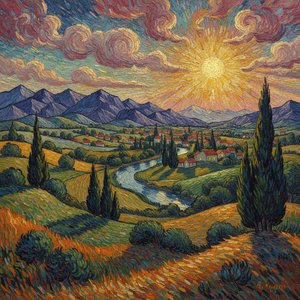
Beyond Impressionism: The Emotional Depth and Vibrant Evolution of Post-Impressionist Landscapes
Explore the profound evolution of Post-Impressionist landscapes. From Van Gogh's emotional brushwork to Cézanne's structural mastery, discover how these visionaries redefined art history through color and form in this expert guide for fine art enthusiasts.

Impressionistic Landscapes: 10 Masterpieces That Changed Art & Decor
Journey into the heart of Impressionism! Explore 10 masterpieces by Monet, Renoir & Degas that revolutionized landscape art. Discover their stories, techniques & find museum-quality reproductions to elevate your home decor on OriginalUniqueArt.com.

Beyond Impressionism: Exploring the Emotional Depth and Vibrant Textures of Post-Impressionist Landscapes
Discover the profound emotional depth of Post-Impressionist landscapes. Explore how masters like Van Gogh revolutionized art through vibrant color, textured impasto, and symbolic expression in this expert guide to the movement that redefined modern art history.

印象派风景画的十部巨作:定义艺术与家的和谐之境
探索印象派风景画的十部经典巨作!从莫奈到雷诺阿,揭秘大师们的技法与灵感。OriginalUniqueArt.com为您呈现高清油画复制和精选艺术品,点亮您的家居空间。立即发现更多艺术珍宝!