切换至版画销售渠道
 展开全文
展开全文







































 对于任何边长超过 105 厘米(约 41 英寸)的艺术品或复制品,画框将以拆解后的组件形式发货。此方法可确保安全送达并防止运输过程中的损坏。


A Dreamscape of Temporal Distortion
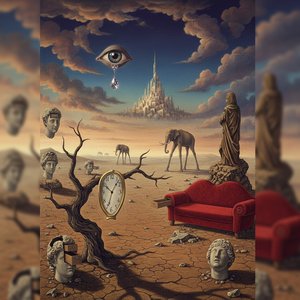
In the hauntingly beautiful 1967 masterpiece “Mane, thecel, phares,” Salvador Dalí invites us into a realm where the boundaries between reality and the subconscious dissolve into a singular, breathtaking vision. This evocative work, executed with the delicate precision of gouache, presents a scene that feels less like a landscape and more like a fragment of a fever dream. At its heart, a solitary figure stands poised atop an inverted clock face, clutching a luminous lantern that pierces through the surrounding gloom. The composition is punctuated by the presence of birds—some perched with quiet stillness, others seemingly caught in mid-flight—which weave a sense of movement and organic life into an otherwise surreal and static environment. For the discerning collector, this piece offers more than mere visual interest; it provides a window into the profound psychological depths that Dalí mastered throughout his illustrious career.
The technique employed here is a testament to Dalí’s technical virtuosity. By utilizing gouache, the artist achieved a velvety, matte texture that allows for subtle gradations of light and shadow, lending the painting an ethereal, almost otherworldly glow. The palette is masterfully muted, relying on deep, somber tones to establish a sense of mystery, while sudden bursts of luminosity draw the eye toward the central symbolic elements. This careful manipulation of light creates a dramatic chiaroscuro effect, where every brushstroke serves to destabilize the viewer's perception and evoke a feeling of profound disorientation. It is this very tension between meticulous realism and deliberate distortion that makes the work so captivating for those looking to introduce a sense of intellectual depth and conversation-starting drama into a sophisticated interior.
Symbolism and the Echoes of History
To gaze upon “Mane, thecel, and phares” is to engage with a complex web of biblical and psychological symbolism. The title itself refers to the cryptic message from the Book of Daniel—Mene, Mene, Tekel, Upharsin—a divine warning of an approaching end. This historical and religious weight is mirrored in the artwork's motifs; the inverted clock face serves as a recurring Dalínian symbol for the fluidity and unreliability of time, suggesting a world where the rational laws of physics have been suspended. The birds, often representing rebirth or the flight of the soul, add a layer of spiritual complexity to the composition, contrasting the heavy, existential dread of the title with a flicker of ephemeral life.
Emerging from the post-World War II era, this work reflects the broader Surrealist movement's preoccupation with exploring the irrational and the unseen. Dalí does not merely depict a scene; he constructs an emotional landscape that resonates with themes of loss, transformation, and the search for meaning amidst chaos. For interior designers and art enthusiasts alike, a high-quality reproduction of this piece serves as a powerful focal point. It brings with it an aura of prestige and a profound sense of narrative, making it an ideal acquisition for those who seek to surround themselves with art that challenges the mind and stirs the soul.
常见问题与解答
对于 萨尔瓦多·达利 的《Mane, thecel, phares》,有哪些推荐的用途和陈列空间?
针对 萨尔瓦多·达利 的《Mane, thecel, phares》,我们为您提供以下两项建议:用途为 (Conversation),适宜空间为 (Living Room)。
"Mane, thecel, phares"创作于何时,属于哪种艺术流派?
"Mane, thecel, phares"创作于1967年,属于Surrealist Expressionism运动。
萨尔瓦多·达利 的《Mane, thecel, phares》 的色彩特征是什么?
"Mane, thecel, phares" 的色彩基调由以 Celadon (#bab8af) 为主的 Neutrals 色系构成。
 实景预览
实景预览
 分享
分享 分享
分享
 详情
详情 指南
指南

 下载作品
下载作品
 相似作品
相似作品 X射线
X射线 幻灯片播放
幻灯片播放 Q&A
Q&A 统计数据
统计数据