

 实景预览
实景预览
 发送
发送 分享
分享
 详情
详情 指南
指南

 下载图片
下载图片
 相似作品
相似作品 X射线
X射线 幻灯片播放
幻灯片播放 统计数据
统计数据Woman Writing a Letter
 Oil On Canvas
- WallArt
 1939
1939 46.0 x 36.0 cm
 Arts Council Collection
 阅读全文
阅读全文
艺术微喷/版画
博物馆级艺术微喷或帆布版画,制作高效,并提供多种饰面选择。 ( 订购此收藏品的纯手工复刻画作 切换至数字图像销售渠道)




P118B $10

P118H $10

P118W $10

P438Z $10

P508JH $12

P508YH $12

P805H $10

P805Z $10

P919BZ $10

P919G $10

P919XJ $10

P959ZH $10

P968JZ $12

W106C $8

W218G $10

W218JH $8

W218Y $10

W307PJ $10

W316G $10

W316PJ $8

W316Y $10

W398PJ $8

W4111J $10

W500HY $15

W500JH $15

W692G $12

W849H $8

W940BG $15

W953PJ $8




您可以从与原作比例一致的预设尺寸中进行选择。

您可以输入自定义尺寸,以适配特定的画框或空间。如果您选择的尺寸与原图比例不符,我们将对作品进行裁剪,或通过镜像填充/纯色填充边缘的方式来扩展图像。在开始制作之前,我们会向您发送一份数字效果图供您确认。
请注意,屏幕上的预览并不能反映实际的裁剪或扩展效果。只有效果图才能准确展示最终的构图。
虽然我们提供定制尺寸,但为了保持原图比例,我们建议您从预设列表中选择尺寸。


 玻璃选项仅适用于110厘米以下的尺寸。

Woman Writing a Letter
艺术微喷/版画
复刻品尺寸说明
-


总计金额
$ 80
A Moment Suspended in Ink and Light
The quiet dignity captured in "Woman Writing a Letter" invites the viewer into an intimate space of contemplation. This portrait is far more than a mere depiction of a woman at her desk; it is an immersion into the very act of creation, the delicate dance between thought and tangible form. The subject sits bathed in the soft, natural luminescence filtering through the window behind her, a light that seems to illuminate not just the room, but the very process of intellectual endeavor itself. Scattered around her—the open books, the papers awaiting inscription—suggest a mind deeply engaged, wrestling with ideas worthy of permanence.
The Atmosphere of Focused Creation
Rupert Shephard masterfully constructs an atmosphere of profound calm amidst apparent industry. The composition guides the eye gently from the focused gesture of her hand to the surrounding scholarly tools. Notice how the placement of objects—the carefully arranged books, the decorative vase catching the light—all contribute to a sense of ordered beauty. It speaks to a life lived with purpose, where knowledge and correspondence are the primary forms of artistry. For those who find solace in routine or inspiration within quiet corners, this painting resonates as an ideal visual anchor for any study or drawing-room.
Technique and Emotional Resonance
While the subject matter is domestic and intellectual, Shephard’s handling elevates it beyond simple genre painting. The technique suggests a careful balance between realism and evocative suggestion. One can almost feel the texture of the aged paper beneath her fingers and perceive the subtle shift in light across the polished wood of the desk. Emotionally, the piece whispers of connection—the act of writing is inherently an act of reaching out, of bridging distance through carefully chosen words. It evokes a sense of thoughtful melancholy mixed with quiet accomplishment.
A Timeless Study for Modern Interiors
Dating from 1939, this work carries the weight of history while remaining beautifully timeless. Its muted palette and classical arrangement allow it to integrate seamlessly into diverse interior design schemes, whether you favor the rich tones of a traditional library or the clean lines of a modern workspace. Owning a reproduction of "Woman Writing a Letter" is not simply acquiring art; it is curating an ambiance—a sanctuary dedicated to thought, correspondence, and enduring human connection.
艺术家简介
Francis Bacon: A Chronicle of Anguish and the Human Condition
Born in Dublin, Ireland, on October 28th, 1909, Francis Bacon’s life was one marked by a profound sense of isolation and an unrelenting exploration of the darker aspects of human existence. He wasn't a traditional artist seeking to capture beauty or represent reality; instead, he relentlessly pursued a visceral depiction of psychological torment, fear, and vulnerability – a pursuit that would cement his place as one of the 20th century’s most unsettling and influential figures. His early years were characterized by a restless spirit and a lack of formal artistic training, a factor which arguably contributed to the raw, unpolished quality of his work.
Bacon drifted through various occupations in his twenties – interior decorating, gambling, and even a stint as a bon vivant in London’s Soho. It wasn't until his late twenties that he truly began to dedicate himself to painting, a decision fueled by a persistent need to translate the intense emotional landscapes within him onto canvas. He famously described his artistic process as “seeing images in series,” suggesting an almost involuntary response to the world around him – a compulsion to capture fleeting moments of horror and despair. This approach led him to repeatedly return to single subjects, creating intricate cycles of paintings that explored variations on a theme, delving deeper into their psychological complexities with each iteration.
The Evolution of a Style: From Bio-Morphs to Screaming Popes
Bacon’s artistic journey can be broadly divided into several distinct phases, each characterized by a specific visual vocabulary and thematic focus. His early work, particularly the “bio-morphs” of the 1930s, showcased distorted human figures – often vaguely sexual in nature – emerging from geometric structures. These pieces, influenced by Picasso’s cubism, hinted at a deeper exploration of the subconscious and the fragmentation of identity. As the decade progressed, Bacon shifted his attention to “Furies” – grotesque, screaming figures trapped within confined spaces, embodying primal rage and anguish.
The 1940s witnessed a significant transformation with the emergence of the “screaming popes,” iconic images of tormented religious figures rendered in vibrant, unsettling colors. These works, often depicted with gaping mouths and contorted faces, became synonymous with Bacon’s oeuvre, representing not just religious suffering but also the universal experience of pain and vulnerability. The mid-to-late 1950s saw him exploring animals – lions, dogs, and birds – alongside solitary figures, further emphasizing themes of isolation and predation. Later in his career, Bacon turned to self-portraits, confronting his own mortality and anxieties with unflinching honesty.
His final period, spanning the 1980s, produced some of his most powerful and disturbing works – the “Black Triptychs,” monumental canvases dominated by dark colors and fragmented figures. These paintings, particularly *Study for Self-Portrait—Triptych, 1985–86*, are considered masterpieces, capturing a profound sense of decay, loss, and the relentless passage of time. The meticulous detail with which he rendered these images, despite their inherent horror, speaks to his unwavering commitment to confronting uncomfortable truths about the human condition.
Influences and Legacy
While Bacon resisted easy categorization, it’s clear that his work was shaped by a diverse range of influences. Picasso's cubism undoubtedly played a role in his early explorations of form and space, while Surrealist ideas – particularly the exploration of the subconscious – resonated with his preoccupation with psychological torment. The writings of existentialist philosophers like Jean-Paul Sartre and Søren Kierkegaard also informed his worldview, contributing to his bleak and pessimistic outlook on life.
Bacon’s influence extends far beyond the realm of painting. His unflinching depiction of human suffering has resonated deeply with audiences for decades, prompting reflection on themes of mortality, isolation, and the fragility of existence. He remains a profoundly challenging yet undeniably compelling artist – a chronicler of our darkest impulses and a testament to the power of art to confront uncomfortable truths.
Key Works
- Three Studies for Figures at the Base of a Crucifixion (1944): Arguably Bacon’s most famous work, this triptych captures the raw horror and psychological intensity of crucifixion.
- Study for Self-Portrait—Triptych, 1985–86: A monumental exploration of self-reflection and mortality, rendered in a hauntingly beautiful black palette.
- The Black Triptychs (1982): A series of intensely dark and disturbing paintings that represent the culmination of Bacon’s artistic vision.
Francis Bacon died on April 28th, 1992, leaving behind a legacy as one of the most important and unsettling artists of the 20th century. His work continues to provoke, disturb, and ultimately fascinate viewers with its unflinching portrayal of the human condition.

rupert shephard
1909 - 1992 , United Kingdom
快速概览
- Artistic Movement Or Style: Figurative art
- Artists Or Movements Influenced By This Artist: ['New York School']
- Artists Who Influenced This Artist:
- Picasso
- Furies
- Date Of Birth: October 28, 1909
- Date Of Death: April 28, 1992
- Full Name: Francis Bacon
- Nationality: British
- Notable Artworks:
- Three Studies...
- screaming popes
- portraits of friends
- Place Of Birth: Dublin, Ireland
相关文章

The Enduring Legacy of Oil on Canvas: Technique, History & Aesthetic Impact
Explore the rich history & techniques of oil painting – from Renaissance masters to Impressionism. Discover pigments, layering methods, and why this timeless medium endures. Expert insights for artists & art enthusiasts.
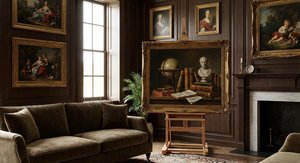
Academic Realism's Finest: 10 Masterpieces for Art Lovers & Home Decor
Explore 10 defining Academic Realism masterpieces by Bouguereau, Gérôme & Cabanel. Discover the stories behind these iconic paintings and bring timeless art into your home with museum-quality reproductions from OriginalUniqueArt.com. Explore the full collection online!
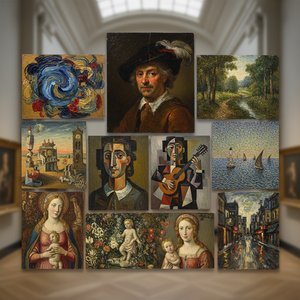
Oil on Board Masters: 10 Paintings That Redefined Art | OriginalUniqueArt
Explore 10 legendary 'Oil on Board' masterpieces by Van Gogh, Monet & more! Discover art history, iconic styles like Impressionism, and find museum-quality reproductions to elevate your home decor. Explore the full collection online at OriginalUniqueArt.com.
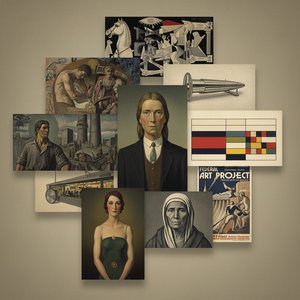
1930s Art: 10 Masterpieces Reflecting a Decade of Change | OriginalUniqueArt
Journey back to the 1930s with OriginalUniqueArt. Explore 10 iconic artworks from Hopper, Kahlo & Magritte reflecting a decade of change. Find museum-quality reproductions and curated decor ideas inspired by Art Deco, Surrealism & more! Discover all masterpieces on OriginalUniqueArt.com

Oil on Canvas: A Historical & Technical Exploration of a Timeless Artistic Medium
Explore the rich history & enduring techniques of oil painting on canvas. Discover the science behind its longevity, conservation practices, and contemporary relevance. Expert insights for art enthusiasts.