切换至版画销售渠道
 展开全文
展开全文







































 对于任何边长超过 105 厘米(约 41 英寸)的艺术品或复制品,画框将以拆解后的组件形式发货。此方法可确保安全送达并防止运输过程中的损坏。


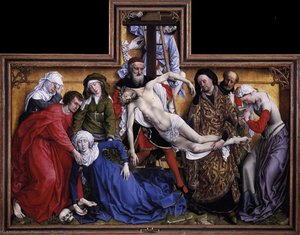
A Masterpiece of Emotion: Exploring Rogier van der Weyden’s ‘The Last Judgment Polyptych’
Rogier van der Weyden (c. 1399 – 1464), a Flemish painter whose legacy continues to inspire awe and admiration, stands as one of the foremost figures in Early Netherlandish art. Born in Tournai, Belgium—a city steeped in medieval tradition—van der Weyden’s artistic journey began not with brushes but with the meticulous craft of goldsmithing, an apprenticeship that instilled within him a profound understanding of detail and precision – qualities which would become inseparable from his distinctive visual language.
- Subject Matter: The monumental ‘Last Judgment Polyptych,’ completed around 1443-1451, depicts the apocalyptic scene described in the Book of Revelation. It portrays Christ presiding over Heaven, flanked by Mary Magdalene and Saint John the Evangelist, overseeing the judgment of humanity – a dramatic representation of divine justice and salvation.
- Style: Van der Weyden’s style is characterized by its unparalleled realism and psychological depth. Departing from the stylized conventions of his predecessors, he embraced a humanist approach, prioritizing expressive emotion and capturing nuanced facial expressions to convey profound spiritual contemplation.
The Polyptych itself—a complex arrangement of panels depicting scenes from the Gospels and culminating in the Judgment Day—represents a pinnacle of artistic innovation. Van der Weyden’s technique involved layering thin glazes of oil paint over meticulously prepared gesso, achieving astonishing luminosity and textural richness. This painstaking process allowed him to render fabrics with breathtaking accuracy, capturing folds and creases that seemed to breathe with life.
Symbolism: Beyond its narrative depiction, the artwork is laden with symbolic significance. The rainbow—a symbol of God’s covenant—represents divine mercy amidst judgment. The figures themselves embody archetypal roles representing faith, repentance, and redemption. Notably, the central figure of Christ embodies compassion and solemn authority simultaneously – a masterful portrayal reflecting the theological concerns of the period.
Historical Context: Created during the Burgundian Renaissance, ‘The Last Judgment’ reflects the burgeoning humanist spirit that questioned medieval dogma while retaining its reverence for Christian faith. It stands as testament to Van der Weyden's ability to synthesize artistic innovation with spiritual contemplation—a feat that cemented his place among the greatest painters of his time.
- Smarthistory Link: Explore Smarthistory’s Analysis
- Beaune Altarpiece Reference: Consider the influence of similar monumental altarpieces on Van der Weyden's approach to composition and storytelling.
常见问题与解答
是否有面向学生的 罗杰·范德·魏登 的《The Last Judgment Polyptych (detail)》 详情页?
罗杰·范德·魏登 的《The Last Judgment Polyptych (detail)》 的 指南 页面提供了一份可打印的两页式学生资料单:包含作品及其基本信息表、将其置于艺术家生平中的年代轴、艺术家的其他作品、经测量的色板,以及四种格式的即用型引用文献。
罗杰·范德·魏登 的《The Last Judgment Polyptych (detail)》 的构图以什么颜色为主导?
Putty (#dbb69d) 是 罗杰·范德·魏登 的《The Last Judgment Polyptych (detail)》 的主导色。
罗杰·范德·魏登 的《The Last Judgment Polyptych (detail)》 传达了怎样的情感?
罗杰·范德·魏登 的《The Last Judgment Polyptych (detail)》 所传达的情感基调为 Dramatic,这概括了作品所表达的情绪。
 实景预览
实景预览
 分享
分享 分享
分享
 详情
详情 指南
指南

 下载作品
下载作品
 相似作品
相似作品 X射线
X射线 幻灯片播放
幻灯片播放 Q&A
Q&A 统计数据
统计数据