切换至版画销售渠道
 展开全文
展开全文







































 对于任何边长超过 105 厘米(约 41 英寸)的艺术品或复制品,画框将以拆解后的组件形式发货。此方法可确保安全送达并防止运输过程中的损坏。


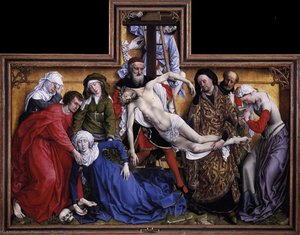
A Moment Frozen in Time: Examining Rogier van der Weyden’s ‘The Last Judgment’ Detail
Rogier van der Weyden, a titan of Early Netherlandish painting (c. 1399 – 1464), stands as an unparalleled master of emotional expression and meticulous craftsmanship—qualities that resonate powerfully within his monumental work, “The Last Judgment.” This particular detail from the polyptych, housed in St John’s Cathedral in Basel, Switzerland, offers a glimpse into the artist's revolutionary approach to portraying religious fervor and human suffering. More than just an illustration of biblical scripture, it embodies a profound psychological exploration that distinguishes van der Weyden from his contemporaries.- Subject Matter & Composition: The image depicts a woman adorned in opulent crimson robes, clutching a golden ball—a symbol often interpreted as representing the Virgin Mary’s womb and divine grace. Her gaze is fixed upward, conveying unwavering faith and acceptance of God's judgment. Surrounding her are figures embodying various stages of purgatory, rendered with astonishing realism and imbued with palpable anguish.
- Style & Technique: Van der Weyden’s style is characterized by its sculptural quality—a hallmark of Flemish painting during the Burgundian Renaissance. He achieved this effect through painstaking layering of thin glazes over a meticulously prepared gesso ground, resulting in surfaces that appear to glow with internal luminescence. The artist's mastery of chiaroscuro – dramatic contrasts between light and dark – amplifies the emotional intensity of the scene.
Historical Context & Artistic Innovation
Painted circa 1446, “The Last Judgment” reflects the anxieties surrounding mortality and divine retribution prevalent in fifteenth-century Europe. However, van der Weyden transcends mere historical representation; he elevates it to an artistic statement of unparalleled depth. Unlike many artists of his time who prioritized stylized depictions, he insisted on portraying human anatomy with anatomical accuracy—a daring move that challenged prevailing conventions and foreshadowed the burgeoning humanist movement. This commitment to realism wasn’t simply about replicating what was seen; it was about conveying the inner turmoil experienced by individuals confronting their own mortality.- Color Palette & Symbolism: The dominant color scheme—a harmonious blend of orange and blue—creates a sense of ethereal grandeur, mirroring the celestial realm. The crimson robes symbolize Mary’s purity and divine compassion, while the golden ball reinforces her role as bearer of salvation. Each figure is meticulously rendered with subtle variations in skin tone and drapery folds, demonstrating van der Weyden's unparalleled attention to detail.
- Emotional Impact: “The Last Judgment” compels viewers to confront uncomfortable truths about human existence—the inevitability of death and the judgment of God. Yet, amidst the despair depicted on many faces, there’s also a glimmer of hope—represented by Mary's serene countenance and the radiant glow emanating from her crown. Van der Weyden’s ability to capture such profound emotion solidified his legacy as one of the greatest painters of his era.
Why Choose a Reproduction?
A high-quality reproduction of “The Last Judgment” allows you to bring this iconic masterpiece into your home or workspace. Utilizing archival inks and canvas stretched taut on museum-grade stretcher bars ensures that the vibrancy and nuance of van der Weyden’s original vision are faithfully preserved. Explore OriginalUniqueArt.com today and discover a stunning representation of artistic brilliance—a testament to Rogier van der Weyden's enduring influence on Western art history.常见问题与解答
“The Last Judgment (detail) (12)”唤起怎样的情感?
罗杰·范德·魏登 的《The Last Judgment (detail) (12)》 传达出一种 Dramatic 的情感基调。
"The Last Judgment (detail) (12)" 的版画推荐用于何处?
罗杰·范德·魏登 的《The Last Judgment (detail) (12)》 的建议用途为 Statement,同时也适用于其他场景。
“The Last Judgment (detail) (12)”代表了罗杰·范德·魏登艺术生涯的哪个阶段?
“The Last Judgment (detail) (12)”创作于罗杰·范德·魏登艺术生涯的Mature Period时期。这一时期标志着该作品与艺术家艺术风格演进的紧密关联。
 实景预览
实景预览
 分享
分享 分享
分享
 详情
详情 指南
指南

 下载作品
下载作品
 相似作品
相似作品 X射线
X射线 幻灯片播放
幻灯片播放 问答
问答 统计数据
统计数据