

 效果预览
效果预览
 购买印刷品
购买印刷品 分享
分享 分享
分享
 详情
详情

 下载
下载
 相似作品
相似作品 X射线
X射线 幻灯片播放
幻灯片播放Cabrita
 80.0 x 65.0 cm
 展开详情
展开详情
购买高分辨率增强版数字图像,其品质远超在线预览。
每一份文件都由我们的内部专家使用先进工具与专业的后期润色技术精心打造。我们确保每一张图像都具备卓越的清晰度、精准的色彩还原度以及细腻的细节表现。
最终文件将在 72 小时内通过电子邮件交付,并针对专业、编辑及印刷用途进行了优化。其品质与顶级设计工作室、出版社和画廊所信赖的标准完全一致。
每份数字图像订单均包含
专业数字图像交付,品质保障
选择 OriginalUniqueArt.com,您获得的不仅仅是一张图像——您收到的是经过专业级增强、精雕细琢的数字艺术作品,并享有满意保证。以下是您的订单中自动包含的所有内容:

邮件快速送达
您的高分辨率数字图像文件将在下单后 72 小时内通过电子邮件发送给您 —— 即可立即使用。

AI 增强型数字文件
您的艺术品经过专业优化,结合先进的 AI 技术与人工修饰,确保呈现极致的细节、清晰度与色彩准确度。

终身免费重发服务
不小心删除了文件或找不到了?没关系——我们将随时为您免费重发。

无需进口费用,始终如一
即刻拥有您的艺术作品,无需支付任何关税、税费或运费——数字下载始终免税。

色彩精准保证
我们通过专业工具与色彩管理技术,确保您的数字图像尽可能真实地还原原作色彩。

60天满意保证
如果您对所购买的数字图像不满意,我们将在60天内为您进行修改或退还100%的款项——无需任何解释。

100% 退款保证
如果不满意?在收到数字文件后的60天内,我们为您提供全额退款——无需任何理由。

批量订单优惠
购买 3 张图片可享 10% 折扣 - 购买 5 张可享 15% 折扣 - 购买 10+ 张可享 20% 折扣。非常适合创意项目、画廊和机构使用。
艺术家简介
The Soul of Oaxaca: The Life and Vision of Rodolfo Nieto
Born amidst the vibrant, sun-drenched landscapes of Oaxaca, Mexico, in 1936, Rodolfo Nieto emerged as a profound voice within the Oaxacan School, weaving together the raw energy of his indigenous roots with the sophisticated nuances of European modernism. His early life was marked by both sudden hardship and extraordinary promise. Following the mysterious disappearance of his father, a medical epidemiologist, in 1949, Nieto’s family faced profound destitution, forcing a move to Mexico City. It was during this period of transition that a chance encounter with the dancer and professor Santos Balmori revealed the young artist's latent genius; a simple sketch of a cat served as the catalyst for a lifelong devotion to the brush and the chisel.
Nieto’s formal artistic journey began in earnest at the prestigious Escuela Nacional de Pintura, Escultura y Grabado "La Esmeralda". Under the tutelage of masters like Carlos Orozco Romero, he began to navigate the complex intersections of Mexican identity and international avant-garde movements. His early years were deeply intertwined with the giants of Mexican muralism; having apprenticed under Diego Rivera, Nieto absorbed the monumental scale and social consciousness of the era, yet he possessed an innate desire to transcend the purely didactic nature of much of the period's art. This thirst for expansion eventually led him to Paris in the early 1960s, a move that would fundamentally reshape his aesthetic language.
A Synthesis of Worlds: From Paris to the Alebrijes
In the bohemian heart of Paris, Nieto found himself immersed in a rich tapestry of intellectual and artistic exchange. He moved within circles that included literary luminaries like Julio Cortázar and fellow painters such as Severo Toledo and José Biasi. It was during this European sojourn that his work underwent a transformative metamorphosis. Working at Atelier 17 under Stanley William Hayter, he discovered the intricate possibilities of printmaking, while the haunting, emotive works of Edvard Munch ignited a deep fascination with wood engraving. This period allowed him to view his native heritage through a detached, analytical lens, stripping away the purely folkloric to find the universal spirit beneath.
The most striking achievement of Nieto’s mature style was his ability to reimagine the alebrijes—the brightly painted, hand-carved wooden creatures of Oaxacan tradition. Rather than merely replicating folk art, he synthesized these fantastical beasts with a surrealist sensibility, creating what many call his "bestiarios." His canvases became dreamscapes populated by hybrid creatures that felt both ancient and modern, blending the tactile textures of Mexican craftsmanship with the psychological depth of European Surrealism and Art Brut. This fusion created a unique visual vocabulary that spoke to the subconscious, bridging the gap between the earthly traditions of his homeland and the abstract explorations of the global art scene.
Legacy of a Tragic Master
Despite his immense talent and the significant connections he maintained across continents, Rodolfo Nieto’s life was cut tragically short in 1985. His death marked the loss of an artist who had successfully navigated the delicate balance between the local and the universal. He did not merely paint scenes; he constructed worlds where the boundaries between animal, human, and myth were perpetually blurred.
The historical significance of Nieto lies in his role as a bridge-builder. His work remains a testament to several key artistic pillars:
- Cultural Synthesis: The seamless integration of Oaxacan folk motifs with European modernism.
- Technical Versatility: Mastery across various media, including painting, lithography, and wood engraving.
- Symbolic Depth: The use of the bestiario to explore themes of identity, metamorphosis, and the subconscious.
- Artistic Lineage: Carrying forward the legacy of the Mexican School while pushing it toward a more personal, surrealist frontier.
Today, Rodolfo Nieto is remembered not just as an assistant to Rivera or a student of the Oaxacan tradition, but as a visionary who transformed the colorful legends of his childhood into a sophisticated, haunting, and eternally captivating body of work.
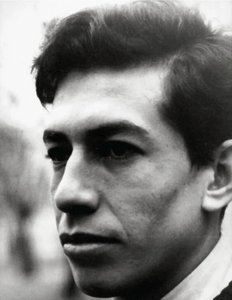
rodolfo nieto
1936 - 1985 , Mexico
基本信息
- Artistic Movement Or Style: Oaxacan School, Surrealism
- Artists Who Influenced This Artist:
- Diego Rivera
- Edvard Munch
- Carlos Orozco Romero
- Date Of Birth: July 13, 1936
- Date Of Death: 1985
- Full Name: Rodolfo Nieto Labastida
- Nationality: Mexican
- Place Of Birth: Oaxaca, Mexico

