Minimalism · 1968
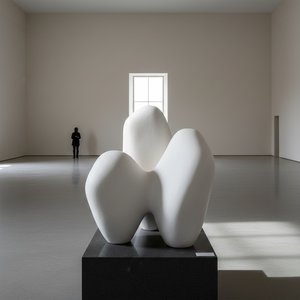
Untitled (Robert Morris, 1968)
Robert Morris (1931–2018) 创作了《Untitled》。 创作于 1968 年。 它属于 Minimalism 运动。 由 Acrylic 创作。 现藏于伦敦, 英国的泰特现代美术馆。
- 1968
- Acrylic
- 泰特现代美术馆, 伦敦

 实景预览

 手工油画复制品
 分享
 分享
 详情页


 下载作品
 相似作品
 X射线
 幻灯片播放
 问答

 统计数据
Untitled简介
- 标题
- Untitled
- 艺术家
- Robert Morris (1931–2018)
- 艺术家出生于
- Kansas City, United States
- 日期
- 1968
- 媒介
- Acrylic
- 观赏地点
- 泰特现代美术馆, 伦敦, 英国
- 主题
- sculpture, minimalism, organic, form, space, suspension
Untitled 描绘了什么内容?
Robert Morris’s “Untitled”: A Meditation on Absence and Form
Robert Morris’s “Untitled,” created in 1968, stands as a cornerstone of Minimalism and a profound exploration into the very nature of perception within art. More than simply a sculpture, it's an invitation to contemplate the space between object and viewer, a deliberate rejection of representational imagery in favor of pure form and process. The piece, often realized in cast concrete or resin – though variations exist – presents a single, elongated form suspended from the ceiling, seemingly adrift within a stark white void. This simplicity is deceptive; it’s precisely this lack of overt narrative that generates such a powerful emotional response.
The sculpture's design deliberately avoids any immediately recognizable reference. It’s an organic curve, reminiscent perhaps of a fossilized stone or the attenuated form of a stretched root system – a subtle nod to the natural world without resorting to direct depiction. The surface is rarely smooth; instead, it bears the marks of its creation: subtle undulations, slight variations in tone, and even traces of the casting process itself. These imperfections aren’t flaws but integral elements of the work's philosophy, emphasizing the inherent materiality of the object and rejecting the illusionistic qualities of traditional sculpture. The deliberate roughness invites a tactile engagement, prompting us to consider the physicality of the piece and its relationship to our own bodies within the space.
The Philosophical Undercurrents of Minimalism
“Untitled” is deeply rooted in the burgeoning philosophical currents of the late 1960s. Minimalist artists like Morris were reacting against the perceived excesses of Abstract Expressionism, rejecting subjective emotion and personal expression in favor of a more objective approach to art-making. They sought to strip away all unnecessary elements – color, texture, narrative – leaving only the essential form and its relationship to space. Morris’s work directly engages with questions of perception: how do we see? How does our mind construct meaning from visual information? The sculpture's stark simplicity forces us to confront our own assumptions about art and representation.
Crucially, Morris wasn’t simply creating a visually pleasing object. He was interested in the *experience* of seeing – the way the form interacts with the surrounding space, the effect it has on the viewer’s perception of reality. The work's placement within a white room is deliberate; it isolates the sculpture and forces us to focus entirely on its shape and presence. This creates a sense of quiet contemplation, inviting viewers to slow down and engage with the artwork in a more mindful way.
Materiality and Process: A Key to Understanding
The choice of materials – typically cast concrete or resin – is significant. These durable, industrial substances lend an air of solidity and permanence to the sculpture, yet their inherent imperfections subtly undermine this sense of stability. The casting process itself becomes part of the artwork’s narrative; the marks left by the mold are not concealed but deliberately revealed, emphasizing the labor involved in its creation. This transparency – a key characteristic of Minimalism – invites us to consider the artist's hand and the physical processes that shaped the final form.
Morris often experimented with different casting techniques, manipulating the pour to create variations in texture and surface quality. These subtle differences contribute to the sculpture’s overall sense of ambiguity and complexity. The work is not about achieving a perfect, idealized form; it's about exploring the possibilities inherent within the materials and processes themselves.
Symbolism and Emotional Resonance
While “Untitled” resists easy interpretation, it evokes a powerful sense of stillness and contemplation. The elongated form suggests a reaching gesture – perhaps towards an unknown horizon or a deeper understanding – while its suspended position conveys a feeling of vulnerability and precariousness. The work’s simplicity can be surprisingly unsettling, prompting us to confront our own anxieties about the world and our place within it.
Ultimately, “Untitled” is not a statement but an experience. It's a reminder that art doesn't always need to tell a story; sometimes, its power lies in its ability to simply *be* – a quiet meditation on form, space, and the mysteries of perception. It remains a profoundly influential work, continuing to challenge our assumptions about what constitutes art and how we engage with it.
哪家博物馆收藏有 Untitled?
泰特现代美术馆
伦敦, 英国
泰特现代美术馆的历史与起源 坐落于英国伦敦的泰特现代美术馆,其生命力深深植根于南华克区(Southwark)的天际线工业史之中。这片土地最初被班克斯赛德发电厂(Bankside Power Station)所占据,这座宏伟的建筑在最终退役之前,曾作为工业心脏运转了三十载。随着经济格局的变迁,尤其是石油价格的飙升,发电厂最终于1981年10月31日停止了运转。在随后的漫长岁月里,这座庞然大物一直处于闲置状态,化作城市景观中一段沉默的注脚,静静等待着新的使命。 直到20世纪90年代,将这一工业遗迹转化为现代与当代艺术中心的宏伟蓝图才真正拉开序幕。随着1992年新美术馆建设计划的公布,这片场地经历了一场深刻的蜕变。2000年5月11日,泰特现代美术馆正式向公众敞开大门。这场转型不仅是建筑功能的更迭,更将一个曾经的制造工厂,升华为一个致力于探索从20世纪起艺术表达演进的灵感殿堂。前发电厂的建筑美学 将班克斯赛德发电厂转化为艺术空间的过程,是一场工业历史与当代功能之间精妙的平衡艺术。在赫尔佐格与德梅伦的设计下,这座建筑通过粗犷的野兽派混凝土与闪烁玻璃的剧烈并置,与它的过去展开了一场跨越时空的对话。建筑师在改造过程中展现出一种轻盈而细腻的手法,在创造当代公共空间的同时,并未削弱建筑原有的历史厚重感。这种处理方式让沉重的石材结构得以与现代干预手段共生,例如矗立在屋顶之上的光束,为烟囱的垂直线条提供了水平维度的视觉对比。 建筑的轮廓通过对原始用途的建筑学致敬而得以界定。锯齿状屋顶是对原始设计的刻意延续,保留了发电厂的功能性几何美感。在泰晤士河的另一岸,发电厂的烟囱与圣保罗大教堂的穹顶形成了巧妙的对位。这种工业天际线与历史名城之间的关系,营造出一种独特的视觉张力。这座建筑并未试图掩盖其工业起源;相反,它巧妙地利用现有的建筑形式,为内部的艺术体验构筑起了一道无形的画框。涡轮厅与锅炉房 涡轮厅依然是伦敦工业遗产的有力见证。这片巨大的空间曾是发电厂的工业心脏,如今已化身为承载沉浸式装置艺术的动态舞台。其宏大的尺度容纳了足以占据整个虚空的纪念碑式作品,仅凭其震撼的物理存在感,便足以挑战观者的感知。在这里,建筑本身的巨大体量主宰了艺术在墙垣之间所释放的影响力。 与涡轮厅的辽阔不同,锅炉房则提供了截然不同的体验。这里曾是安置发电厂锅炉的场所,如今则举办着更为私密的展览。从涡轮厅那种宏大且开放的尺度,过渡到锅炉房更为内敛的环境,艺术的邂逅方式也随之发生了转变。如果说涡轮厅要求观者对宏大尺度做出回应,那么锅炉房则更倾向于引导人们对展品进行更近距离、更静谧的观察。国际现代与当代艺术收藏 泰特现代美术馆珍藏着英国的国家级国际现代与当代艺术,其核心聚焦于1900年以来的艺术创作。这批珍贵的藏品优先呈现了那些体现了创新精神、实验性探索以及社会评论深度的杰作。艺术的边界在这里被不断拓宽,其范畴早已超越了传统绘画与雕塑,将摄影、电影、行为艺术以及数字媒体等多元媒介悉数纳入其中。这种极具包容性的多样性,为我们审视艺术表达在过去数十年间的演变提供了广阔的视野。 在这些艺术殿堂之中,抽象艺术、构成主义以及澳大利亚现代主义等艺术运动皆找到了属于它们的栖息地。馆内还收藏了大量具有重要意义的战后艺术作品及各种形式的雕塑。通过汇集这些跨时代的杰作,这座机构为我们呈现了一幅塑造了现代时代的风格演进全景图。这些艺术品的存在,让我们得以与20世纪及21世纪的形式变革进行一场跨越时空的直接对话。 《喷泉》,1917年 - 马塞尔·杜尚 《玛丽莲·双联画》,1962年 - 安迪·沃霍尔 《舞者》,1949年 - 亨利·马蒂斯 《深红上的黑色》,1959年 - 马克·罗斯科 馆藏杰作 在这些墙壁之间,某些作品的存在彻底改变了人们对艺术本质的认知。毕加索的《亚威尼翁少女》始终是一个核心的起点,它通过立体主义的视角,标志着人们对形式与透视理解的一次激进变革。而在不远处,罗斯科那色域绘画所散发出的静谧张力,则引导着一种沉思与精神性的体验,巨大的画布将观者吸入其深邃的色彩之中。这些作品不仅仅是占据了空间,它们更是在主宰空间。 馆藏中还包含了一些挑战媒介定义的物件。马塞尔·杜尚于1917年创作的《泉》,至今仍是一份根本性的存在,质疑着日常物品与纯艺术之间的界限。同样地,安迪·沃霍尔的《金宝汤罐头》》及其1962年的《玛丽莲双联画》》,让观者直面大众生产与高雅文化之间的交汇点。这些作品拥有一种特殊的厚重感,时刻索求着人们的关注。 《舞者》,1949 - 亨利·马蒂斯 《龙虾电话》,1938 - 萨尔瓦多·达利 《深红上的黑色》,1959 - 马克·罗斯科 展览与艺术对话 美术馆始终保持着一种独特的律动,通过在不同空间内交替呈现大型回顾展与主题群展,构建起一场流动的艺术盛宴。这些展览往往不局限于美学范畴,而是频繁地引发关于社会与政治议题的辩论,使美术馆本身成为了一个活跃的对话场域。近期的策展重点聚焦于对身份认同的深度探索,以及气候变化这一复杂课题的审视。通过那些与场域紧密结合的装置艺术,机构直接介入了这些当代紧迫的议题,确保艺术始终与当下时刻紧密相连,不曾脱节。 著名的“联合利华系列”将宏大的作品引入了这片空旷的内部空间,往往能彻底重塑人们对空间本身的感知。其中一个令人难忘的瞬间是奥拉维尔·埃利亚松的《天气项目》,它曾彻底改变了涡轮厅的氛围。这类装置艺术让观众能够与艺术进行一场超越传统画框或底座界限的身体感官邂逅,让艺术不再是静止的凝视,而是一场全方位的沉浸体验。扩张与未来愿景 随着时代的变迁,这座建筑也在通过不断的扩张计划进行自我演进,以适应日益增长的艺术需求。其中,备受瞩目的核心项目便是计划中的南翼扩建工程。这一宏伟的开发计划旨在增设5,000平方米的新型展示空间,从而为馆藏艺术品提供更广阔的对话舞台,让观众能够更深入地沉浸在艺术的海洋中。该项目的初步预算估算为2.15亿英镑。 扩建部分的建筑设计意在将美术馆转化为一个充满活力的十字路口。通过打造全新的入口,该项目力求使建筑结构与周边的城市肌理实现更完美的融合。这些变革不仅体现了美术馆致力于为艺术家和观众提供不断进化的艺术空间,更确保了这座机构在艺术的未来进程中,始终扮演着一个充满生命力的参与者角色。


Untitled 的高分辨率图像

Robert Morris, Untitled (1968), 泰特现代美术馆.
关于 Untitled 的常见问题解答
目前可以在哪里观赏到Robert Morris 的《Untitled》?
Robert Morris 的《Untitled》 目前正在 泰特现代美术馆, 伦敦, 英国 展出。此处列出的博物馆指代原作,而非复制品。
Robert Morris 的《Untitled》 的创作年份是哪一年?
"Untitled"创作于1968年。这一时期将该作品置于Robert Morris的艺术生涯及其所处时代之中。
Robert Morris 的《Untitled》 的创作媒介是什么?
《Untitled》采用Acrylic创作。
“Untitled”的主题是什么?
Robert Morris 的《Untitled》 中呈现的主题包括 sculpture, minimalism, organic, form, space, suspension, white, contemporary,这些主题共同构成了该艺术作品的主旨。
"Untitled" 是否属于公有领域作品?
Robert Morris 的《Untitled》 属于 仍受版权保护。此版权状态决定了该作品图像的复制方式。
"Untitled" 的创作艺术家是谁?
《Untitled》被归为Robert Morris的作品。
"Untitled" 属于哪种艺术风格?
Robert Morris 的《Untitled》 属于 Minimalism 流派,该流派为这件作品提供了风格背景。
《Untitled》属于 Robert Morris 艺术生涯中的哪个时期?
"Untitled" 展现了 Robert Morris 在 Late Period 时期的艺术风格。
在 1968 年创作“Untitled”时,Robert Morris 的年龄是多少?
当"Untitled"于1968创作时,出生于1931的Robert Morris正值37岁。
关于艺术家 Robert Morris

1931–2018, United States
Robert Morris
The Architect of Perception: The Life and Legacy of Robert Morris In the vast, often turbulent landscape of twentieth-century American art, few figures cast as long or as intellectually profound a shadow as Robert Morris. Born in 1931 in Kansas City, Missouri, Morris did not merely participate in the movements of his time; he provided the theoretical and physical scaffolding upon which much of contemporary art was built. His journey began with a rigorous multidisciplinary foundation, blending the precision of engineering with the expressive potential of fine art. This unique duality—the ability to dissect a form through a technical lens while simultaneously questioning its philosophical essence—became the hallmark of his career.
Robert Morris 的其他作品
 Document
 Bull Wall
关于 Untitled 的论文集
 Form vs. Idea: Distinguishing Minimalism and Conceptual ArtMaster the distinction between Minimalism and Conceptual Art with our expert guide. Explore the history of these 1960s movements now.
 The Subtlety of Form: Exploring Emotional Resonance in Minimalist ArtExplore the emotional depth of minimalist art with OriginalUniqueArt. Discover key artists like Agnes Martin & Donald Judd, investment pote…
 Materiality and Method: A Collector’s Guide to Sculptural Form and TechniqueExplore the mastery of marble carving, bronze casting, and negative space. Discover the profound soul of sculptural technique.