实景预览
实景预览
 发送
发送 分享
分享
 详情
详情 指南
指南

 下载图片
下载图片
 相似作品
相似作品 X射线
X射线 幻灯片播放
幻灯片播放 统计数据
统计数据Les amoureux de l


 阅读全文
阅读全文
艺术微喷/版画
博物馆级艺术微喷或帆布版画,制作高效,并提供多种饰面选择。 ( 订购此收藏品的纯手工复刻画作 切换至数字图像销售渠道)




P118B ¥10

P118H ¥10

P118W ¥10

P438Z ¥10

P508JH ¥12

P508YH ¥12

P805H ¥10

P805Z ¥10

P919BZ ¥10

P919G ¥10

P919XJ ¥10

P959ZH ¥10

P968JZ ¥12

W106C ¥8

W218G ¥10

W218JH ¥8

W218Y ¥10

W307PJ ¥10

W316G ¥10

W316PJ ¥8

W316Y ¥10

W398PJ ¥8

W4111J ¥10

W500HY ¥15

W500JH ¥15

W692G ¥12

W849H ¥8

W940BG ¥15

W953PJ ¥8




您可以从与原作比例一致的预设尺寸中进行选择。

请输入您所需的宽度和高度,以适配您的画框或墙面。由于印刷品只能进行裁剪,无法超出原图尺寸,因此若比例不一致,画面的一部分将会被裁切。在正式印刷之前,我们会为您发送一份数字效果图供您确认。本页面显示的图片并非最终裁剪后的效果——只有效果图才能展示真实的裁剪情况。


 玻璃选项仅适用于110厘米以下的尺寸。

Les amoureux de l
艺术微喷/版画
复刻品尺寸说明
-


总计金额
¥ 538
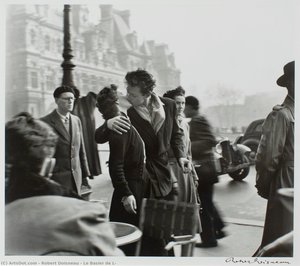
《爱在圣母院》:罗伯特·多伊索诺的巴黎爱情瞬间
罗伯特·多伊索诺的《爱在圣母院》(Les Amoureux de l’Opera)超越了摄影记录的简单功能;它体现了战后巴黎的精神——一个充满乐观与忧郁的城市,渴望在都市喧嚣中寻找联系。 这幅标志性作品于1950年拍摄,描绘了一对年轻情侣拥抱在圣母院的台阶上,沐浴在柔和的光线下,为画面增添了神秘的美感。
罗伯特·多伊索诺(1912-1994)是一位法国摄影师,以其对巴黎的人文主义街景摄影而闻名。 他捕捉到了爱情与联系的瞬间,在喧嚣的城市背景下,这幅作品于战后时期创作,展现了艺术家对日常生活和情感体验的深刻理解。
构图与视角:捕捉巴黎的浪漫气息
多伊索诺巧妙运用了低角度拍摄技巧,强调圣母院的宏伟气势,引导观众视线向上望向建筑的壮丽线条。 台阶的斜线与建筑墙壁的水平线交织构成了一组动态视觉节奏线,为画面增添了活力和艺术感。 这张照片捕捉到了巴黎街景中最动人的瞬间。
摄影技术:运动模糊的艺术魅力
多伊索诺最显著的技术成就在于运用慢镜头拍摄技巧——被称为“运动模糊”(motion blur)的方法。 他故意控制相机速度,创造出一种流动感,将背景中的人物模糊转化为光线轨迹,极大地增强了图像的真实感和情感冲击力。 这不仅是摄影技术上的创新,更是多伊索诺艺术风格的核心。
色彩与纹理:巴黎的光影诗意
《爱在圣母院》采用全黑白调,通过微妙的 tonal range 来营造氛围和表达情绪。 从深邃黑色到明亮白色,图像中的色彩范围展现了光线与阴影之间的对比,为画面增添了丰富的视觉层次感。 石阶的光滑表面与背景人物模糊形成的柔和纹理形成鲜明对比,这不仅丰富了艺术作品的质感,也象征着多伊索诺对生活细节的敏锐观察力。
历史语境与艺术风格:人文主义现实主义的传承
多伊索诺的作品诞生于二战后法国社会变革时期。 他是这一代艺术家中拥抱纪录片摄影作为表达日常生活和捕捉情感体验方式的一批人。 多伊索诺的风格属于人文主义现实主义运动,这种艺术形式注重真实地描绘人类形象,并常常关注边缘群体。 这张照片体现了多伊索诺对社会与人性的深刻思考。
象征意义与情感冲击力:爱与孤独的对话
"爱在圣母院" 通过捕捉运动模糊的瞬间,表达了爱情与孤独之间的对话。 情侣拥抱的动作象征着连接与和谐,在喧嚣的城市生活中,这幅作品提醒我们珍惜人与人之间的情感联系。 多伊索诺对运动模糊技巧的运用不仅提升了摄影艺术水平,更赋予了图像一种超越现实主义的诗意和哲学思考。
问答详情
针对我的房间,"Les amoureux de l" 应该打印成什么尺寸?
Robert Doisneau 的《Les amoureux de l》 的推荐搭配:在 起居空间 中悬挂尺寸为 大尺寸 的版画。
Robert Doisneau 的《Les amoureux de l》 的视觉明亮度如何?
总体而言,"Les amoureux de l" 的亮度记录为 适中。感知亮度描述了作品呈现出的明暗程度。
Robert Doisneau 的《Les amoureux de l》 属于哪种艺术流派,又处于哪个时代?
"Les amoureux de l" 属于 Documentary Photography 流派,其创作者活跃于 Modern 时期。
艺术家简介
A Parisian Chronicler: The Life and Legacy of Robert Doisneau
Robert Doisneau, born in Gentilly, France, in 1912, wasn’t merely a photographer; he was a visual poet of the streets, a chronicler of everyday life who captured the heart and soul of post-war Paris with an unparalleled blend of humanism, irony, and playful observation. His journey began amidst personal hardship – orphaned at a young age, raised by an unloving aunt – yet it blossomed into a career that celebrated the resilience and charm of the human spirit. Initially drawn to the technical arts, Doisneau trained in engraving and lithography at the École Estienne, skills that would later inform his compositional eye. However, it was the allure of the streets, the spontaneous narratives unfolding before him, that truly ignited his artistic passion. He began tentatively, reportedly photographing cobblestones to overcome initial shyness, gradually building confidence to capture the lives of children and adults in their natural environment.From Advertising to Artistic Vision
Doisneau’s early career was a pragmatic blend of necessity and opportunity. He navigated the world of advertising, working first as a draughtsman at Atelier Ullmann and later as a photographer for Renault. While these roles provided financial stability, they also fueled his growing interest in people and their interactions. His time at Renault, though ultimately cut short by his habitual tardiness, proved formative, exposing him to the possibilities of photography beyond mere commercial application. The late 1930s saw him join the Rapho photographic agency, a pivotal moment that allowed him to pursue street photography more seriously. This period coincided with the looming shadow of World War II, and Doisneau’s life took on another layer of complexity as he served in the French army and actively participated in the Resistance, utilizing his skills to forge documents for those fleeing persecution. It was a time of immense risk and moral responsibility, shaping his commitment to documenting the lives of ordinary people with dignity and respect.The Humanist Lens: Style and Influences
Doisneau’s photographic style is instantly recognizable – a masterful blend of candid observation, carefully composed framing, and a gentle, often ironic, perspective. He wasn't interested in grand narratives or dramatic events; instead, he found beauty and meaning in the mundane, the fleeting moments of everyday life. Influenced by masters like André Kertész, Eugène Atget, and Henri Cartier-Bresson, Doisneau developed his own unique voice, one that prioritized human connection over technical perfection. He possessed an extraordinary ability to anticipate and capture decisive moments, often with a touch of humor or whimsy. His work frequently features amusing juxtapositions, contrasting social classes, and eccentric characters, all set against the backdrop of bustling Parisian streets and cafes. Le Baiser de l'Hôtel de Ville (The Kiss by the Town Hall), his most iconic image from 1950, perfectly encapsulates this approach – a spontaneous moment of intimacy amidst the chaos of city life, an enduring symbol of love and freedom. He famously stated, “The marvels of daily life are so exciting; no movie director can arrange the unexpected that you find in the street.”A Legacy of Empathy and Observation
Throughout his career, Doisneau consistently championed the overlooked and marginalized. He had a particular fondness for children, portraying their play with seriousness and respect, recognizing their inherent dignity and freedom from adult constraints. His photographs offer a poignant glimpse into a post-war Paris rebuilding itself, grappling with social change, yet retaining its unique charm and spirit. While he briefly experimented with fashion photography for Vogue, his heart remained on the streets, capturing the authentic pulse of Parisian life. Despite receiving an invitation to join Magnum Photos from Henri Cartier-Bresson, Doisneau chose to remain with Rapho, valuing the agency’s independence and allowing him greater creative freedom. He was appointed a Chevalier (Knight) of the Legion of Honour in 1984, a testament to his significant contribution to French culture. Robert Doisneau passed away in 1994, leaving behind a vast body of work that continues to inspire and captivate audiences worldwide. His photographs are not simply records of a time and place; they are enduring celebrations of the human condition, reminding us to find beauty and meaning in the everyday moments that shape our lives.
Robert Doisneau
1922 - 1994 , France
快速概览
- Full Name: Robert Doisneau
- Nationality: French
- Date Of Birth: 1922
- Date Of Death: 1994
- Place Of Birth: Gennevilliers, France
- Notable Artworks: ["Le Baiser de l'hôtel de ville"]
- Artistic Movement Or Style: Humanist photography
- Artists Who Influenced This Artist:
- André Kertész
- Eugène Atget
- Henri Cartier-Bresson
相关文章
Shadow & Soul: Why Black & White Photography Remains the Ultimate Power Move in Modern Art
Discover why black & white photography remains a powerful force in contemporary art. Explore the impact of light, shadow, and texture through a visual journey of monochrome mastery and learn how to elevate your space with timeless grayscale aesthetics.
Timeless Shadows: The Artistry, History, and Emotional Resonance of Black and White Photography
Explore the profound artistry of black and white photography. From historical mastery to the interplay of light and shadow, discover how monochrome captures timeless emotion and form through a sophisticated lens of art history.

Monochrome Visions: Exploring the Aesthetic & Historical Significance of Black & White Photography
Explore the rich history & artistic power of black and white photography. From early techniques to iconic masters like Ansel Adams, discover why monochrome continues to captivate art lovers today. Expert insights for collectors.
Beyond Color: The Timeless Power and Artistry of Black and White Photography
Explore the profound artistry of black and white photography. From the chemistry of gelatin silver to the chiaroscuro of the Old Masters, discover how monochrome captures the eternal essence of light, form, and emotion for the discerning art collector.

White on Canvas: 10 Masterpieces & Timeless Elegance for Your Home Decor
Explore 10 iconic white paintings by Monet, Whistler & Rothko! Discover the stories behind these serene masterpieces and their impact on art history. Find museum-quality reproductions for your home decor at .