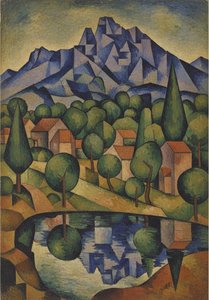
油画原件
 关于 Window 的一切







































 对于任何边长超过 105 厘米(约 41 英寸)的艺术品或复制品,画框将以拆解后的组件形式发货。此方法可确保安全送达并防止运输过程中的损坏。


A Symphony of Light and Geometry
In the early twentieth century, as the world stood on the precipice of profound transformation, Robert Delaunay captured a moment of pure, luminous transcendence in his 1912 masterpiece, "Window." This work is far more than a mere depiction of a windowpane; it is an invitation to witness the birth of Orphism, a movement that sought to liberate color from the constraints of representational form. To gaze upon this painting is to step into a realm where light does not simply illuminate objects but becomes the subject itself. Delaunay masterfully distills the sensory experience of perception, transforming a simple architectural element into a complex mosaic of interlocking rectangles and vibrant squares that seem to pulse with an internal energy.
The brilliance of "Window" lies in its ability to evoke a sense of rhythmic movement through static shapes. Through a sophisticated technique of layered paint application—often incorporating the rich, tactile quality of encaustic wax alongside traditional oils—Delaunay achieved a depth that feels almost ethereal. The subtle gradations of pigment within each geometric cell create a shimmering effect, reminiscent of sunlight filtering through stained glass. This meticulous manipulation of color density allows the viewer to experience a visual dynamism that transcends the flat surface of the canvas, making the piece feel as though it is breathing with light.
The Orphic Vision: Color as Emotion
At the heart of this composition lies the radical philosophy of Orphism. Moving away from the analytical fragmentation of Cubism, Delaunay and his contemporaries embraced a more lyrical approach, prioritizing the emotional resonance of pure color. In "Window," there is no attempt to replicate the naturalistic world; instead, the artist uses hues of deep blue, radiant yellow, and warm orange to communicate a sense of harmony and cosmic order. This focus on pure abstraction allows the painting to function as an emotional landscape, where the interplay of light and shadow serves as a metaphor for the clarity and chaos of human existence.
For the discerning collector or interior designer, this piece offers a unique opportunity to introduce a focal point of sophisticated energy into a space. The painting’s vibrant palette and structured composition make it an ideal centerpiece for modern, minimalist, or even classical interiors, providing a burst of intellectual and visual stimulation. It does not merely decorate a wall; it transforms the atmosphere of a room, inviting contemplation and a renewed appreciation for the beauty found in geometric precision.
A Legacy of Harmony Amidst Change
The historical context of "Window" adds a layer of profound poignancy to its visual splendor. Created during an era of significant societal upheaval, the painting serves as a radiant antidote to the anxieties of the pre-war period. While much of the art of this time grappled with the fragmentation of reality, Delaunay sought to synthesize it, finding a way to weave disparate elements into a cohesive, beautiful whole. This pursuit of geometric harmony reflects a deep-seated desire for stability and beauty amidst a changing world.
Owning a high-quality reproduction of this seminal work allows one to possess a fragment of art history—a piece that embodies the courage of innovation and the timeless allure of light. "Window" remains a testament to the power of abstraction to touch the human spirit, offering a window not just into a room, but into the very essence of light and color.
常见问题与解答
Window是手绘的还是印刷的?
手工绘制:由受过专业训练的画家在亚麻画布上,以油画形式临摹 Window。
Window 我该选择什么尺寸?
尺寸范围从 33.8 x 29.6 cm (¥1336) 到 245.6 x 214.5 cm (¥12797);本页表格列出了主要步骤及其价格。
物流需要多长时间?
送货时间为 4 至 5 周,并提供全球免费快递服务;本页面还提供加急制作选项。您可以在 100 天内无条件退货并获得全额退款。
《Window》的原作在哪里?
原作收藏于利物浦的泰特利物浦美术馆。
罗贝尔·德劳内 在创作《Window》时使用了什么媒介?
Oil
 实景预览

 分享
 分享
 详情
 详情页


 下载作品
 相似作品
 X射线
 幻灯片播放
 问答

 统计数据