

 实景预览
实景预览
 发送
发送 分享
分享
 详情
详情 指南
指南

 下载图片
下载图片
 相似作品
相似作品 X射线
X射线 幻灯片播放
幻灯片播放 统计数据
统计数据It
 Contemporary Realism
 1999
1999 57.0 x 54.0 cm
 EMMA - Espoo Museum of Modern Art
 阅读全文
阅读全文
艺术微喷/版画
博物馆级艺术微喷或帆布版画,制作高效,并提供多种饰面选择。 ( 订购此收藏品的纯手工复刻画作 切换至数字图像销售渠道)




P118B $10

P118H $10

P118W $10

P438Z $10

P508JH $12

P508YH $12

P805H $10

P805Z $10

P919BZ $10

P919G $10

P919XJ $10

P959ZH $10

P968JZ $12

W106C $8

W218G $10

W218JH $8

W218Y $10

W307PJ $10

W316G $10

W316PJ $8

W316Y $10

W398PJ $8

W4111J $10

W500HY $15

W500JH $15

W692G $12

W849H $8

W940BG $15

W953PJ $8




您可以从与原作比例一致的预设尺寸中进行选择。

您可以输入自定义尺寸,以适配特定的画框或空间。如果您选择的尺寸与原图比例不符,我们将对作品进行裁剪,或通过镜像填充/纯色填充边缘的方式来扩展图像。在开始制作之前,我们会向您发送一份数字效果图供您确认。
请注意,屏幕上的预览并不能反映实际的裁剪或扩展效果。只有效果图才能准确展示最终的构图。
虽然我们提供定制尺寸,但为了保持原图比例,我们建议您从预设列表中选择尺寸。


 玻璃选项仅适用于110厘米以下的尺寸。

It
艺术微喷/版画
复刻品尺寸说明
-


总计金额
$ 80
艺术家简介
Marina Abramović: A Pioneer of Physical and Conceptual Art
Born in Belgrade, Yugoslavia (now Serbia) on November 30, 1946, Marina Abramović’s life has been a relentless exploration of the boundaries between performer and audience, body and mind. Her journey from a childhood steeped in Yugoslavian Partisan history to becoming a globally recognized figure as “the grandmother of performance art” is a testament to her unwavering commitment to pushing artistic limits and challenging conventional notions of art itself. Abramović’s work isn't merely about visual spectacle; it’s an intensely physical and psychological engagement, demanding both vulnerability from the artist and active participation from the viewer.
Her early life profoundly shaped her artistic trajectory. Raised within a family connected to the Serbian Orthodox Church through her great-uncle, Varnava, Patriarch of Serbia, Abramović's upbringing instilled in her a deep connection to tradition and spirituality, which would later inform her exploration of themes like ritual, suffering, and the human condition. The tumultuous backdrop of World War II and the subsequent socialist era further fueled her desire to question established norms and explore alternative modes of expression.
Early Artistic Development and Influences
Abramović’s formal artistic training began at the Academy of Fine Arts in Belgrade (1970) and continued at the Academy of Fine Arts in Zagreb (1972). However, she quickly rejected traditional academic approaches, seeking instead to develop a highly personal and experimental practice. Early influences included conceptual art, particularly the work of Joseph Kosuth and Yoko Ono, as well as the body art movement spearheaded by Hermann Nitsch. Crucially, her relationship with Ulay, a fellow artist and choreographer whom she met in 1978, became central to her artistic development. Their collaborative performances, often involving extreme physical endurance and ritualistic elements, formed the core of her work for nearly two decades.
The dynamic between Abramović and Ulay was characterized by intense emotional and physical intimacy, frequently pushing their bodies and minds to the breaking point. Performances like “Ribalta” (1978-1980), where they stood facing each other across a chasm in Milan, symbolizing the division of Europe after World War II, established her as a provocative force within the art world. This period saw the emergence of key themes that would dominate her later work: vulnerability, trust, and the exploration of the limits of human endurance.
Key Performances and Conceptual Innovations
Abramović’s career is punctuated by a series of iconic performances that have redefined the possibilities of performance art. “Cleaning the Mirror” (1995), in which she sat for 72 hours in a New York City subway station, silently observing the faces of passersby, exemplifies her commitment to confronting discomfort and challenging audience expectations. “Seven Easy Pieces” (2005) involved Abramović smashing seven porcelain vases – a seemingly simple act that became a powerful meditation on destruction, value, and the fragility of beauty.
Her work frequently incorporates elements of ritual, endurance, and psychological intensity. “The Artist Is Present” (2010), performed at the MoMA in New York City, saw Abramović sitting silently across from viewers for eight hours a day, offering only eye contact – an act that invited profound introspection and fostered a unique connection between artist and audience. These performances are not simply theatrical events; they are deeply personal explorations of the self and the relationship between art, body, and perception.
Legacy and Institutionalization
In 2007, Marina Abramović founded the Marina Abramović Institute (MAI), a non-profit organization dedicated to preserving and expanding her artistic legacy while also fostering a global community of performance artists. The MAI serves as both a research center and a platform for new works, ensuring that Abramović’s radical approach continues to inspire and challenge generations of artists. Her influence extends far beyond the realm of performance art, impacting fields such as psychology, sociology, and even medicine, as her work has been studied for its effects on the human nervous system.
Abramović's body of work remains profoundly relevant today, prompting viewers to confront uncomfortable truths about themselves and the world around them. Her relentless pursuit of artistic innovation and her willingness to expose herself physically and emotionally have cemented her place as one of the most important and influential artists of our time.

reijo juhani hukkanen
1946 - 2024 , Finland
快速概览
- Artistic Movement Or Style: Conceptual & Performance Art
- Artists Or Movements Influenced By This Artist: ['Performance Art']
- Artists Who Influenced This Artist: ['Ulay']
- Date Of Birth: November 30, 1946
- Full Name: Marina Abramović
- Nationality: Serbian
- Notable Artworks:
- Rhythm
- Cleaning the Mirror
- Spirit Cooking
- Balkan Baroque
- Seven Easy Pieces
- The Artist Is Present
- Place Of Birth: Belgrade, Serbia
相关文章

Metal Art for Commercial Spaces: A Procurement Guide to Durable & Modern Large-Scale Decor Solutions
Expert procurement guide for hotel designers and managers. Discover durable, large-scale metal art solutions for commercial spaces. Learn about material selection, maintenance, and efficient bulk ordering for high-traffic hospitality and corporate interiors.

The Enduring Form: Exploring Themes & Techniques in Sculpture Across Historical Periods
Explore the rich history of sculpture from ancient masterpieces to contemporary innovations. Discover key techniques, influential artists & investment potential for discerning art collectors.

Bronze Sculptures That Defined Art History | OriginalUniqueArt
Journey through art history with our Top 10 bronze sculptures! Explore masterpieces by Rodin, Michelangelo & more. Discover stories behind iconic statues and find museum-quality reproductions for your home decor at OriginalUniqueArt.com.

Bronze Age to Modern Masters: 10 Sculptures That Redefined Art | OriginalUniqueArt
Journey through art history with 10 legendary bronze sculptures – from Michelangelo's David to Rodin’s Thinker. Explore the stories, techniques & timeless beauty of these masterpieces. Find museum-quality reproductions & elevate your home decor on OriginalUniqueArt.com.
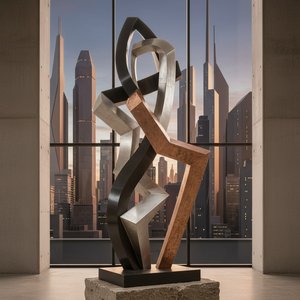
Forged in Fire: The Timeless Strength and Ethereal Beauty of Metal Art
Discover the enduring allure of metal art. Explore how masterfully forged sculptures blend industrial strength with organic elegance to create timeless investment pieces for sophisticated collectors and luxury interiors.