 切换至版画销售渠道
 展开全文
展开全文







































 对于任何边长超过 105 厘米(约 41 英寸)的艺术品或复制品,画框将以拆解后的组件形式发货。此方法可确保安全送达并防止运输过程中的损坏。


Reginald Marsh: Capturing Urban Grit and Artistic Vision
Reginald Marsh (1898-1954) stands as a pivotal figure in American Social Realism, renowned for his strikingly detailed depictions of New York City during the 1920s and 1930s. More than just documenting scenes of Coney Island beaches or burlesque performances—though these undeniably populate his oeuvre—Marsh’s art embodies a profound engagement with the textures and rhythms of urban life, underpinned by an unwavering commitment to artistic exploration. His legacy resides not only in his iconic images but also in his pioneering techniques and enduring influence on subsequent generations of artists. Born in Paris above the Café du Dome, Marsh's formative years were steeped in artistic heritage. The son of Frederick Dana Marsh—a muralist who championed American Impressionism—and Alice Randall, a miniaturist painter—Marsh’s family fostered an environment where creativity flourished. His father’s early embrace of modernist aesthetics established a foundation for Marsh’s own distinctive approach to visual representation.The Canvas of Coney Island
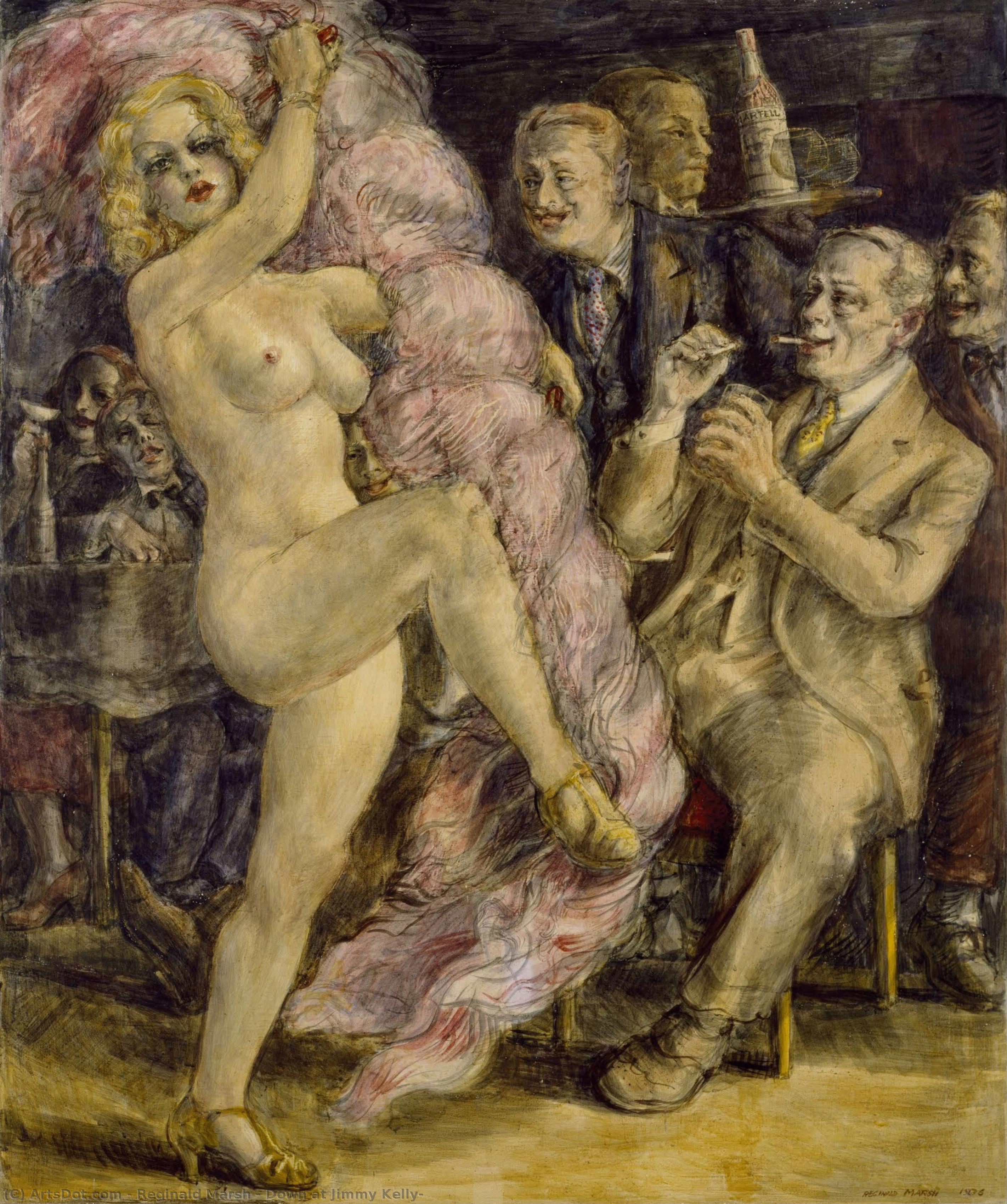
Marsh's fascination with the burgeoning American urban landscape found its most immediate expression in works like “Down at Jimmy Kelly’s,” a vibrant tableau capturing the frenetic energy of a burlesque nightclub. Painted in 1936, this piece exemplifies Marsh’s masterful use of conte crayon and gouache—a technique he honed to achieve unparalleled realism—resulting in an astonishing level of detail that transports viewers directly into the smoky atmosphere of Jimmy Kelly's. The composition is deliberately asymmetrical, mirroring the chaotic dynamism of the scene itself; figures jostle for space amidst a backdrop of tables, bottles, and performers, creating a palpable sense of immediacy. Marsh’s meticulous rendering of light and shadow further enhances this effect, emphasizing the physicality of the environment and conveying its emotional impact—a celebration of hedonistic indulgence juxtaposed with an underlying awareness of social disparity.Symbolism Within Spectacle
Marsh wasn't merely recording what he saw; he was actively interpreting it through a lens informed by Social Realist principles. The inclusion of portraits, notably Lloyd Goodrich—a prominent art critic and Marsh’s close collaborator—serves as more than just stylistic embellishment. Goodrich represents the intellectual discourse surrounding artistic innovation at the time, highlighting the tension between aesthetic beauty and social responsibility. Furthermore, the depiction of a woman performing in burlesque underscores themes of female agency and vulnerability within a societal context marked by shifting gender roles. Marsh’s subtle use of symbolism elevates “Down at Jimmy Kelly’s” beyond mere visual representation, prompting contemplation about the complexities of urban culture and its influence on human experience.A Pioneer's Technique
Marsh’s groundbreaking approach to painting—characterized by his unwavering dedication to meticulous observation and painstaking execution—established him as a leader in American Social Realism. He rejected idealized representations, favoring instead unflinching portrayals of everyday life that confronted social issues head-on. His mastery of conte crayon and gouache allowed him to achieve remarkable tonal range and textural depth, capturing the gritty surfaces of urban spaces with astonishing accuracy. This technique—a deliberate departure from Impressionistic tendencies—became a cornerstone of Marsh’s artistic vision, ensuring that his images retained an enduring power to engage viewers emotionally and intellectually.Legacy and Influence
Reginald Marsh's influence extends far beyond his own lifetime, inspiring countless artists who followed in his footsteps. His commitment to realism combined with a keen awareness of social commentary continues to resonate within contemporary art practice. “Down at Jimmy Kelly’s,” as well as his broader body of work—including depictions of Coney Island and the Bowery—remains a testament to Marsh's enduring legacy as one of America’s most compelling Social Realist painters, securing his place in art history as an artist who captured not only the visual splendor of his era but also its underlying moral dilemmas.常见问题与解答
"Down at Jimmy Kelly" 属于 Reginald Marsh 艺术生涯中的哪个时期?
"Down at Jimmy Kelly" 展现了 Reginald Marsh 在 Jazz Age Period 时期的艺术风格。
Reginald Marsh 的《Down at Jimmy Kelly》 的色彩是鲜艳夺目还是柔和低调?
Reginald Marsh 的《Down at Jimmy Kelly》 的色彩呈现出 Balanced Soft 的饱和度。饱和度描述了色彩的鲜艳或柔和程度。
Reginald Marsh 的《Down at Jimmy Kelly》 的色彩是鲜艳还是柔和?
Reginald Marsh 的《Down at Jimmy Kelly》 的色彩呈现出 Balanced Soft 的饱和度与 Balanced 的强度。
 实景预览
实景预览
 分享
分享 分享
分享
 详情
详情 指南
指南

 下载作品
下载作品
 相似作品
相似作品 X射线
X射线 幻灯片播放
幻灯片播放 问答
问答 统计数据
统计数据