
 切换至版画销售渠道
 展开全文
展开全文







































 对于任何边长超过 105 厘米(约 41 英寸)的艺术品或复制品,画框将以拆解后的组件形式发货。此方法可确保安全送达并防止运输过程中的损坏。


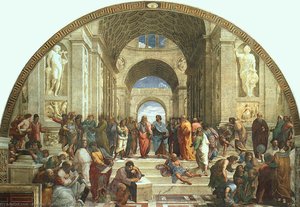
A Renaissance Harmony: Unveiling Raphael’s *The Parnassus* (Detail)
This exquisite detail from Raphael’s fresco *The Parnassus*, painted between 1509 and 1511, offers a captivating glimpse into the heart of the Italian High Renaissance. Located within the Stanza della Segnatura at the Vatican Palace, this artwork isn't merely a depiction of classical mythology; it is a celebration of human intellect, artistic inspiration, and the enduring power of beauty.Subject & Narrative
The scene unfolds on Mount Parnassus, the sacred dwelling place of Apollo and the Muses in Greek mythology. Apollo, identifiable by his laurel wreath and lyre, is centrally positioned, surrounded by the nine Muses – goddesses who inspire artistic endeavors. The detail showcases a musician playing a violin-like instrument, captivating an attentive audience. Figures like Homer, with his characteristic blind eyes and laurel crown, and potentially Sappho, are present, representing poetry and lyric verse respectively. The composition is dynamic, filled with graceful gestures and expressions that convey intellectual discourse and artistic fervor.Artistic Style & Technique
Raphael masterfully embodies the High Renaissance ideals of balance, harmony, and idealized beauty in *The Parnassus*. The figures are rendered with anatomical precision and a sense of serene dignity. His use of *sfumato* – a subtle blurring of lines – creates soft transitions between forms, lending an ethereal quality to the scene. Executed as a fresco, the painting demonstrates Raphael’s technical brilliance in applying pigments to wet plaster, ensuring lasting vibrancy and integration with the architectural space. The composition is carefully structured, guiding the viewer's eye through the complex arrangement of figures while maintaining a sense of order and clarity.Historical Context & Symbolism
Commissioned by Pope Julius II, the Stanza della Segnatura was intended as a testament to the Renaissance humanist ideals championed by the papacy. *The Parnassus* represents poetry, one of the four branches of human knowledge celebrated within the room (alongside Theology, Philosophy, and Law). Apollo and the Muses symbolize artistic inspiration divinely bestowed upon humanity. The inclusion of prominent poets like Homer elevates their status as intellectual giants whose works embody wisdom and cultural heritage. This fresco reflects a renewed interest in classical antiquity during the Renaissance, viewing ancient Greece and Rome as sources of profound learning and aesthetic excellence.Emotional Impact & Interpretation
*The Parnassus* evokes a sense of tranquility, intellectual stimulation, and artistic reverence. The harmonious composition and graceful figures inspire feelings of peace and contemplation. It’s a visual representation of the power of art to elevate the human spirit and connect us to timeless ideals. The painting isn't simply about depicting mythology; it is about celebrating the very essence of creativity and knowledge.Key Features for Collectors & Designers
- Classical Inspiration: A cornerstone piece embodying Renaissance aesthetics, perfect for spaces seeking a touch of historical grandeur.
- Harmonious Palette: The subtle yet vibrant color scheme complements various interior styles, from traditional to contemporary.
- Symbolic Depth: The rich symbolism adds layers of meaning and intellectual intrigue to any collection or design project.
- Masterful Composition: Raphael’s balanced composition creates a visually pleasing focal point that draws the eye and invites contemplation.
常见问题与解答
《The parnassus (detail)91》的创作者 拉斐尔 是否还有其他艺名?
关于《The parnassus (detail)91》的创作者 拉斐尔,其记录在案的其他名称包括 莱奥纳多·拉斐尔·桑吉, 拉斐尔·桑奇奥·达·乌尔比诺, 拉斐尔·桑蒂。
拉斐尔 的《The parnassus (detail)91》 的色彩和谐度如何?
"The parnassus (detail)91" 的色彩和谐度评分为 均衡和谐。
拉斐尔 的《The parnassus (detail)91》 的构图以什么颜色为主导?
拉斐尔 的《The parnassus (detail)91》 的主色调为 灰色 (#876a5b)。
 分享
分享 分享
分享
 详情
详情 指南
指南

 下载作品
下载作品
 相似作品
相似作品 幻灯片播放
幻灯片播放 问答
问答 统计数据
统计数据








![梵蒂冈宫殿:博尔戈之火(细节)[01]](/media/artworks/images-thumb/76/f6/76f6220ba33c4e1d9790e47ace4c7148.jpg)

