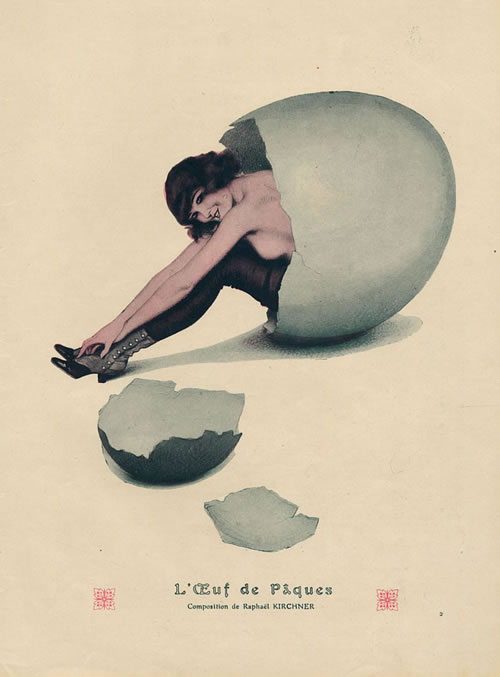
 油画原件
 关于 Fantasy 的一切







































 对于任何边长超过 105 厘米(约 41 英寸)的艺术品或复制品,画框将以拆解后的组件形式发货。此方法可确保安全送达并防止运输过程中的损坏。


The Composition of Emergence
The artwork presents a central figure of a nude woman positioned within the hollow of a large, fractured eggshell. The shell is broken into several irregular, geometric fragments that surround the organic form of the body. The woman's skin is rendered in pale cream and beige tones, contrasting with the darker, shadowed recesses of the shell's interior. Her form is defined by soft, continuous lines that trace the contours of her limbs and torso. The lighting is diffused, creating subtle gradients of shadow across the smooth surface of her skin and the textured, matte surfaces of the eggshell. The background remains neutral, focusing all visual weight on the intersection of the broken calcium structure and the human figure. This arrangement creates a sense of depth through the layering of the shell fragments in the foreground and the figure in the midground.
Technical and Stylistic Attributes
The piece utilizes a muted color palette dominated by shades of ivory, cream, and light tan. The medium appears to be ink on paper, evidenced by the tonal variations and the precision of the line work. The style aligns with the transition between Symbolism and early Surrealism, characterized by a focus on dreamlike subject matter and non-literal representation. The following elements define the visual structure:
- The use of organic shapes to represent the human body and the egg.
- The use of geometric, sharp-edged shapes to represent the cracked shell.
- A flattened perspective that emphasizes the symbolic arrangement over spatial realism.
- A soft, non-directional light source that minimizes harsh highlights.
Historical Context and Symbolism
Created in 1914, this work emerged during a period of significant transition in European art. The subject matter utilizes the egg as a symbol of birth, renewal, or the unveiling of internal potential. The juxtaposition of the rigid, broken shell and the soft, emerging figure suggests a moment of transition from a confined state to an open one. This imagery reflects the broader artistic shifts occurring in the early 20th century, where artists moved away from strict realism toward more psychological and symbolic depictions of the human condition. The work's aesthetic, characterized by a blend of technical precision and ethereal subject matter, is consistent with the Art Nouveau influences prevalent in the era.
常见问题与解答
Fantasy是手绘的还是印刷的?
手工绘制:由受过专业训练的画家在亚麻画布上,以油画形式临摹 Fantasy。
Fantasy 我该选择什么尺寸?
尺寸范围从 36.8 x 27.2 cm (¥1337) 到 245.0 x 181.0 cm (¥10965);本页表格列出了主要步骤及其价格。
物流需要多长时间?
送货时间为 4 至 5 周,并提供全球免费快递服务;本页面还提供加急制作选项。您可以在 100 天内无条件退货并获得全额退款。
原作 Fantasy 是素描还是绘画?
这是一幅素描:由 拉斐尔·克尼查 使用 Ink On Paper 创作。
 实景预览

 分享
 分享
 详情
 详情页


 下载作品
 相似作品
 X射线
 幻灯片播放
 问答

 统计数据


