
 切换至版画销售渠道
 展开全文
展开全文







































 对于任何边长超过 105 厘米(约 41 英寸)的艺术品或复制品,画框将以拆解后的组件形式发货。此方法可确保安全送达并防止运输过程中的损坏。


The Genesis of Beauty: Raphael’s “Adam and Eve”
Raphael’s “Adam and Eve,” a cornerstone of the Stanza della Segnatura within the Vatican, isn't merely a depiction of a biblical story; it’s a profound meditation on creation, temptation, and humanity’s fraught relationship with both divinity and itself. Painted between 1508 and 1511 during his formative years in Rome, this fresco embodies the High Renaissance’s pursuit of idealized beauty, harmonious composition, and intellectual depth – qualities that firmly established Raphael as one of history's greatest artists. The scene unfolds within a meticulously rendered Garden of Eden, a space simultaneously idyllic and subtly menacing, reflecting the precariousness of human existence even at its inception.
The painting’s central figures, Adam and Eve, are presented with an arresting naturalism that was revolutionary for its time. Raphael masterfully captures their youthful vigor and innocence, yet hints at the impending consequences of their actions through subtle gestures and expressions. Note particularly the way Eve reaches out to offer Adam the forbidden fruit – a gesture both alluring and fraught with danger. The serpent, coiled around the Tree of Knowledge, isn’t portrayed as a monstrous villain but rather as a cunning strategist, embodying temptation itself. The composition is carefully balanced, drawing the eye from the central action towards the observing figure in the background, adding an element of mystery and suggesting the wider implications of this pivotal moment.
Renaissance Ideals: Symbolism and Technique
Raphael’s artistic choices are steeped in Renaissance symbolism. The Garden itself represents Paradise – a carefully constructed world governed by divine order. The Tree of Knowledge, with its vibrant colors and prominent position, is the focal point of the narrative, symbolizing both enlightenment and transgression. The use of *chiaroscuro*, the dramatic interplay of light and shadow, is expertly employed to create depth and highlight key elements, drawing attention to Adam and Eve’s figures while simultaneously suggesting the looming darkness of sin. Raphael's mastery of oil paint allowed him to achieve a remarkable level of detail and luminosity, capturing the textures of the foliage, the smoothness of skin, and the richness of the fabrics – all hallmarks of his refined style.
Furthermore, the figures themselves are rendered with an idealized beauty that reflects Renaissance humanism’s fascination with classical forms. Adam's muscular physique and Eve’s graceful posture echo ancient Greek sculpture, while their expressions convey a sense of vulnerability and nascent awareness. The careful attention to anatomical accuracy, combined with a profound understanding of human psychology, elevates the painting beyond a simple illustration of a biblical story.
Historical Context & Legacy
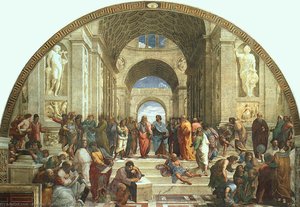
“Adam and Eve” resides within the Stanza della Segnatura, one of the most significant rooms in the Vatican Palace. This chamber was commissioned by Pope Julius II as a library and intellectual center, intended to house works that explored philosophy, theology, and classical learning. The fresco’s placement alongside other allegorical paintings – including those depicting Ptolemy and Pythagoras – underscores its role within this broader humanist project. It's important to note that Raphael was working in the shadow of Michelangelo’s Sistine Chapel ceiling, a monumental undertaking that profoundly influenced the artistic landscape of Rome. “Adam and Eve” demonstrates Raphael’s ability to synthesize classical ideals with Christian themes, creating a work of enduring beauty and intellectual resonance.
Reproductions of this iconic masterpiece offer art enthusiasts a unique opportunity to experience the grandeur and sophistication of Renaissance art in their own homes. OriginalUniqueArt's meticulously crafted reproductions capture every nuance of Raphael’s original technique, ensuring that you can bring this timeless story into your space with unparalleled fidelity.
常见问题与解答
拉斐尔 的《Adam and Eve》 的版权情况是如何界定的?
"Adam and Eve" 的版权状态 —— 属于公有领域 —— 其版权已过期 —— 取决于艺术家于 1520 年逝世这一事实。
我该如何获取拉斐尔 的《Adam and Eve》的数字文件?
您可以在 拉斐尔 的《Adam and Eve》 的 高分辨率数字图像 页面购买其数字图像:高分辨率数字图像下载。
拉斐尔 的作品《Adam and Eve》知名度如何?
拉斐尔 的《Adam and Eve》 的知名度处于 标志性 水平。这一分类反映了该作品被广泛认可的程度。
 实景预览
实景预览
 分享
分享 分享
分享
 详情
详情 指南
指南

 下载作品
下载作品
 相似作品
相似作品 X射线
X射线 幻灯片播放
幻灯片播放 问答
问答 统计数据
统计数据








![梵蒂冈宫殿:博尔戈之火(细节)[01]](/media/artworks/images-thumb/76/f6/76f6220ba33c4e1d9790e47ace4c7148.jpg)

