

 效果预览
效果预览
 购买印刷品
购买印刷品 分享
分享 分享
分享
 详情
详情

 下载
下载
 相似作品
相似作品 X射线
X射线 幻灯片播放
幻灯片播放Construction in green
 Oil On Paper
- Abstract Modernism
 1942
1942 87.0 x 112.0 cm
 艺术画廊悉尼州澳大利亚
 展开详情
展开详情




P118B $10

P118H $10

P118W $10

P438Z $10

P508JH $12

P508YH $12

P805H $10

P805Z $10

P919BZ $10

P919G $10

P919XJ $10

P959ZH $10

P968JZ $12

W106C $8

W218G $10

W218JH $8

W218Y $10

W307PJ $10

W316G $10

W316PJ $8

W316Y $10

W398PJ $8

W4111J $10

W500HY $15

W500JH $15

W692G $12

W849H $8

W940BG $15

W953PJ $8




从与原作比例一致的预设尺寸中进行选择。

您可以输入自定义尺寸,以适配特定的画框或空间。如果所选尺寸与原图比例不符,我们将通过裁剪作品或添加手绘元素来扩展画面。数字样稿将在制作开始前发送给您确认。
请注意,屏幕预览无法准确反映实际的裁剪或扩展效果,只有样稿才能真实呈现最终的构图。
虽然我们提供定制尺寸服务,但为了保留原作比例,建议您从预设列表中选择尺寸。
下单后,OriginalUniqueArt.com 团队将通过电子邮件联系客户获取具体要求,并提供效果预览图。


 玻璃选项仅适用于110厘米以下的尺寸。

Construction in green
复制材质
复制品尺寸
-


最终总价
$ 300
作品详情
A Verdant Vision: Ralph Balson's "Construction in Green"
Ralph Balson’s “Construction in Green,” painted in 1942, is more than just an abstract composition; it’s a window into the burgeoning modernist movement in Australia and a testament to Balson’s pioneering spirit. The artwork, measuring 87 x 112 cm, presents a captivating interplay of form and color against a dominant field of green. It's a piece that invites contemplation, drawing the viewer into its geometric world while simultaneously evoking a sense of quiet dynamism.
The Language of Circles: Abstraction and Australian Modernism
At first glance, "Construction in Green" appears deceptively simple. A vibrant green background serves as the canvas for a scattering of circular forms – at least twelve distinct circles of varying sizes are present. These aren't organic shapes; they’re precise, geometric constructions that seem deliberately placed within the composition. Balson, having explored cubist principles earlier in his career (1934-1937 at the Crowley-Fizelle School), moved decisively towards complete abstraction during this period. This work exemplifies that shift, marking a departure from representational art and embracing the pure language of form and color. The year 1942 was pivotal; Balson’s exhibition showcasing entirely non-figurative work in Sydney was groundbreaking, establishing him as a key figure in Australia's modernist landscape. He wasn't merely following European trends but forging his own path, adapting abstract principles to the Australian context.
Color and Composition: A Balancing Act
The choice of green is significant. It’s not a passive backdrop; it pulsates with life, suggesting growth, nature, and perhaps even a sense of hope amidst the anxieties of wartime. The circles themselves are rendered in a range of colors – reds, yellows, blues—each carefully positioned to create visual tension and balance. They aren't randomly distributed; there’s a deliberate choreography at play. Some cluster near the top left corner, while others anchor the composition towards the center or bottom right. This arrangement creates a sense of movement within the stillness of the abstract form. Balson’s technique, though seemingly straightforward—oil on paperboard—demonstrates a mastery of color relationships and spatial dynamics. The flatness of the picture plane, characteristic of his later style, emphasizes the two-dimensionality of the canvas, further distancing the work from any illusionistic depth.
Beyond the Surface: Symbolism and Emotional Resonance
While abstract art often resists easy interpretation, "Construction in Green" possesses a subtle emotional power. The circles could be seen as representing various elements – perhaps planets orbiting a central point, or even simplified representations of human figures engaged in an unseen activity. The overall effect is one of quiet contemplation and restrained energy. It’s not a chaotic explosion of color but rather a carefully orchestrated harmony. Balson's later work, influenced by Piet Mondrian, further refined this approach, moving towards rectilinear shapes and softer palettes. However, "Construction in Green" retains a unique vibrancy—a testament to the artist’s early explorations into the possibilities of abstract expression. Owning a reproduction of this piece is not just acquiring an artwork; it's embracing a moment in Australian art history and inviting a sense of calm, considered beauty into your space.
艺术家简介
early life and migration
ralph frederick balson, a renowned english-born australian artist, was born in bothenhampton, dorset, england in 1890. at the age of 23, he migrated to sydney, australia, which would later become the hub for his artistic endeavors.artistic career and contributions
balson's artistic career is marked by his leading role in the modernist movement in australia. he is credited with holding the first solo exhibition of abstract work in australia, a testament to his innovative spirit. initially, he worked as a plumber and house painter, but eventually, his passion for art led him to take up painting in his spare time.key artistic periods
- 1934-1937: balson explored cubist principles at the crowely-fizelle school, which significantly influenced his artistic style.
- 1949: he began teaching abstract painting, further cementing his position in the modernist movement.
- 1955: balson committed full-time to art, dedicating himself entirely to his creative pursuits.
influences and later work
in 1960, balson's travels exposed him to the works of influential artists such as jackson pollock, alberto burri, and antoni tapiès. these encounters likely shaped his later work, reflecting a broader scope of artistic influences.legacy and collections
today, balson's works are held by esteemed institutions including the national gallery of australia, the art gallery of new south wales, and the national gallery of victoria. his contributions to australian modernism remain unparalleled. notable works:- view balson's artworks on OriginalUniqueArt.com
- explore the national gallery of australia's collection featuring balson's works: national gallery of australia - OriginalUniqueArt.com
conclusion
ralph frederick balson's life and work serve as a testament to his pioneering role in the modernist movement in australia. his artistic journey, marked by innovation and dedication, continues to inspire and influence contemporary art.
ralph frederick balson
1890 - 1964 , United Kingdom
艺术家简介
- Artistic Movement Or Style: Post-Impressionism
- Artists Or Movements Influenced By This Artist:
- Fauves
- Expressionism
- Artists Who Influenced This Artist:
- Jean-François Millet
- Charles Bargue
- Date Of Birth: March 30, 1853
- Date Of Death: July 29, 1890
- Full Name: Vincent Willem van Gogh
- Nationality: Dutch
- Notable Artworks:
- Starry Night
- Sunflowers
- Bedroom in Arles
- Place Of Birth: Ghent, Belgium
相关文章
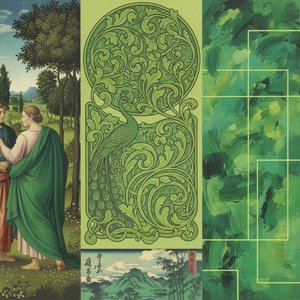
Verdant Visions: Exploring the Symbolism & Aesthetic Impact of Green in Art History
Explore the rich history & symbolism of green in art! Discover iconic paintings, techniques, and how to bring verdant harmony into your home with OriginalUniqueArt's expert guide.

抽象表现主义:十幅定义艺术史的杰作
探索抽象表现主义的十幅经典杰作!波洛克、罗斯科等大师作品,揭秘艺术史上的重要瞬间。OriginalUniqueArt.com为您呈现高品质艺术品复制和精选家居装饰方案,感受现代艺术的力量与魅力。立即浏览全系列!

几何抽象艺术十大杰作:定义现代家居装饰的经典之作
探索几何抽象艺术的十大杰作!康定斯基、蒙德里安等大师作品,色彩构成与非具象之美。OriginalUniqueArt.com提供博物馆级艺术复制品,为您的家居带来现代艺术灵感。立即在线探索完整系列!

Kandinsky's Masterpieces: 25 Paintings That Define Abstract Art | OriginalUniqueArt
Journey through Wassily Kandinsky's 25 most iconic abstract paintings. Explore his revolutionary use of color, form & spiritual expressionism. Find museum-quality Kandinsky reproductions and elevate your home decor with OriginalUniqueArt.com. Discover all masterpieces on OriginalUniqueArt.com!

Beyond the Lines: Mastering the High-Impact World of Contemporary Abstraction
Master the high-impact world of contemporary abstraction. Discover how bold colors, textures, and modern movements like Abstract Expressionism can transform your space with premium, high-energy art curated for the design-conscious professional.

