Expressionism
Aragon (拉斐尔·巴拉达斯)
拉斐尔·巴拉达斯 (1890–1929) 创作了《Aragon》。 它属于 Expressionism 运动。 采用 Oil On Canvas 创作。
- Oil On Canvas

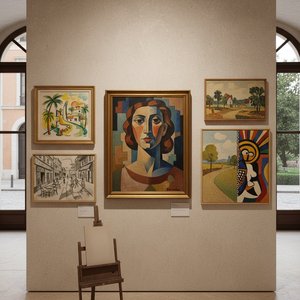
 实景预览

 手工油画复制品
 分享
 分享
 作品详情表


 下载作品
 相似作品
 X射线
 幻灯片播放
 问答

 统计数据
Aragon简介
- 作品名称
- Aragon
- 艺术家
- 拉斐尔·巴拉达斯 (1890–1929)
- 艺术家出生地
- 蒙得维的亚, 烏拉圭
- 材质
- Oil On Canvas
- 艺术流派
- Expressionism
- 时期
- Modern
- 主题
- portrait, religious figures, expressionism, geometric forms, shadows, texture
Aragon 描绘了什么内容?
The Subject and Artist of Aragon
Aragon is a work by Rafael Barradas, an Uruguayan modernist painter and graphic artist. The piece presents a group portrait of three figures, rendered in a distinctly Expressionistic style. These subjects, appearing as clergymen or religious officials, are defined by bold, angular lines and simplified forms. Their attire, including collars and hats, suggests a position of religious authority.
Barradas, born in Montevideo, Uruguay, in 1890, developed a unique visual language through his immersion in European avant-garde movements. His approach often synthesized the dynamism of Futurism and the structural deconstruction of Cubism. In this work, the artist prioritizes emotional impact over accurate representation, utilizing sharp edges to construct the faces and torsos of the subjects.
The composition focuses entirely on the heads and upper bodies of the three men against a dark, textured background. This tight cropping, combined with the severe and detached expressions of the figures, creates a sense of solemnity. The artist’s method emphasizes the physical presence of the subjects through heavy, layered application of paint.
Composition and Visual Elements
The composition is tightly cropped, focusing exclusively on the heads and upper torsos of the three figures. This close framing eliminates environmental context, pushing the subjects toward the viewer. Bold, angular lines define the faces, utilizing sharp edges to construct the features. The arrangement relies on a geometric vocabulary; squares, rectangles, and triangles are used to build the forms of the figures rather than following naturalistic contours.
A single, unseen light source casts heavy shadows across the subjects. These shadows accentuate the structural planes of the faces, heightening the dramatic tension. The perspective is intentionally flattened, rejecting any sense of receding space or depth. Against this lack of spatial dimension, the background remains dark and heavily textured, providing a stark contrast to the geometric subjects.
Technique and Artistic Materials
The work is executed in oil paints on canvas. The application of pigment is heavy, utilizing a thick impasto that creates a palpable, rough surface. This layered approach builds a physical texture across the pictorial plane, emphasizing the material presence of the paint itself.
Visible brushwork defines the forms, rejecting smooth transitions in favor of direct, gestural marks. These strokes contribute to the structural clarity of the figures, using sharp edges and angularity to construct the subjects. The interplay of light and shadow is achieved through this deliberate, uneven application, which accentuates the planes of the faces and adds a sense of weight to the composition.
Aragon 的高分辨率图像
拉斐尔·巴拉达斯, Aragon. 公有领域
关于 Aragon 的常见问题解答
拉斐尔·巴拉达斯 的《Aragon》 中呈现了哪些主题?
"Aragon" 的描绘主题为 portrait, religious figures, expressionism, geometric forms, shadows, texture, clergy, angular。
拉斐尔·巴拉达斯 的《Aragon》 的图像可以自由转载吗?
关于版权,"Aragon" 属于 属于公有领域 —— 其版权已过期。
"Aragon" 属于哪种艺术风格?
“Aragon”是一件Expressionism时期的作品。该艺术流派体现了作品所属的艺术传统。
拉斐尔·巴拉达斯 的作品《Aragon》是否属于公有领域?其原因是什么?
"Aragon" 与 拉斐尔·巴拉达斯 的其他作品有何共通之处?
"Aragon" 是否体现了 拉斐尔·巴拉达斯 一贯的创作风格?
拉斐尔·巴拉达斯 的创作主题常涉及 futurist & cubist echoes, uruguayan religious themes, spanish exile reflections, aragon – a stark portrait, barradas' intense vision, early expressionistic style, short career, bold impact;而《Aragon》则聚焦于 portrait, religious figures, expressionism, geometric forms, shadows, texture, clergy, angular。
关于艺术家 拉斐尔·巴拉达斯

1890–1929, 烏拉圭
拉斐尔·巴拉达斯
拉斐尔·巴拉达斯:沉浸于震颤之中的一生 1890年,拉斐尔·佩雷斯·吉梅内斯·巴拉达斯出生于乌拉圭蒙得维多,很快便成为二十世纪初期新兴现代主义运动中的关键人物。他的故事是一段不安的艺术探索历程,是乌拉圭根源与欧洲先锋思潮充满活力的融合。从童年时代起,他就生活在一个充满艺术气息的家庭中——一位钢琴家姐姐、一位诗人哥哥和一位画家父亲,这让他从小就吸收了一种将定义他一生工作的审美情趣。尽管主要为自学成才,但他磨练了自己的技能,在蒙得维多和布宜诺斯艾利斯的报纸杂志上担任插画师,为独特的视觉语言奠定了基础。1913年前往欧洲是他人生中的一个转折点,这次旅行彻底改变了他的艺术轨迹。他沉浸在意意大利未来主义运动的动态能量中,并短暂地体验了巴黎立体主义激进的解构,开始形成一种既创新又深刻个人化的审美愿景。 震颤主义的诞生:多种影响力的综合 定居西班牙后,主要在巴塞罗那和马德里,巴拉达斯迅速成为先锋圈内的核心人物。正是在这里,在西班牙艺术生活激烈的智力氛围中,他发展出自己独特的风格——震颤主义。这并非仅仅是对未来主义动态或立体主义碎片的模仿;而是一种综合,一种有意识的尝试,通过强烈的色彩和动态构图捕捉现代都市生活的本质。震颤主义试图传达的不仅仅是所见之物,而是体验现代城市加速节奏和感官超负荷的感觉。他尝试了各种媒体,为《La Esquella de Torratxa》和《Paraninfo》等出版物绘制插图,展示了他超越绘画的卓越多才多艺。震颤主义的核心原则——它对强烈色度表达、暗示运动的破碎形式以及对城市场景的描绘——标志着与传统艺术惯例的重要突破。这是试图将现代化的能量转移到画布上,是机器时代无情脉搏的可视等价物。 从肖像画到宏伟作品:多样化的创作 巴拉达斯的艺术创作非常多样化,反映了他不断实验和演变的精神。早期的作品,如《探戈》(1913年),展现了对现代主题的迷恋以及对形式和色彩日益精湛的掌握。然而,真正巩固他声誉的是《宏伟人物》系列。这些对西班牙普通人进行的大型肖像画以大胆的几何形状呈现,将平凡的人转变为他们时代的标志性代表。这一时期还出现了“小丑主义”,一种表现主义风格,其特点是充满活力的城市生活描绘以及对人类情感的顽皮而深刻的探索。除了这些独特的风格之外,巴拉达斯还展示了他作为肖像画家的技巧,以敏感和现代化的风格捕捉了华金·托雷斯·加西亚和伊格纳西奥·苏洛阿加等杰出人物的形象。他能够无缝地将传统的肖像技术与先锋美学相结合,体现了他独特的艺术才华。著名的作品,如《吉普赛营地》(1918年)和“酒馆中的男人”(1922年),展示了他风格的成熟,展现了他对色彩、构图和情感深度的掌握。 短暂的遗产:影响与历史意义 不幸的是,拉斐尔·巴拉达斯因疾病于1929年英年早逝,享年39岁。尽管生命短暂,但他给乌拉圭艺术史留下了不可磨灭的印记,并为更广泛的现代主义运动做出了重大贡献。他将乌拉圭遗产与欧洲先锋思潮相结合的独特方式使他成为二十世纪初期艺术界的一个独特声音。巴拉达斯的作品深刻影响了同时代的人,例如华金·托雷斯·加西亚,后者将震颤主义元素融入了他自己的“建设性普遍主义”中。今天,他的画作被收藏在蒙得维多国家视觉艺术博物馆等著名机构,确保了他的持续认可和后代的赞赏。他因其对色彩、形式和主题的创新方法而受到赞誉,这证明了他的艺术愿景和持久遗产。他的作品仍然是对艺术变革潜力的有力提醒及其捕捉时代精神的能力。 巴拉达斯风格的关键特征 震颤主义:一种融合了未来主义、奥菲斯派和立体主义的独特风格,专注于捕捉动态。 强烈的色彩:大胆而富有表现力的色彩运用,以传达情感和能量。 几何形状:频繁使用几何形状来解构和重建现实。 城市主题:描绘现代都市生活,包括咖啡馆、街道和工业景观的场景。 肖像画与人物:熟练地描绘个人,通常以程式化和纪念性的方式呈现。
拉斐尔·巴拉达斯 的其他作品
 Barcelona Street at 1 pm1918
 The Tango1913
 Playa Ramirez (on the terrace)
 Hospitalet de Llobregat
关于 Aragon 的论文集
 Rafael Barradas: Bridging Brazilian Modernism with European InfluencesExplore the life & art of Rafael Barradas, a pioneering Uruguayan modernist who blended European influences with vibrant local heritage. Di…
 20th century Argentine painters20th-century Argentine painters like Lucio Fontana, Antonio Berni, and Marta Minujín defined a movement. Find museum-quality reproductions …
 Spontaneity and Matter: Distinguishing CoBrA from Art InformelMaster the differences between CoBrA and Art Informel with our expert guide. Learn to identify these post-war movements today.