切换至版画销售渠道
 展开全文
展开全文







































 对于任何边长超过 105 厘米(约 41 英寸)的艺术品或复制品,画框将以拆解后的组件形式发货。此方法可确保安全送达并防止运输过程中的损坏。


A Moment Frozen in Delft Light
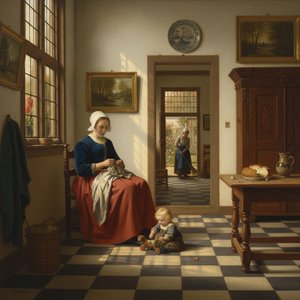
In the quiet corners of seventeenth-century Delft, where the soft glow of morning light often danced through open doorways, Pieter de Hooch captured a world of profound stillness. His masterpiece, "The Drinker," serves as a breathtaking window into the Dutch Golden Age, offering much more than a mere depiction of a domestic scene. It is an invitation to step into a sanctuary of peace, where the frantic pace of the outside world dissolves into the gentle rhythm of everyday life. As one gazes upon this canvas, there is an immediate sense of being present in that sun-drenched courtyard, feeling the warmth of the diffused daylight as it filters through the architecture to illuminate a scene of quiet, unhurried existence.
The composition is a masterclass in spatial storytelling and balanced restraint. De Hooch, a contemporary of the legendary Johannes Vermeer, utilizes perspective not merely as a technical tool, but as an emotional guide. The viewer’s eye is led through a carefully constructed depth of field, moving from the intimate foreground—where a man sits cradling a feline companion with tender care—toward the subtle movement of figures conversing near a doorway in the background. This layering of space creates a revolutionary sense of realism, making the courtyard feel like an extension of our own world. The presence of three cats, scattered throughout the scene, adds a layer of domestic charm and organic life, grounding the painting in the relatable, tactile reality of a middle-class home.
The Artistry of Light and Texture
Technically, "The Drinker" is a triumph of chiaroscuro and meticulous observation. De Hooch’s ability to render the interplay of light and shadow transforms a simple interior into a luminous experience. He employs thin, delicate layers of oil paint to achieve a translucent quality, allowing light to appear as if it is truly emanating from within the scene itself. One can almost feel the varied textures underfoot: the cool stone of the courtyard, the smooth wood of the chairs, and the soft, organic warmth of the cat’s fur. This dedication to material accuracy serves to heighten the painting's naturalism, making every element—from the humble dining table to the simple cup—feel significant and permanent.
For the discerning collector or interior designer, this artwork offers a unique emotional resonance that transcends time. It does not demand attention through grand, dramatic gestures; instead, it commands respect through its understated elegance and psychological nuance. The painting evokes a sense of domestic tranquility and refined sensibility, making it an ideal centerpiece for spaces designed to inspire contemplation and calm. Whether placed in a contemporary gallery or a classic study, a high-quality reproduction of "The Drinker" brings with it the timeless prestige of the Dutch masters, offering a sophisticated touch of history that celebrates the beauty found in life's most quiet, fleeting moments.
常见问题与解答
"The Drinker" 在 Dutch Golden Age 流派中具有怎样的影响力?
在馆藏的 Dutch Golden Age 作品中,"The Drinker" 的流行程度被记录为 Recognized。
“The Drinker”是否一直留在其艺术家的故乡?
不,该作品目前存放于海外。彼得·德·霍赫的出生国是荷兰,而收藏有《The Drinker》原件的博物馆则位于France。
彼得·德·霍赫 的《The Drinker》 属于哪种艺术流派?
彼得·德·霍赫 的《The Drinker》 所属的艺术流派为 Dutch Golden Age。这一分类将该作品置于相关艺术家及艺术作品的语境之中。
 实景预览
实景预览
 分享
分享 分享
分享
 详情
详情 指南
指南

 下载作品
下载作品
 相似作品
相似作品 X射线
X射线 幻灯片播放
幻灯片播放 Q&A
Q&A 统计数据
统计数据