

 实景预览
实景预览
 发送
发送 分享
分享
 详情
详情 指南
指南

 下载图片
下载图片
 相似作品
相似作品 X射线
X射线 幻灯片播放
幻灯片播放 统计数据
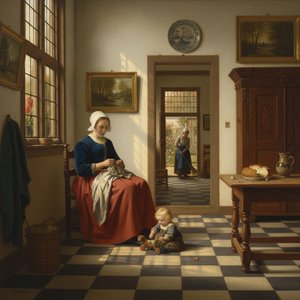
统计数据Paying the Hostess
 Oil On Canvas
- WallArt
- Baroque
 1670
1670 95.0 x 111.0 cm
 大都会艺术博物馆
 阅读全文
阅读全文
艺术微喷/版画
博物馆级艺术微喷或帆布版画,制作高效,并提供多种饰面选择。 ( 订购此收藏品的纯手工复刻画作 切换至数字图像销售渠道)




P118B ¥10

P118H ¥10

P118W ¥10

P438Z ¥10

P508JH ¥12

P508YH ¥12

P805H ¥10

P805Z ¥10

P919BZ ¥10

P919G ¥10

P919XJ ¥10

P959ZH ¥10

P968JZ ¥12

W106C ¥8

W218G ¥10

W218JH ¥8

W218Y ¥10

W307PJ ¥10

W316G ¥10

W316PJ ¥8

W316Y ¥10

W398PJ ¥8

W4111J ¥10

W500HY ¥15

W500JH ¥15

W692G ¥12

W849H ¥8

W940BG ¥15

W953PJ ¥8




您可以从与原作比例一致的预设尺寸中进行选择。

请输入您所需的宽度和高度,以适配您的画框或墙面。由于印刷品只能进行裁剪,无法超出原图尺寸,因此若比例不一致,画面的一部分将会被裁切。在正式印刷之前,我们会为您发送一份数字效果图供您确认。本页面显示的图片并非最终裁剪后的效果——只有效果图才能展示真实的裁剪情况。


 玻璃选项仅适用于110厘米以下的尺寸。

Paying the Hostess
艺术微喷/版画
复刻品尺寸说明
-


总计金额
¥ 538
A Quiet Moment in Delft: Pieter de Hooch’s “Paying the Hostess”
Pieter de Hooch's "Paying the Hostess," painted around 1670, isn’t merely a depiction of a transaction; it’s a masterful distillation of Dutch Golden Age life—a fleeting glimpse into the subtle social dynamics and quiet elegance of a Delft inn. The painting immediately draws the eye with its luminous quality, achieved through de Hooch's signature use of light and shadow, creating an atmosphere both intimate and subtly charged. It’s a scene brimming with unspoken narratives, inviting viewers to become silent observers of this private moment within a bustling world. De Hooch was a pivotal figure in the Delft School of painting, known for his ability to capture the essence of domestic life—not grand portraits or heroic scenes, but rather the everyday rituals and interactions that shaped the lives of the burgeoning middle class. His work stands apart through its remarkable realism, capturing not just appearances but also the nuances of human behavior and the play of light on surfaces.The Composition: A Dance of Observation
The composition itself is a testament to de Hooch’s skill. The scene unfolds within what appears to be a modest inn yard—a space simultaneously public and private. A smartly dressed gentleman, likely a wealthy merchant or official, stands poised before a young woman, presumably the hostess, as she presents him with a bill. Their hands are subtly overlapping, creating an immediate visual tension – a delicate dance of negotiation and perhaps even flirtation. The background is deliberately blurred, populated by other patrons engaged in their own conversations and activities—a lively tableau that hints at the inn’s vibrant atmosphere without distracting from the central drama. Notice how de Hooch uses architectural details—the rough-hewn beams of the barn, the simple wooden furniture, the straw bales – to ground the scene in a tangible reality. The placement of figures within the space is carefully considered, creating depth and guiding the viewer’s eye through the composition.Technique and Style: Light, Shadow, and Texture
De Hooch's technique is characterized by its meticulous attention to detail and his masterful manipulation of light. He employed a technique known as *chiaroscuro*, using strong contrasts between light and shadow to create a sense of volume and drama. The light streams in from the open doorway on the left, illuminating the figures and casting long shadows across the yard, adding depth and atmosphere. The artist’s brushwork is remarkably subtle—a delicate layering of paint that creates a rich texture without sacrificing clarity. You can almost feel the roughness of the wooden surfaces, the warmth of the straw bales, and the softness of the fabrics. This textured approach adds to the painting's realism and invites close inspection. The use of muted colors – browns, grays, and ochres – further enhances the sense of atmosphere and contributes to the painting’s overall mood.Symbolism and Context: A Glimpse into Dutch Society
“Paying the Hostess” offers a fascinating window into 17th-century Dutch society. The scene is not simply about settling an account; it's laden with symbolic meaning. The overlapping hands of the couple suggest a complex interplay of power, attraction, and social expectations. In Dutch art of this period, such interactions often carried connotations of flirtation and even illicit desire – a subtle commentary on the constraints and freedoms of the time. The presence of other guests in the background underscores the importance of social interaction within the community. The inclusion of the delivery boy with sheaves of wheat hints at the economic realities of rural life—the exchange of goods and services that underpinned the prosperity of the region. The painting reflects a shift towards a more secular, bourgeois culture, where commerce and social interactions were increasingly valued alongside religious piety.Emotional Resonance: A Moment Frozen in Time
Ultimately, “Paying the Hostess” is a profoundly evocative work of art. It’s not a grand statement or a dramatic event; it's a quiet moment—a snapshot of everyday life that captures something essential about the human condition. The painting invites us to contemplate the complexities of social interaction, the subtle nuances of human relationships, and the beauty found in the ordinary. It possesses a timeless quality, resonating with viewers across centuries because it speaks to universal themes of connection, negotiation, and the quiet dramas that unfold within our daily lives. It’s a piece that rewards careful observation and invites repeated viewing, revealing new layers of meaning with each encounter.问答详情
什么样的摆放方式最适合 彼得·德·霍赫 的《Paying the Hostess》 的画幅?
凭借其Landscape的形态,建议将《Paying the Hostess》复制品用于装饰Living Room。
"Paying the Hostess" 的色彩之间是如何相互关联的?
彼得·德·霍赫 的《Paying the Hostess》 展示了一种 Unified Palette 的色彩和谐感。
彼得·德·霍赫 的《Paying the Hostess》 的画面方向是怎样的?
彼得·德·霍赫 的《Paying the Hostess》 采用 Landscape 格式。该格式描述了构图的比例。
艺术家简介
早年生活与艺术训练
彼得·德·霍赫作为荷兰黄金时代的一位杰出人物,于1629年12月20日出生在荷兰鹿特丹。他是建筑匠亨德里克·亨德里克斯·德·霍赫与助产士安内格·皮特斯五个孩子中的长子。尽管关于他早年生活的记载寥寥无几,但据信他的足迹遍布鹿特丹、德尔夫特和阿姆斯特丹。在哈勒姆,他在风景画家尼古拉斯·贝尔切姆的指导下接受了艺术训练,期间还与雅各布·奥赫特维尔特共同学习。这段时期的磨砺,为他日后成为擅长描绘带有敞开门扉、宁静室内场景的绘画大师奠定了坚实的基础。艺术风格与主题
德·霍赫的作品以其对细节的极致追求、自然主义色彩以及对光影的精妙运用而著称。他的画作往往聚焦于日常生活,映射出当时新兴中产阶级的价值观与生活向往。这种风格的一个卓越典范便是《德尔夫特的一座房屋庭院》(1658年),它生动地展示了他捕捉平凡生活细节的非凡能力。虽然德·霍赫的作品在主题与构图上与埃马纽埃尔·德·维特有着相似之处,但他对人物及其情感关系的关注使他脱颖而出。这一点在《哺乳的妇女》(1658年)和《膝上抱着婴儿的妇女》(1658年)中表现得淋漓尽致,充分体现了他对家庭生活场景的深厚兴趣。传世杰作与艺术遗产
德·霍赫的一些最著名的作品包括:- 《快乐的饮酒者》(约1650年)
- 《阳光下的纸牌玩家》(1658年)
- 《为男孩准备面包和黄油的妇女》(1661年)
博物馆与收藏
德·霍赫的作品散见于世界各地的博物馆中,其中包括位于比利时安特卫普的皇家美术学院,该馆收藏了大量从15世纪到20世纪的欧洲艺术珍品。欲在 OriginalUniqueArt 探索更多关于彼得·德·霍赫及其作品的信息: [https://OriginalUniqueArt.com/@/pieter-de-hooch](https://OriginalUniqueArt.com/@/pieter-de-hooch) /zh/art/show/art-d3b4kt-zh/ (探索比利时皇家美术学院的艺术杰作)
彼得·德·霍赫
1629 - 1694 , 荷兰
快速概览
- Artistic Movement Or Style: 德尔夫特画派,荷兰黄金时代
- Artists Or Movements Influenced By This Artist: ['扬·维米尔']
- Artists Who Influenced This Artist: ['尼古拉斯·贝尔切姆']
- Date Of Birth: 1629年12月20日
- Full Name: 彼得·亨德里克兹·德·霍赫
- Nationality: 荷兰
- Notable Artworks:
- 空杯
- 读信的女子
- 阳光下的纸牌玩家
- 准备面包和黄油的女子
- Place Of Birth: 荷兰,鹿特丹
相关文章

荷兰黄金时代绘画:文化创新中的现实主义反思
深入探索荷兰黄金时代绘画的文化创新与现实主义反思。本文解读伦勃朗、维米尔等大师的作品,并结合玛莉特·韦斯特曼的图像学研究,揭示艺术史背后的社会语境与现代性意识觉醒。

戈雅大师25幅杰作:西班牙灵魂的艺术之旅| OriginalUniqueArt
探索戈雅大师的25幅杰作!深入了解西班牙绘画巨匠Francisco Goya的艺术世界,从洛可可到浪漫主义风格,感受黑加仑时代的情感力量。OriginalUniqueArt.com提供高品质油画复制品和家居装饰灵感。立即在线发现所有名画!
Pieter de Hooch: Illuminating Dutch Domestic Life & Golden Age Charm
Explore the captivating world of Pieter de Hooch, a master of Dutch Golden Age painting. Discover his innovative use of light, intimate domestic scenes, and lasting influence on art history. Learn more at OriginalUniqueArt.

Willem van de Velde the Elder: Master of Maritime Painting & Chronicler of the Dutch Golden Age
Discover the captivating maritime paintings of Willem van de Velde the Elder, a master chronicler of the Dutch Golden Age. Explore his unparalleled realism and lasting influence on naval art history.

荷兰黄金时代:十幅定义艺术史的巨作 | OriginalUniqueArt
探索荷兰黄金时代的艺术巅峰! 伦勃朗、维米尔等大师名作,带您领略巴洛克艺术的辉煌。高清画作、博物馆级品质,点亮您的家居空间。OriginalUniqueArt.com 提供精选艺术复制品和定制装饰方案。立即在线探索全系列!
