
 效果预览
效果预览
 购买印刷品
购买印刷品 分享
分享 分享
分享
 详情
详情

 下载
下载
 相似作品
相似作品 X射线
X射线 幻灯片播放
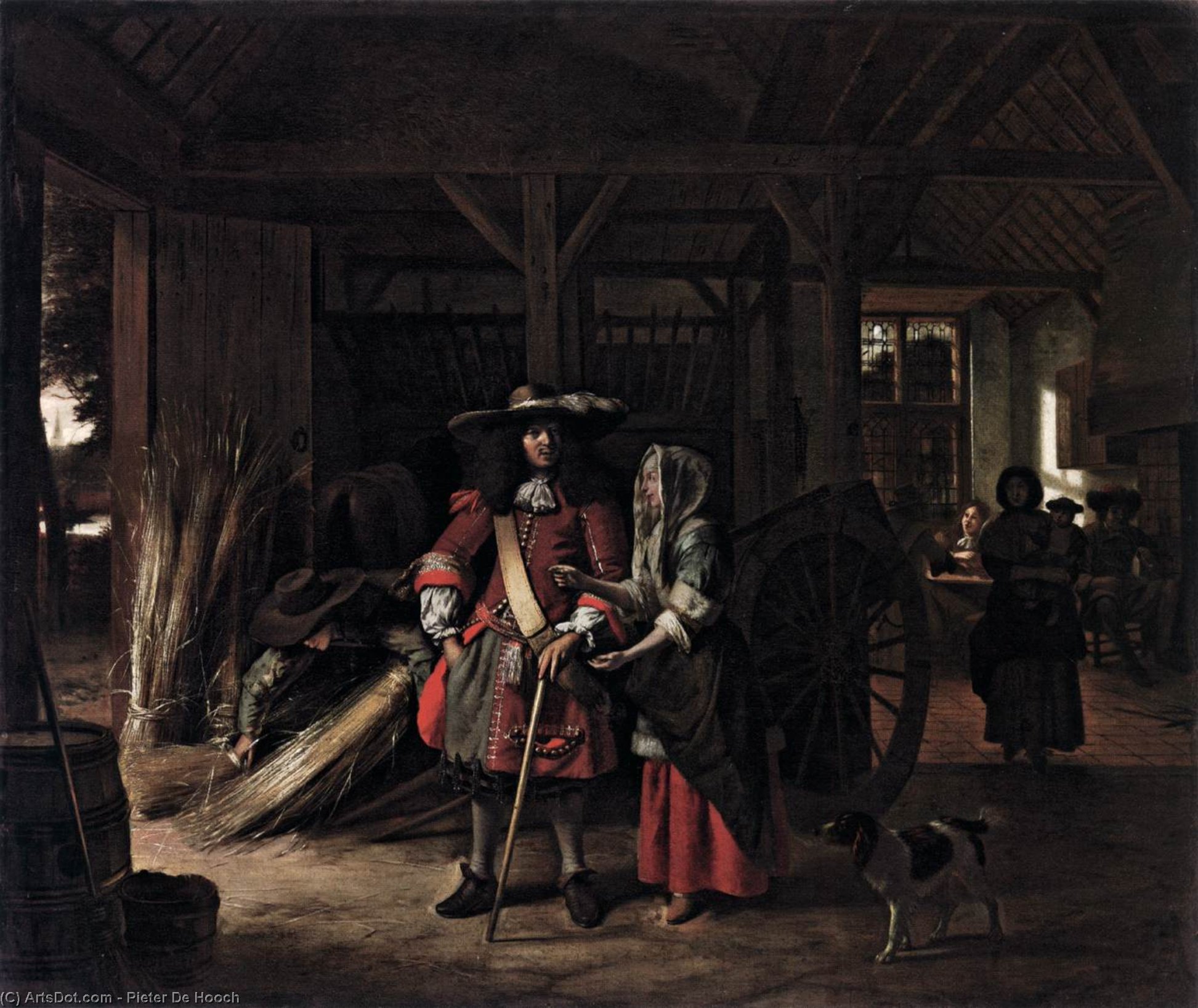
幻灯片播放Paying the Hostess
 Oil On Canvas
- WallArt
- Dutch Golden Age
 1670
1670 95.0 x 111.0 cm
 大都会艺术博物馆
 展开详情
展开详情




































从与原作比例一致的预设尺寸中进行选择。

您可以输入自定义尺寸,以适配特定的画框或空间。如果所选尺寸与原图比例不符,我们将通过裁剪作品或添加手绘元素来扩展画面。数字样稿将在制作开始前发送给您确认。
请注意,屏幕预览无法准确反映实际的裁剪或扩展效果,只有样稿才能真实呈现最终的构图。
虽然我们提供定制尺寸服务,但为了保留原作比例,建议您从预设列表中选择尺寸。
下单后,OriginalUniqueArt.com 团队将通过电子邮件联系客户获取具体要求,并提供效果预览图。


 玻璃选项仅适用于110厘米以下的尺寸。

Paying the Hostess
复制材质
复制品尺寸
-


最终总价
$ 400
作品详情
A Window Into Delft’s Commerce: Pieter de Hooch's “Paying the Hostess”
Delft, 1670 – Pieter de Hooch’s “Paying the Hostess,” housed in a private collection today, offers more than just a glimpse into the bustling port city of Delft during its golden age; it presents a meticulously crafted tableau that speaks volumes about social dynamics and artistic innovation. Painted circa 1658, this monumental canvas transcends mere depiction, immersing viewers in an atmosphere thick with observation and imbued with subtle symbolic resonance. The scene unfolds within a dimly lit warehouse or storage facility—a space deliberately chosen by De Hooch to convey both the physicality of Delft’s economic activity and the psychological complexities of human interaction. At its core is a wealthy gentleman and his wife seated upon a cart laden with goods, their presence dominating the composition. Around them move several laborers diligently unloading crates and transporting materials – figures rendered with remarkable realism, capturing not just physical postures but also expressions of quiet contemplation and purposeful action. This isn’t simply a record of trade; it's an exploration of how individuals navigate social hierarchies within a community striving for prosperity. De Hooch’s artistic style exemplifies the hallmark characteristics of Dutch Golden Age painting: painstaking detail combined with masterful use of light. Unlike many contemporaries who favored grand narratives and theatrical gestures, De Hooch opted for a restrained aesthetic focused on capturing the nuances of domestic life—a deliberate choice that aligns perfectly with the burgeoning interest in portraying everyday realities during this period. The artist’s technique is characterized by meticulous brushwork, utilizing oil paint on canvas to achieve luminous effects and subtle tonal variations. Notice particularly how light streams through an open doorway, illuminating the faces of the figures and casting dramatic shadows across the warehouse floor—a compositional device that elevates the scene beyond mere representation, inviting contemplation about solitude and connection. The color palette is deliberately muted – dominated by deep browns, reds, and blacks – reflecting not only the materiality of the setting but also a prevailing mood of solemnity and introspection. However, De Hooch skillfully employs highlights of ochre and crimson to draw attention to key elements within the composition, subtly emphasizing the dignity of the gentleman and his wife while simultaneously underscoring the industriousness of their companions. The geometric precision of the architectural framework—straight lines delineating the walls and beams—contrasts with the organic curves of the cart wheels and fabric folds, creating a dynamic interplay between structure and fluidity. Beyond its visual beauty, “Paying the Hostess” carries significant symbolic weight. The open doorway represents access to both physical space and spiritual contemplation – suggesting that even amidst the demands of commerce, there remains room for introspection and reflection. Furthermore, the positioning of the figures—seated prominently on the cart—underscores the importance of social status within Delft society. De Hooch’s masterful rendering captures not just a moment in time but also an enduring portrait of human experience – a testament to his ability to transform observation into artful storytelling. This painting continues to inspire interior designers seeking to evoke a sense of understated elegance and historical gravitas, reminding us that true beauty resides in the quiet contemplation of everyday life.艺术家简介
早年生活与艺术训练
彼得·德·霍赫作为荷兰黄金时代的一位杰出人物,于1629年12月20日出生在荷兰鹿特丹。他是建筑匠亨德里克·亨德里克斯·德·霍赫与助产士安内格·皮特斯五个孩子中的长子。尽管关于他早年生活的记载寥寥无几,但据信他的足迹遍布鹿特丹、德尔夫特和阿姆斯特丹。在哈勒姆,他在风景画家尼古拉斯·贝尔切姆的指导下接受了艺术训练,期间还与雅各布·奥赫特维尔特共同学习。这段时期的磨砺,为他日后成为擅长描绘带有敞开门扉、宁静室内场景的绘画大师奠定了坚实的基础。艺术风格与主题
德·霍赫的作品以其对细节的极致追求、自然主义色彩以及对光影的精妙运用而著称。他的画作往往聚焦于日常生活,映射出当时新兴中产阶级的价值观与生活向往。这种风格的一个卓越典范便是《德尔夫特的一座房屋庭院》(1658年),它生动地展示了他捕捉平凡生活细节的非凡能力。虽然德·霍赫的作品在主题与构图上与埃马纽埃尔·德·维特有着相似之处,但他对人物及其情感关系的关注使他脱颖而出。这一点在《哺乳的妇女》(1658年)和《膝上抱着婴儿的妇女》(1658年)中表现得淋漓尽致,充分体现了他对家庭生活场景的深厚兴趣。传世杰作与艺术遗产
德·霍赫的一些最著名的作品包括:- 《快乐的饮酒者》(约1650年)
- 《阳光下的纸牌玩家》(1658年)
- 《为男孩准备面包和黄油的妇女》(1661年)
博物馆与收藏
德·霍赫的作品散见于世界各地的博物馆中,其中包括位于比利时安特卫普的皇家美术学院,该馆收藏了大量从15世纪到20世纪的欧洲艺术珍品。欲在 OriginalUniqueArt 探索更多关于彼得·德·霍赫及其作品的信息: [https://OriginalUniqueArt.com/@/pieter-de-hooch](https://OriginalUniqueArt.com/@/pieter-de-hooch) /zh/art/show/art-d3b4kt-zh/ (探索比利时皇家美术学院的艺术杰作)
彼得·德·霍赫
1629 - 1694 , 荷兰
艺术家简介
- Artistic Movement Or Style: 德尔夫特画派,荷兰黄金时代
- Artists Or Movements Influenced By This Artist: ['扬·维米尔']
- Artists Who Influenced This Artist: ['尼古拉斯·贝尔切姆']
- Date Of Birth: 1629年12月20日
- Full Name: 彼得·亨德里克兹·德·霍赫
- Nationality: 荷兰
- Notable Artworks:
- 空杯
- 读信的女子
- 阳光下的纸牌玩家
- 准备面包和黄油的女子
- Place Of Birth: 荷兰,鹿特丹
相关文章
Pieter de Hooch: Illuminating Dutch Domestic Life & Golden Age Charm
Explore the captivating world of Pieter de Hooch, a master of Dutch Golden Age painting. Discover his innovative use of light, intimate domestic scenes, and lasting influence on art history. Learn more at OriginalUniqueArt.

Golden Light & Dutch Skies: The Timeless Magic of Dutch Golden Age Landscapes
Discover the breathtaking beauty of Dutch Golden Age landscapes. Explore the mastery of light, chiaroscuro, and 17th-century realism through an expert art history lens, celebrating the enduring legacy of the Dutch Masters for discerning collectors and art lovers.

Demandes Commerciales
APS ofrece reproducciones de bellas artes y encargos personalizados desde 2004. Confían en nosotros corporaciones, hoteles y coleccionistas selectos para obras de arte de calidad museística, servicio discreto y soluciones artísticas completas. ¡Póngase en contacto con nosotros para obtener un presupuesto personalizado!

荷兰黄金时代:十幅定义艺术史的巨作 | OriginalUniqueArt
探索荷兰黄金时代的艺术巅峰! 伦勃朗、维米尔等大师名作,带您领略巴洛克艺术的辉煌。高清画作、博物馆级品质,点亮您的家居空间。OriginalUniqueArt.com 提供精选艺术复制品和定制装饰方案。立即在线探索全系列!

Mastering Light & Shadow: A Journey Through the Dutch Golden Age's Luminous Legacy
Embark on a cultural journey through the Dutch Golden Age. Explore the masterful interplay of light and shadow in 17th-century masterpieces, from Rembrandt to Vermeer, and discover how this era of profound realism continues to inspire fine art collectors today.


