

 效果预览
效果预览
 分享
分享 分享
分享
 详情
详情 Guide
Guide

 下载
下载
 相似作品
相似作品 X射线
X射线 幻灯片播放
幻灯片播放 统计数据
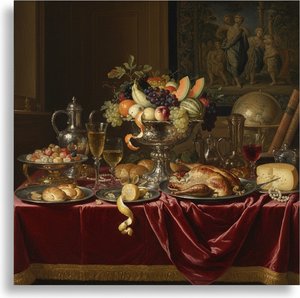
统计数据Still Life


 展开详情
展开详情
手工油画复制品
由我们的艺术家按需定制,为您提供您所选尺寸及画框的布面手工油画。 ( 切换至版画销售渠道 切换至数字图像销售渠道)




































从与原作比例一致的预设尺寸中进行选择。

您可以输入自定义尺寸,以适配特定的画框或空间。如果所选尺寸与原图比例不符,我们将通过裁剪作品或添加手绘元素来扩展画面。数字样稿将在制作开始前发送给您确认。
请注意,屏幕预览无法准确反映实际的裁剪或扩展效果,只有样稿才能真实呈现最终的构图。
虽然我们提供定制尺寸服务,但为了保留原作比例,建议您从预设列表中选择尺寸。
下单后,OriginalUniqueArt.com 团队将通过电子邮件联系客户获取具体要求,并提供效果预览图。


 玻璃选项仅适用于110厘米以下的尺寸。

Still Life
复制材质
复制品尺寸
-


最终总价
$ 300
艺术家简介
Pieter Claesz Soutman: A Master of Subtle Realism in the Dutch Golden Age
Pieter Claesz Soutman (1593-1657) stands as a quietly significant figure within the pantheon of Dutch Golden Age painters. Often overshadowed by the flamboyant brushstrokes of Frans Hals or the dramatic compositions of Rembrandt, Soutman’s legacy lies in his remarkable ability to capture nuanced realism and atmospheric depth—particularly in his still lifes and portraits. Born and raised in Haarlem, a city brimming with artistic talent during this period, Soutman's career unfolded amidst the vibrant cultural landscape shaped by contemporaries like Hals, Pot, and Claesz himself, suggesting an absorption of diverse influences that ultimately defined his unique style. His life story is intertwined with the political currents of the era, marked by service to Polish royalty and a fascinating episode involving a mistaken attribution at the Louvre.Early Life and Training
Soutman’s origins were rooted in wealth and Catholic tradition. He was the youngest son of a prosperous brewery owner, the proprietor of De Werelt in Haarlem, a fact that afforded him a comfortable upbringing and access to cultural circles. While details about his formal artistic training remain somewhat elusive, accounts suggest a connection with Peter Paul Rubens in Antwerp—a pivotal experience for any aspiring artist of the time. Houbraken’s biographical notes indicate this apprenticeship, painting Soutman as a successful protégé who garnered recognition through Samuel Ampzing's verse praising his abilities within Haarlem society. The timing of this period – coinciding with Prince Władysław Vasa’s visit to Antwerp in 1624 – further cemented Soutman’s reputation and led to a recommendation by Rubens himself, a testament to the artist’s burgeoning skill. This early exposure to Rubens's studio undoubtedly shaped his approach to composition, lighting, and the rendering of textures—elements that would become hallmarks of Soutman’s distinctive style.Service in Poland and Return to Haarlem
A significant chapter in Soutman’s life unfolded during his tenure as a court painter for King Sigismund III Vasa in Poland (1624-1628). This period marked a departure from his Haarlem roots, thrusting him into the heart of Polish aristocratic society. He served as a servitor to the king and his son, Władysław Sigismund, demonstrating an adaptability and professionalism that allowed him to thrive in a foreign court. Returning to Haarlem in 1628, Soutman established himself as a respected portrait painter within the city’s artistic community. His connections to the Catholic Hofje Codde en Van Beresteijn—a complex arrangement involving two separate hofjes—provided him with patronage and opportunities for commissions, particularly lucrative schutterstukken (civic group portraits) that were central to Haarlem's social and political life.The Scandal at the Louvre and Artistic Legacy
Perhaps the most intriguing aspect of Soutman’s career revolves around a remarkable misattribution that occurred in the 1860s. A portrait of the Beresteijn family, regents of both the Codde and Beresteijn hofjes, was mistakenly identified as a work by Frans Hals and purchased by the Louvre for a considerable sum. This incident sparked outrage within the Dutch press, with Conrad Busken Huet vehemently arguing that such a national treasure should remain in its homeland. The story highlights not only the challenges of attribution during that era but also underscores Soutman’s remarkable skill—his paintings were so convincing that they fooled even seasoned art experts. Today, Soutman's works are housed in various museums across Europe, including the Huis ten Bosch in The Hague, and his pupils – Cornelis Visscher, Jacob Louys, and Pieter van Sompel – continued to build upon his artistic foundations.Style and Technique
Soutman’s distinctive style is characterized by a remarkable restraint and subtlety. Unlike the bold, dramatic brushwork of Hals or the chiaroscuro mastery of Rembrandt, Soutman favored a more muted palette and a meticulous attention to detail. His still lifes—often featuring humble objects like fruit, bread, and wine—are imbued with an almost melancholic beauty, capturing not just their physical appearance but also suggesting a deeper contemplation on themes of mortality and transience – hallmarks of *vanitas* paintings. His portraits, too, are notable for their psychological depth and the way he captured the quiet dignity of his subjects. He skillfully employed light and shadow to create atmospheric effects, lending a sense of realism and immediacy to his compositions. His work represents a significant contribution to the development of Dutch still life painting during the 17th century, demonstrating a mastery of technique and an ability to evoke profound emotion through seemingly simple imagery.
Pieter Claesz Soutman
1580 - 1657
艺术家简介
- Artistic Movement Or Style: Dutch Golden Age
- Artists Or Movements Influenced By This Artist: ['Frans Hals']
- Artists Who Influenced This Artist:
- Rubens
- Hals
- Pieter Claesz
- Date Of Birth: 1593/1601
- Date Of Death: 1657
- Full Name: Pieter Claesz Soutman
- Nationality: Dutch
- Notable Artworks:
- Portrait of Sigismund III Vasa
- Emerantia van Berensteyn
- Place Of Birth: Haarlem, Netherlands
相关文章

荷兰黄金时代绘画:文化创新中的现实主义反思
深入探索荷兰黄金时代绘画的文化创新与现实主义反思。本文解读伦勃朗、维米尔等大师的作品,并结合玛莉特·韦斯特曼的图像学研究,揭示艺术史背后的社会语境与现代性意识觉醒。

荷兰黄金时代:十幅定义艺术史的巨作 | OriginalUniqueArt
探索荷兰黄金时代的艺术巅峰! 伦勃朗、维米尔等大师名作,带您领略巴洛克艺术的辉煌。高清画作、博物馆级品质,点亮您的家居空间。OriginalUniqueArt.com 提供精选艺术复制品和定制装饰方案。立即在线探索全系列!

光影交织的时代:荷兰黄金时代绘画艺术的兴盛与创新
深入探索荷兰黄金时代的绘画艺术:伦勃朗、维米尔等大师的技法与创新,了解巴洛克风格的独特演绎。OriginalUniqueArt提供手绘油画复制、艺术咨询及收藏建议,助您领略经典艺术之美。

Golden Light & Dutch Skies: The Timeless Magic of Dutch Golden Age Landscapes
Discover the breathtaking beauty of Dutch Golden Age landscapes. Explore the mastery of light, chiaroscuro, and 17th-century realism through an expert art history lens, celebrating the enduring legacy of the Dutch Masters for discerning collectors and art lovers.
Abraham Hendricksz van Beyeren: Pioneering Dutch Still Life & the Banquet Tradition
Explore the captivating world of Dutch Golden Age still life with Abraham van Beyeren. Discover his innovative techniques, symbolic banquet scenes & lasting influence on art history. Learn about collecting these masterpieces.