效果预览
效果预览
 分享
分享 分享
分享
 详情
详情

 下载
下载
 相似作品
相似作品 X射线
X射线 幻灯片播放
幻灯片播放 统计数据
统计数据《伪君子》


 展开详情
展开详情
手工油画复制品
由我们的艺术家按需定制,为您提供您所选尺寸及画框的布面手工油画。 ( 切换至版画销售渠道 切换至数字图像销售渠道)




P118B $10

P118H $10

P118W $10

P438Z $10

P508JH $12

P508YH $12

P805H $10

P805Z $10

P919BZ $10

P919G $10

P919XJ $10

P959ZH $10

P968JZ $12

W106C $8

W218G $10

W218JH $8

W218Y $10

W307PJ $10

W316G $10

W316PJ $8

W316Y $10

W398PJ $8

W4111J $10

W500HY $15

W500JH $15

W692G $12

W849H $8

W940BG $15

W953PJ $8




从与原作比例一致的预设尺寸中进行选择。

您可以输入自定义尺寸,以适配特定的画框或空间。如果所选尺寸与原图比例不符,我们将通过裁剪作品或添加手绘元素来扩展画面。数字样稿将在制作开始前发送给您确认。
请注意,屏幕预览无法准确反映实际的裁剪或扩展效果,只有样稿才能真实呈现最终的构图。
虽然我们提供定制尺寸服务,但为了保留原作比例,建议您从预设列表中选择尺寸。
下单后,OriginalUniqueArt.com 团队将通过电子邮件联系客户获取具体要求,并提供效果预览图。


 玻璃选项仅适用于110厘米以下的尺寸。

《伪君子》
复制材质
复制品尺寸
-


最终总价
$ 300
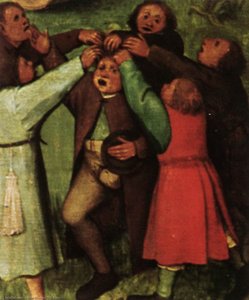
《孤僻者》:一幅对人性的深刻反思
皮埃尔·布鲁盖尔(Pieter Bruegel the Elder)的1568年作品《孤僻者》(The Misanthrope)不仅仅是一幅风景画,更是一部充满智慧和情感的艺术杰作。它以其独特的视角,对人性的复杂性、世俗的虚伪以及个体在社会中的孤独感进行了深刻的反思。这幅作品运用了当时流行的北方文艺复兴风格,将现实主义的笔触与象征主义的内涵巧妙地融合在一起,至今仍能引发人们的共鸣。
布鲁盖尔作为一名经验丰富的画家,对当时的社会风貌有着敏锐的观察力。他所处的16世纪正值欧洲宗教改革和政治动荡时期,社会矛盾日益尖锐,人与人之间的信任也逐渐瓦解。因此,《孤僻者》中的“孤僻者”形象,并非简单的个人性格描述,而是对当时社会普遍存在的精神困境的一种象征性表达。他那张饱受风霜的脸庞,以及他所处的场景,都暗示着一种对世俗的失望和对真理的追寻。
技巧与风格:北方文艺复兴的精髓
这幅画作采用的是温彩油画(tempera on canvas)技法,以其色彩的饱和度和笔触的细腻而著称。布鲁盖尔运用了强烈的明暗对比(chiaroscuro),将画面中的人物和场景置于光影之中,营造出一种戏剧性的效果。他的人物造型生动逼真,无论是衣着、表情还是动作都充满了细节,展现了他对现实生活的敏锐观察力。同时,作品也体现了北方文艺复兴绘画的特点——注重写实,强调对日常生活的描绘。
值得注意的是,布鲁盖尔在构图上非常巧妙。“孤僻者”站在画面中央,占据了视觉主导地位,而他周围的场景则充满了活动和喧嚣。这种对比突出了“孤僻者”的孤独感,也暗示着他与社会格格不入的处境。此外,画面的背景是一个广阔的乡村风光,其中包含了许多象征性的元素,例如农舍、羊群、以及远处的小镇等。
符号与寓意:解读《孤僻者》的深层含义
《孤僻者》充满了丰富的象征意义。画中那个被盗窃的场景,并非简单的犯罪行为,而是对社会道德沦丧的一种隐喻。而“孤僻者”手中的小刀,则象征着他对虚伪和欺骗的批判。此外,画面中的其他元素也具有重要的象征意义:玻璃球代表着世俗的虚幻,而散落在地上的石子则预示着痛苦和不幸。
更值得注意的是,布鲁盖尔巧妙地运用了古典寓言的技巧。《孤僻者》的故事与亚里士多德的《提米俄斯》(Timon of Athens)有相似之处。提米俄斯是一位富有的哲学家,他因受到朋友的背叛而变得孤独和绝望,最终放弃了财富和名誉,选择隐居在荒野之中。布鲁盖尔通过对提米俄斯的借鉴,进一步深化了《孤僻者》的主题,使作品具有更强的思想性和艺术价值。
情感与启示:永恒的艺术魅力
《孤僻者》之所以能够跨越时空,感动着一代又一代的人们,正是因为它触及了人类内心深处最真实的情感。这幅画作让我们思考人生的意义、社会的道德以及个体在社会中的位置。它提醒我们,要保持清醒的头脑,对世俗的虚伪保持警惕,并努力寻找真理和幸福。
无论您是艺术爱好者、收藏家还是室内设计师,《孤僻者》都将为您带来独特的视觉体验和深刻的思考。这幅作品不仅是一件精美的艺术品,更是一部充满智慧和情感的文化遗产。现在就选择高品质的复制品,让《孤僻者》带给您的生活更多的美好与启示。
艺术家简介
Pieter Bruegel the Elder (c. 1525-1569): Renaissance Master of Landscapes & Peasant Life
Pieter Bruegel the Elder emerged during a period of profound change, a time when the artistic landscape of Europe was shifting from the High Renaissance ideals of Italy towards the burgeoning complexities of Northern European expression. Born sometime between 1525 and 1530, likely in Breda – though details surrounding his early life remain somewhat elusive – Bruegel’s formative years unfolded amidst religious upheaval and a flourishing merchant culture. He began his artistic journey around 1545 as an apprentice to Pieter Coecke van Aelst, a respected Antwerp painter known for both his artistry and his designs for tapestries. This apprenticeship provided Bruegel with a solid grounding in the technical skills of oil painting and drawing, but perhaps more importantly, it exposed him to the humanist currents that were beginning to permeate intellectual circles. Van Aelst’s workshop was not merely a place of artistic instruction; it was a crucible where traditional techniques met new ideas, shaping Bruegel's future vision.Early Life & Artistic Training
Bruegel’s initial training took place in Antwerp, the heart of Flemish art and commerce during his time. He studied under Pieter Coecke van Aelst, absorbing the principles of humanist painting – a reaction against the rigid formalism of scholasticism – and mastering the meticulous craft of oil painting. Van Aelst's influence extended beyond mere technique; he instilled in Bruegel a fascination for observation and an appreciation for detail, qualities that would characterize his later work. The workshop environment fostered experimentation and encouraged artists to push boundaries, preparing Bruegel for his subsequent explorations into diverse artistic styles and subjects.Wanderings & The Seeds of Innovation
Around 1551-1553, Bruegel embarked on a transformative journey through France, Switzerland, and Italy – expeditions that fundamentally altered his artistic perspective. Unlike many artists of his era who sought to emulate Italian grandeur, Bruegel found inspiration in the landscapes of Alpine regions, capturing their dramatic beauty with unprecedented accuracy. He encountered the monumental works of Michelangelo and Raphael, absorbing their stylistic innovations without attempting wholesale imitation. These travels instilled in him a deep understanding of cultural differences and broadened his artistic horizons, fueling his desire to depict scenes from everyday life—a departure from the dominant preoccupation with religious iconography that prevailed in Italy.A Revolutionary Vision: Landscapes & Peasant Life
Bruegel’s true genius lay in his daring rejection of established conventions. While Renaissance painters primarily focused on idealized depictions of biblical narratives or mythological allegories, Bruegel turned his gaze to the realities of rural Flemish society—peasants laboring in fields, villagers celebrating festivals, and hunters traversing snowy landscapes. This wasn't a mere stylistic preference; it represented a profound philosophical shift—a conviction that beauty could be found not only in sacred realms but also in the mundane experiences of ordinary people. He achieved this remarkable feat through masterful use of chiaroscuro – dramatic contrasts between light and shadow – creating depth, realism, and emotional resonance within his canvases. Paintings like “The Tower of Babel” exemplify Bruegel’s ambition to convey complex ideas with visual precision.Legacy & Influence
Pieter Bruegel the Elder's legacy extends far beyond his own lifetime. He profoundly impacted subsequent generations of artists—particularly those in the Dutch Golden Age—inspiring them to embrace realism and explore themes from everyday life. Artists like Isaac van Ostade and Adriaen Brouwer drew inspiration from Bruegel’s innovative approach, capturing the spirit of their time with unflinching honesty. Furthermore, Bruegel's pioneering use of landscape painting paved the way for later developments in the genre, influencing artists who sought to convey the grandeur and beauty of the natural world. His enduring influence can be seen not only in paintings but also in literature and theater—demonstrating the universality of his artistic vision. He died prematurely in Brussels in 1569 at the age of forty-three, leaving behind a remarkable body of work that continues to captivate audiences worldwide—a testament to the transformative power of observation and artistic innovation.
彼得·布鲁赫尔
1525 - 1569 , 比利时
艺术家简介
- Artistic Movement Or Style: 文艺复兴绘画
- Artists Or Movements Influenced By This Artist: ['荷兰黄金时代绘画']
- Artists Who Influenced This Artist: ['伊森戈斯·博斯赫']
- Date Of Birth: c. 1525
- Date Of Death: 1569
- Full Name: Pieter Bruegel the Elder
- Nationality: 弗兰德斯人
- Notable Artworks:
- 圣母玛利亚与耶稣的飞翔埃及行
- 死亡的辉煌
- 农夫婚礼
- 雪中的猎人
- 巴别塔
- Place Of Birth: Breda,荷兰
相关文章

Pieter Bruegel the Elder: A Master of Genre, Landscape & Social Commentary
Explore the life & art of Pieter Bruegel the Elder, a pivotal figure of the Renaissance. Discover his groundbreaking genre scenes, symbolic landscapes, and lasting influence on art history. Learn more at OriginalUniqueArt.
Oil on Panel Masters: 10 Paintings That Revolutionized Art |
Journey through 10 legendary 'Oil on Panel' masterpieces by Van Eyck, Bosch & Bruegel. Explore the stories behind these iconic Renaissance & Baroque paintings and find museum-quality art reproductions to elevate your home decor. Discover all masterpieces on !

The Enduring Power of Painting: A Historical & Contemporary Exploration of Form and Emotion
Explore the rich history & enduring techniques of oil painting with OriginalUniqueArt. Discover masterpieces, learn about art collecting, and find authentic handmade reproductions crafted by skilled artists.

The Enduring Legacy of Oil on Canvas: Technique, History & Aesthetic Impact
Explore the rich history & techniques of oil painting – from Renaissance masters to Impressionism. Discover pigments, layering methods, and why this timeless medium endures. Expert insights for artists & art enthusiasts.

Oil on Canvas: A Historical & Technical Exploration of a Timeless Artistic Medium
Explore the rich history & enduring techniques of oil painting on canvas. Discover the science behind its longevity, conservation practices, and contemporary relevance. Expert insights for art enthusiasts.