切换至版画销售渠道
 展开全文
展开全文







































 对于任何边长超过 105 厘米(约 41 英寸)的艺术品或复制品,画框将以拆解后的组件形式发货。此方法可确保安全送达并防止运输过程中的损坏。


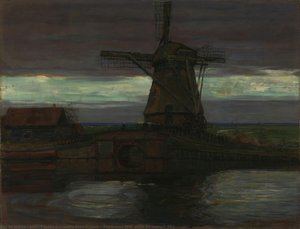
A Pioneer's Pursuit of Pure Form: Exploring Piet Mondrian’s “The Red Mill”
The painting *The Red Mill*, executed in 1911 by Piet Mondrian, stands as a cornerstone of Fauvist art and embodies the artist’s relentless quest for abstraction. Initially trained in landscape painting—a tradition deeply rooted in Dutch artistic heritage—Mondrian's early works demonstrate a careful observation of nature alongside a nascent desire to transcend its visual limitations. Pieces like *The Red Mill*, which captures a serene rural scene bathed in azure hues, reveal this initial exploration of color and texture with impressive precision. Yet, it’s within these seemingly straightforward depictions that hints of Mondrian's future stylistic breakthroughs begin to emerge.- Subject Matter: The painting portrays a quintessential Dutch windmill—a symbol of agricultural productivity and national identity—against a backdrop of expansive blue sky.
- Style: Fauvism, championed by artists like Matisse and Derain, marked a radical departure from Impressionism’s focus on capturing fleeting moments of light. Mondrian embraced this movement's bold chromatic palette, prioritizing expressive color over realistic representation.
Technique and Composition – Simplifying Reality
Mondrian’s masterful application of oil paint contributes significantly to the artwork’s impact. He employs a reductive technique—characterized by sparse brushstrokes—to distill the visual elements into their essential geometric forms: rectangles and squares. The windmill blades themselves are rendered in vibrant red, contrasting sharply with the dominant blue of the sky. This deliberate simplification isn't merely stylistic; it reflects Mondrian’s philosophical belief that art should express universal harmony through pure abstraction. He sought to liberate color from its descriptive function, allowing it to convey emotion and spiritual significance directly.Historical Context – The Birth of Geometric Abstraction
“The Red Mill” emerged during a period of profound artistic experimentation in Europe. Fauvism challenged the conventions of academic painting and paved the way for movements like Cubism and Constructivism. Mondrian’s work aligns with broader intellectual currents—particularly those influenced by Eastern philosophy—that questioned traditional Western notions of perspective and representation. The painting represents a pivotal moment in art history, signaling the decisive shift toward geometric abstraction as a dominant aesthetic ideal.Symbolic Resonance – Beyond Representation
More than just a depiction of a windmill, *The Red Mill* embodies Mondrian’s symbolic vision. The red color—often associated with passion and vitality—represents energy and dynamism, countering the stillness implied by the geometric forms. Simultaneously, the blue sky symbolizes serenity and contemplation, creating a visual dialogue between opposing forces. Through this carefully orchestrated interplay of color and shape, Mondrian transcends mere visual observation, inviting viewers to engage in a deeper exploration of artistic expression and spiritual truth.Emotional Impact – A Quiet Intensity
Despite its apparent simplicity, *The Red Mill* possesses an undeniable emotional resonance. The bold colors and precise geometric composition evoke a sense of calm contemplation punctuated by flashes of vibrant energy. It’s a painting that speaks to the viewer's subconscious, prompting reflection on themes of harmony, balance, and the pursuit of universal beauty—values central to Mondrian’s artistic philosophy.常见问题与解答
“The Red Mill”的作者是谁,创作于何时?
蒙德里安 于 1911 年创作了《The Red Mill》。
蒙德里安 的《The Red Mill》 的亮度是多少?
"The Red Mill" 的色彩呈现出 Gentle Luminance 的亮度。
在“The Red Mill”中,哪种颜色最为醒目?
蒙德里安 的《The Red Mill》 的主色调为 Steel Blue (#6998e1)。
 实景预览
实景预览
 分享
分享 分享
分享
 详情
详情 指南
指南

 下载作品
下载作品
 相似作品
相似作品 X射线
X射线 幻灯片播放
幻灯片播放 问答
问答 统计数据
统计数据