- 首页

- 数字图像作品
- pierre gouthière
- Side Table
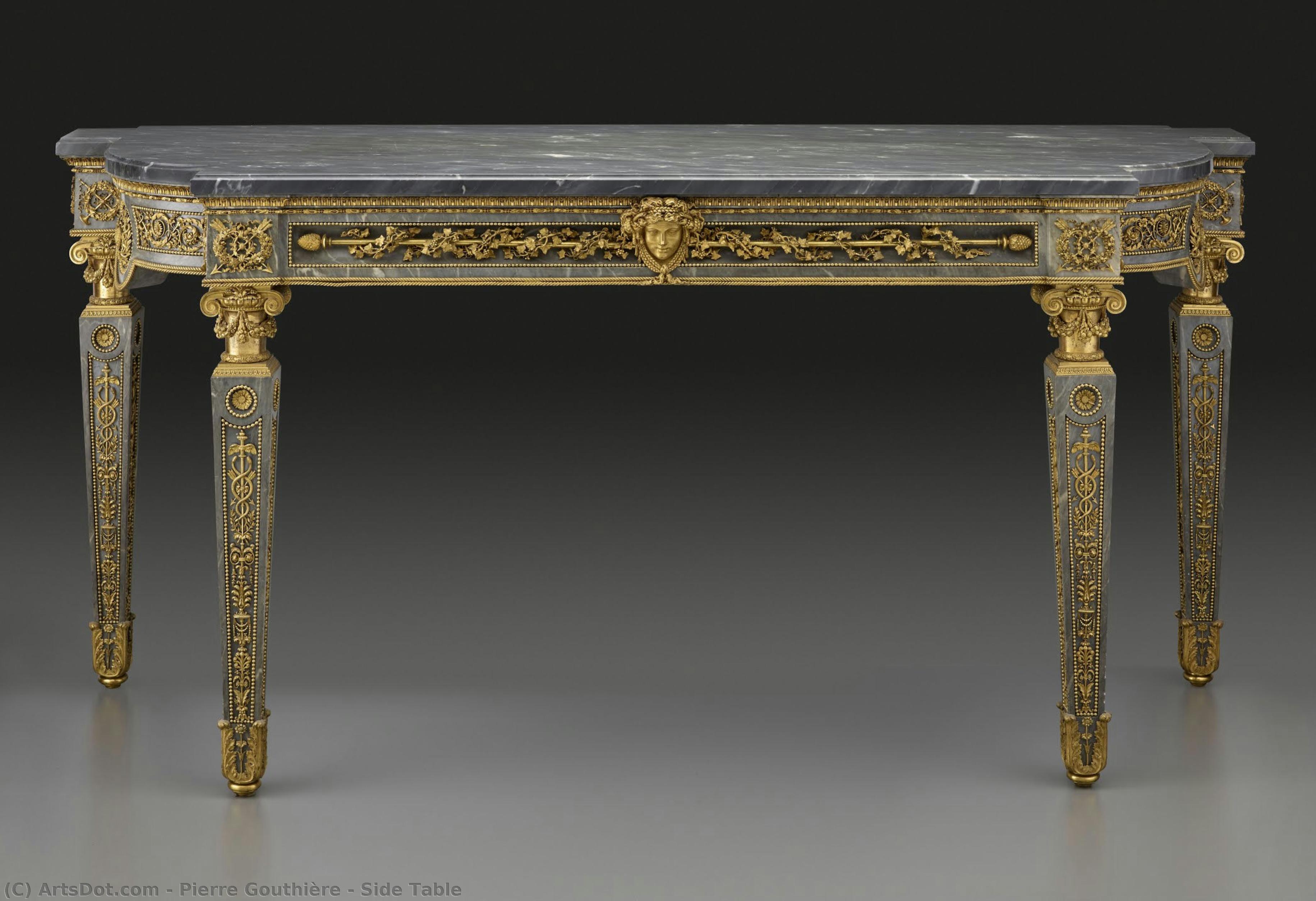
 效果预览
效果预览
 切换至印刷版
 分享
分享 分享
分享
 详情
详情

 下载
下载
 相似作品
相似作品 X射线
X射线 幻灯片播放
幻灯片播放Side Table


 展开详情
展开详情
购买高分辨率增强版数字图像,其品质远超在线预览。
每一份文件都由我们的内部专家使用先进工具与专业的后期润色技术精心打造。我们确保每一张图像都具备卓越的清晰度、精准的色彩还原度以及细腻的细节表现。
最终文件将在 72 小时内通过电子邮件交付,并针对专业、编辑及印刷用途进行了优化。其品质与顶级设计工作室、出版社和画廊所信赖的标准完全一致。
每份数字图像订单均包含
专业数字图像交付,品质保障
选择 OriginalUniqueArt.com,您获得的不仅仅是一张图像——您收到的是经过专业级增强、精雕细琢的数字艺术作品,并享有满意保证。以下是您的订单中自动包含的所有内容:

邮件快速送达
您的高分辨率数字图像文件将在下单后 72 小时内通过电子邮件发送给您 —— 即可立即使用。

AI 增强型数字文件
您的艺术品经过专业优化,结合先进的 AI 技术与人工修饰,确保呈现极致的细节、清晰度与色彩准确度。

终身免费重发服务
不小心删除了文件或找不到了?没关系——我们将随时为您免费重发。

无需进口费用,始终如一
即刻拥有您的艺术作品,无需支付任何关税、税费或运费——数字下载始终免税。

色彩精准保证
我们通过专业工具与色彩管理技术,确保您的数字图像尽可能真实地还原原作色彩。

60天满意保证
如果您对所购买的数字图像不满意,我们将在60天内为您进行修改或退还100%的款项——无需任何解释。

100% 退款保证
如果不满意?在收到数字文件后的60天内,我们为您提供全额退款——无需任何理由。

批量订单优惠
购买 3 张图片可享 10% 折扣 - 购买 5 张可享 15% 折扣 - 购买 10+ 张可享 20% 折扣。非常适合创意项目、画廊和机构使用。
藏品详情
艺术家简介
Pierre Gouthière: The Goldsmith of Kings
The name Pierre Gouthière (1732–1813) is synonymous with opulent artistry in 18th-century France, a testament to his extraordinary skill as a metalworker and gilder. Born in Bar-sur-Aube, a small village in Champagne, Gouthière’s early life offered little indication of the dazzling career that lay ahead. He apprenticed under Martin Cour in Paris, immersing himself in the techniques of chasing, engraving, and gilding – skills he would master with unparalleled precision and refinement. His journey wasn't one of solitary brilliance; it was deeply intertwined with the lavish tastes of a court obsessed with spectacle and the pursuit of beauty, ultimately shaping his legacy as a pivotal figure in French decorative arts.
Gouthière’s rise to prominence coincided with a period of extraordinary artistic flourishing under Louis XV and Louis XVI. He quickly established himself as a sought-after craftsman, catering to an elite clientele that included the Duc d'Aumont, the Duchess of Mazarin, Madame du Barry, and, most notably, Marie Antoinette herself. His reputation wasn’t built solely on royal patronage; it was forged through sheer artistic merit – his ability to transform rough metal into objects of breathtaking beauty and intricate detail. Unlike many artists of his time who focused on grand scale, Gouthière excelled in the creation of smaller, exquisitely crafted pieces, often adorning furniture, mirrors, and decorative objects with scenes from mythology, classical history, and everyday life.
The Techniques of a Master
Gouthière’s genius lay not just in his aesthetic sensibility but also in his mastery of technical skills. He was a true ‘fondeur-ciseleur,’ a term that encompassed both the casting and finishing processes involved in creating gilt bronze objects. His workshop, initially located on the Rue du Faubourg Saint-Martin, became a hub of activity, employing a team of skilled artisans who assisted him in realizing his ambitious designs. The process was painstaking, involving multiple stages: first, the creation of molds from wax models – often meticulously crafted by Gouthière himself; then, casting the metal in a furnace; and finally, the intricate work of chasing, engraving, and gilding to achieve the desired surface texture and finish.
Gouthière’s signature style was characterized by an extraordinary delicacy and subtlety. He employed a unique ‘soft gold’ technique – a burnished, lustrous gilding that set him apart from his contemporaries. This achieved through a complex process of polishing and applying multiple layers of gold leaf, it created a shimmering effect that seemed to radiate light. He also demonstrated remarkable skill in rendering natural forms, whether it was the rippled fur of a goat, the delicate veins of a leaf, or the flowing drapery of mythological figures. His ability to capture both texture and movement within a small space was truly exceptional.
Royal Patronage and Financial Ruin
The demand for Gouthière’s work soared during the reign of Louis XV and Marie Antoinette, fueled by their extravagant tastes and the desire to impress foreign dignitaries. His creations adorned the most opulent interiors in France, from the grand salons of Versailles to the private chambers of the royal family. The Duc d'Aumont’s collection, sold at auction in 1782, served as a spectacular showcase for Gouthière’s talents, cementing his reputation as one of the foremost artists of his time. However, this period of unparalleled success was tragically followed by financial ruin.
Gouthière's downfall stemmed from a series of unfortunate circumstances. His lavish spending habits, coupled with the death of two major clients – the Duc d’Aumont and the Duchess of Mazarin – left him deeply indebted. His attempts to secure commissions from the new revolutionary government were thwarted, and he was imprisoned for several months in 1794 on suspicion of counter-revolutionary activities. Despite his talent and reputation, Gouthière died in poverty in 1813, a poignant reminder of the precariousness of artistic success during turbulent times.
Legacy and Rediscovery
Despite his untimely demise, Gouthière’s legacy endures through the exquisite objects he created. His works are now treasured by museums and private collectors around the world, offering a glimpse into the opulent tastes of 18th-century France. The Wallace Collection in London houses an exceptional collection of Gouthière's bronzes, including a remarkable brûle-parfums (incense burner) that exemplifies his mastery of gilding techniques. Recent scholarship has shed new light on Gouthière’s life and work, revealing the depth of his artistic vision and the technical brilliance of his craft.
The Frick Collection's 2017 exhibition, “Pierre Gouthière: Virtuoso Gilder at the French Court,” marked a significant milestone in the rediscovery of this forgotten master. By bringing together a selection of his finest works and offering new insights into his creative process, the exhibit demonstrated that Gouthière remains one of the most important and influential figures in the history of French decorative arts – a testament to the enduring power of beauty, skill, and artistry.

pierre gouthière
1732 - 1813 , France
基本信息
- Artistic Movement Or Style: Baroque & Rococo
- Artists Or Movements Influenced By This Artist: ['Thomire']
- Artists Who Influenced This Artist: ['Martin Cour']
- Date Of Birth: 1732
- Date Of Death: 1813
- Full Name: Pierre Gouthière
- Nationality: French
- Notable Artworks:
- Medusa applique
- Brûle-parfum (bronze)
- Place Of Birth: Bar-sur-Aube, France

