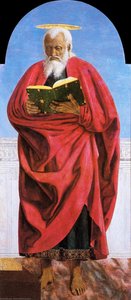
效果预览
效果预览
 分享
分享 分享
分享
 详情
详情

 下载
下载
 相似作品
相似作品 X射线
X射线 幻灯片播放
幻灯片播放 统计数据
统计数据The Flagellation (detail)


 展开详情
展开详情
艺术微喷/版画
博物馆级艺术微喷或帆布版画,制作高效,并提供多种饰面选择。 ( 购买手绘画作 切换至数字图像销售渠道)




P118B $10

P118H $10

P118W $10

P438Z $10

P508JH $12

P508YH $12

P805H $10

P805Z $10

P919BZ $10

P919G $10

P919XJ $10

P959ZH $10

P968JZ $12

W106C $8

W218G $10

W218JH $8

W218Y $10

W307PJ $10

W316G $10

W316PJ $8

W316Y $10

W398PJ $8

W4111J $10

W500HY $15

W500JH $15

W692G $12

W849H $8

W940BG $15

W953PJ $8




从与原作比例一致的预设尺寸中进行选择。

您可以输入自定义尺寸,以适配特定的画框或空间。如果您选择的尺寸与原图比例不符,我们将对作品进行裁剪,或通过镜像填充/纯色填充边缘的方式来扩展图像。在开始制作之前,我们会向您发送一份数字效果图供您确认。
请注意,屏幕上的预览并不能反映实际的裁剪或扩展效果。只有效果图才能准确展示最终的构图。
虽然我们提供定制尺寸,但为了保持原图比例,我们建议您从预设列表中选择尺寸。


 玻璃选项仅适用于110厘米以下的尺寸。

The Flagellation (detail)
艺术微喷/版画
复制品尺寸
-


最终总价
$ 80
A Serene Vision of Suffering: Unveiling Piero della Francesca’s *The Flagellation*
Piero della Francesca's *The Flagellation*, painted in 1455 and currently residing within the Galleria Nazionale delle Marche in Urbino, Italy, is not merely a depiction of a biblical event; it’s an immersive experience—a carefully constructed tableau that invites contemplation on human nature, faith, and the very principles of Renaissance art. Far removed from the dramatic, emotionally charged portrayals common at the time, Piero offers a strikingly restrained and geometrically precise rendering of Christ's scourging, a testament to his profound understanding of perspective and his humanist philosophy. The painting immediately draws the viewer in with its unusual composition: three figures—a bearded man, a younger figure, and a balding individual—stand before a nondescript building, seemingly oblivious to the gruesome scene unfolding behind them. This deliberate separation, this spatial distancing, is key to understanding Piero’s artistic intent.
The architectural backdrop, featuring columns and a tile roof, establishes a sense of solidity and order, while a clock subtly visible on the wall anchors the scene in time—a detail that speaks to Piero's meticulous approach to realism. The figures themselves are rendered with an almost sculptural quality, their forms defined by precise lines and subtle modeling, creating a remarkable illusion of volume within the relatively small panel. Notably, the painting’s emotional core is deliberately muted; there’s no dramatic weeping or anguished expressions—instead, a quiet solemnity pervades the scene, prompting viewers to consider the event not as a spectacle of suffering, but as a moment of profound human experience.
The Geometry of Faith: Piero della Francesca's Artistic Innovations
Piero della Francesca was more than just a painter; he was a mathematician and geometer—a fact deeply embedded within the very fabric of *The Flagellation*. His artistic style reflects his rigorous study of perspective, proportion, and geometry, principles he meticulously applied to create an illusion of three-dimensional space on a two-dimensional surface. The painting’s composition is built upon a complex system of converging lines that lead the eye towards a vanishing point—a technique borrowed from ancient architectural theory and perfected by Brunelleschi. This masterful use of linear perspective not only creates a sense of depth but also reinforces the painting's overall harmony and balance.
Furthermore, Piero’s mastery extends to color and light. He employs a limited palette of earthy tones—ochres, browns, and grays—to create a subdued yet luminous effect. The subtle gradations of tone suggest the play of light and shadow, adding depth and realism to the figures and architecture. The careful arrangement of these colors contributes significantly to the painting’s serene atmosphere, avoiding any overly dramatic or emotionally charged hues.
Decoding the Enigmatic Figures: Symbolism and Interpretation
Perhaps the most intriguing aspect of *The Flagellation* lies in the identity of the three figures positioned in the foreground. For centuries, art historians have debated their meaning—a debate fueled by the painting’s inherent ambiguity. While traditional interpretations identify them as Oddantanio da Montefeltro (the ruler of Urbino), his advisor Ludovico Gonzaga, and a young man representing Christ himself, more recent scholarship suggests alternative possibilities. Some scholars propose that they represent figures connected to the tragic events surrounding the death of a nobleman, while others see them as allegorical representations of time, past, present, and future.
Regardless of their precise identities, these figures serve as a crucial element in the painting’s complex symbolism—a reminder that Piero della Francesca's work is not simply a literal depiction of a biblical scene but rather an invitation to engage with profound questions about human existence, faith, and mortality. The fact that they remain largely unaffected by the event behind them underscores the theme of detachment and contemplation.
A Legacy Preserved: Reproductions and Artistic Appreciation
Piero della Francesca’s *The Flagellation* stands as a cornerstone of Early Renaissance art—a testament to his intellectual rigor, artistic skill, and humanist vision. Its influence can be seen in countless subsequent works of art, demonstrating its enduring power and relevance. OriginalUniqueArt.com offers meticulously crafted oil painting reproductions that allow art lovers to experience the beauty and detail of this masterpiece in their own homes, ensuring that Piero della Francesca’s profound vision continues to inspire generations.
For those seeking a deeper understanding of *The Flagellation*, we recommend exploring additional resources such as Wikipedia and Galleria Nazionale delle Marche (Urbino, Italy) - A Haven of Renaissance Masterpieces. Furthermore, consider visiting Smarthistory’s analysis for a comprehensive overview of the painting's symbolism and historical context.
艺术家简介
托斯卡纳的远见者:皮耶罗·德拉·弗朗切斯科的一生与艺术
大约在1415年,皮耶罗·迪·本尼迪托·德’弗朗切斯科(Piero di Benedetto de' Franceschi),历史所知为皮耶罗·德拉·弗朗切斯科 (Piero della Francesca),诞生于宁静的翁布里亚小镇圣塞波尔克罗。他从一个相对默默无闻的背景中崛起,成为了早期文艺复兴时期最具智慧和影响力的画家之一。与许多同时代人不同的是,皮耶罗的生活细节仍然有些神秘;关于他的家庭和早期训练的信息很少。但可以肯定的是,他拥有非凡的心智,同样被佛罗伦萨新兴的艺术潮流以及数学和几何学的精确语言所吸引。他的父亲是一位制鞋匠兼鞣革工,为皮耶罗提供了一个稳定而朴素的成长环境,据信他在当地接受了最初的艺术教育,在马萨乔和布鲁内莱斯基引发的巨大变革之前,吸收了中部意大利绘画的传统。这种早期的基础将对塑造他哥特式优雅与文艺复兴创新独特的结合至关重要。
佛罗伦萨与新美学的曙光
大约在1439年,皮耶罗前往充满艺术活力的佛罗伦萨。这段时期对他来说具有变革意义。他与多梅尼科·韦内齐亚诺合作完成了圣埃吉迪奥教堂的壁画,这使他直接接触了新兴的佛罗伦萨风格。更重要的是,他沉浸在对马萨乔在布兰卡奇礼拜堂中开创性的壁画的研究中——这是一场自然主义和空间幻象的启示。布鲁内莱斯基建筑创新,特别是他对线性透视的大师级运用,也深深地影响了皮耶罗的艺术发展。他不仅仅是采用这些技术;他分析它们,剖析其潜在的数学原理。这种分析性的方法将成为他作品的标志,使他与许多同辈人区分开来。他吸收了佛罗伦萨对现实主义和解剖学的强调,但通过一个独特的视角进行过滤,这个视角以静止、清晰和近乎禁欲的美为特征。
光线与几何的大师作
皮耶罗·德拉·弗朗切斯科的艺术遗产建立在他相对较小但极具力量的作品之上。他最著名的成就可能是阿雷佐圣弗朗西斯科教堂的《真十字架历史》壁画循环。这个宏伟的故事以惊人的清晰度和宁静展开,用前所未有的空间深度和心理洞察力描绘了关于十字架木头的传奇故事中的场景。人物不仅仅是圣经人物的代表;他们被赋予了一种安静的尊严和沉思的静止感,将他们提升到原型形式。现藏于米兰布雷拉画廊的《蒙特费尔特罗祭坛画》展示了他对油画和精致肖像的掌握,以其心理敏锐性和一丝不苟的细节而闻名。伦敦国家美术馆的《施洗约翰》是另一项证明他技能的见证;它优雅的构图、明亮的色彩以及对光线的微妙探索创造了一种深刻的精神共鸣氛围。他的风格始终如一地展示了对几何精确性、平衡构图和克制的调色的承诺,利用光线不仅仅是为了美学效果,而是作为定义形式和创造有形体积的工具。
超越画笔:数学家的视野
真正使皮耶罗·德拉·弗朗切斯科与众不同的在于他独特的智力广度。他不仅是一位艺术家;他还是数学家、几何学家和作家。他的著作《绘画透视论》(De Prospectiva Pingendi) 是最早的关于透视学的正式论文之一,证明了他对数学原理及其在艺术中的应用的深刻理解。这项工作不仅仅是理论性的;它影响了其作品的方方面面。他仔细计算空间关系,利用几何构造来组织构图,并使用光线不仅照亮,而且定义形式,具有科学的精确性。他对光学学的兴趣进一步增强了他创造深度和真实感幻象的能力。艺术感觉与数学严谨性的这种融合赋予了皮耶罗的作品持久的力量和智力重量。他认为美存在于秩序和比例之中,并试图将这些原则转化为视觉形式。
持久的遗产
皮耶罗·德拉·弗朗切斯科于1492年去世,留下了一项几个世纪后才被充分理解的遗产。尽管不像列奥纳多·达·芬奇或米开朗基罗等一些同辈人那样多产,但他现存的作品对几代艺术家产生了微妙但深远的影响。就连列奥纳多本人都研究过皮耶罗的技术并钦佩他对光线和阴影的大师级运用。拉斐尔也从他的构图和空间安排中汲取灵感。在20世纪,艺术史学家重新发现了皮耶罗的作品,认识到他是意大利文艺复兴时期发展中的关键人物——哥特式国际风格与盛期文艺复兴之间的桥梁。他对数学透视、现实主义表现和宁静的人文主义的强调至今仍能引起艺术家和观众的共鸣,巩固了他作为意大利文艺复兴时期最重要的和持久的主人之一的地位。他的画作不仅仅是美丽的物体;它们是通往一个艺术、科学与灵性和谐统一的世界的窗口。

皮耶罗·德拉·弗朗切斯卡
1415 - 1492 , 意大利
艺术家简介
- 全名: 皮耶罗·德拉·弗朗切斯卡
- 出生地点: 圣塞波尔克罗,意大利
- 出生日期: 约1415年
- 受此艺术家影响的艺术家或运动:
- 列奥纳多·达·芬奇
- 拉斐尔
- 国籍: 意大利人
- 影响该艺术家的艺术家:
- 马萨乔
- 多梅尼科·韦内齐亚诺
- 艺术运动或风格: 早期文艺复兴
- 著名作品:
- 《复活》
- 《蒙特费尔特鲁祭坛画》
- 《施洗约翰》
- 《真十字架壁画》
相关文章

Echoes of Time: Narratives & Transformations in Renaissance Art History
Explore the transformative power of Renaissance art history! Discover iconic masterpieces by Piero della Francesca, Botticelli & Cranach the Elder. Uncover symbolism, techniques, and lasting influence – a guide for enthusiasts.

The Radiance of Rebirth: Unveiling the Humanist Spirit and Aesthetic Mastery of Early Renaissance Art
Embark on a sophisticated journey through the Early Renaissance. Discover how masters like Masaccio and Piero della Francesca revolutionized art through humanism, linear perspective, and naturalism, redefining beauty and the human spirit in an era of profound rebirth.
Piero della Francesca: Renaissance Perspective, Divine Proportion & the Pursuit of Ideal Form
Explore the revolutionary art of Piero della Francesca – master of perspective, divine proportion & Renaissance humanism. Discover his iconic paintings & lasting influence on art history.

文艺复兴人文主义:艺术革新与个体意识的觉醒
深入了解文艺复兴人文主义:艺术革新、个体意识觉醒与文化巨匠。OriginalUniqueArt.com提供精美的手绘油画复制,定制服务及专业艺术咨询,助您重现大师之作,提升生活品味。

Luca della Robbia: Renaissance Sculpture & the Innovation of Terracotta Glazing
Discover the innovative terracotta glazing techniques of Luca della Robbia, a Renaissance master sculptor. Explore his iconic works, legacy, and collecting tips with OriginalUniqueArt.