

 实景预览
实景预览
 发送
发送 分享
分享
 详情
详情 指南
指南

 下载图片
下载图片
 相似作品
相似作品 X射线
X射线 幻灯片播放
幻灯片播放 统计数据
统计数据Ex Voto
 Oil On Canvas
- WallArt
- Baroque
 1662
1662- Early Modern
 165.0 x 229.0 cm
 卢浮宫
卢浮宫
 阅读全文
阅读全文
艺术微喷/版画
博物馆级艺术微喷或帆布版画,制作高效,并提供多种饰面选择。 ( 订购此收藏品的纯手工复刻画作 切换至数字图像销售渠道)




































您可以从与原作比例一致的预设尺寸中进行选择。

请输入您所需的宽度和高度,以适配您的画框或墙面。由于印刷品只能进行裁剪,无法超出原图尺寸,因此若比例不一致,画面的一部分将会被裁切。在正式印刷之前,我们会为您发送一份数字效果图供您确认。本页面显示的图片并非最终裁剪后的效果——只有效果图才能展示真实的裁剪情况。


 玻璃选项仅适用于110厘米以下的尺寸。

Ex Voto
艺术微喷/版画
复刻品尺寸说明
-


总计金额
¥ 538
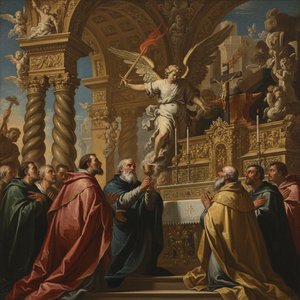
A Sacred Encounter in Light and Shadow
In the hallowed halls of the Musée du Louvre, there exists a window into the profound spiritual intimacy of the seventeenth century. Philippe De Champaigne’s Ex Voto, painted in 1662, is not merely an oil on canvas; it is a silent prayer rendered in pigment. The masterpiece captures a moment of quietude, featuring two religious figures—likely nuns—suspended in a state of deep contemplation. One figure stands with hands clasped in fervent prayer, while the other sits in reflective repose, their presence anchored by the heavy, dignified folds of their dark robes. Through the masterful application of chiaroscuro, De Champaigne breathes life into the stillness, using the interplay of light and shadow to sculpt the figures from the darkness, creating a sense of depth that draws the viewer into their private, holy communion.
The technical brilliance of this work lies in its ability to marry the realism of the Baroque period with an ethereal, almost otherworldly serenity. De Champaigne, a master who studied under the great Nicolas Poussin, utilizes a controlled palette and precise draftsmanship to render the textures of cloth and the subtle modeling of skin. The lighting is soft yet purposeful, casting gentle shadows that emphasize the solemnity of the scene. This technique, reminiscent of the dramatic Tenebrism found in the works of Caravaggio, serves to heighten the emotional weight of the composition. For the collector or interior designer, this painting offers a profound sense of gravity and peace, making it an ideal centerpiece for spaces designed for reflection, study, or sophisticated classical elegance.
Symbolism and the Devotional Legacy
Beyond its aesthetic splendor, Ex Voto is steeped in the religious symbolism of the French Baroque era. The very title suggests a "votive" offering—an object left in a sacred place as a gesture of gratitude or a plea for divine intervention. This connection to faith and healing is explicitly whispered through the Latin inscriptions at the base of the work, where terms such as "Christus" and "Medicina" appear. These words transform the painting from a mere portrait into a functional piece of spiritual devotion, linking the earthly suffering of humanity to the divine healing power of Christ. The visible crosses on the figures' garments further solidify their identity as vessels of faith, acting as anchors for the viewer’s own meditative journey.
The composition is intentionally uncluttered, stripping away the distractions of the material world to focus entirely on the internal landscape of the soul. This minimalist approach to the background—hinting at architectural details of a convent or chapel without overwhelming the subjects—allows the emotional intensity of the figures to resonate more powerfully. For those seeking to bring the essence of history into a modern home, a high-quality reproduction of this piece provides more than just decoration; it introduces an atmosphere of timelessness and spiritual depth. It is an invitation to pause, to breathe, and to find beauty in the quiet, enduring strength of devotion.
问答详情
"Ex Voto" 与 菲利普·德·尚潘 (Fēilìpǔ·Dé·Shàngpān) 的其他作品有何共通之处?
在菲利普·德·尚潘 (Fēilìpǔ·Dé·Shàngpān)的作品集中,"Ex Voto" 呈现出Baroque风格,并贯穿着influenced by nicolas poussin, baroque light and shadow, spiritual devotion and prayer, religious themes of healing, key french baroque work的主题。
菲利普·德·尚潘 (Fēilìpǔ·Dé·Shàngpān) 的《Ex Voto》 是否属于公有领域?
菲利普·德·尚潘 (Fēilìpǔ·Dé·Shàngpān) 的《Ex Voto》 属于 属于公有领域 —— 其版权已过期。此版权状态决定了该作品图像的复制方式。
为什么“Ex Voto”的版权状态是目前的状况?
菲利普·德·尚潘 (Fēilìpǔ·Dé·Shàngpān) 的《Ex Voto》 已进入 属于公有领域 —— 其版权已过期。版权保护期自艺术家逝世之日起计算,该艺术家于 1674 年逝世。
艺术家简介
光影交织的一生
菲利普·德·尚潘(Philippe de Champaigne,1602-1674)是法国巴洛克时期一位举足轻重的画家,尽管他的出身并非贵族之家。他于布鲁塞尔出生,早年的艺术启蒙来自于风景画家雅克·富基埃(Jacques Fouquieres),学习了绘画的基础技巧。这段经历为他日后踏入巴黎的艺术殿堂奠定了坚实的基础。1621年,年轻的尚潘来到巴黎——这座城市即将成为他的家园和创作舞台。在那里,他师从尼古拉斯·普桑(Nicolas Poussin),这次相遇深刻影响了他对构图和素描的理解。卢森堡宫成为了他早期实践的场所,在尼古拉斯·杜谢纳(Nicolas Duchesne)的指导下参与装饰工程,这段经历为他的艺术生涯定下了基调。这是一个吸收各种影响的时期,为他最终形成一种融合巴洛克戏剧性和独特法国风格奠定了基础。权力和虔诚的笔触
尚潘的名字与宗教绘画和肖像画紧密相连——这两大支柱反映了那个时代的潮流。他的画布不仅仅是描绘,更是充满情感强度和精湛透视技巧的宣言,这种光影的戏剧性交织定义了巴洛克美学。诸如《荒野中的圣耶柔米》、《奥梅·塔隆肖像》和《手持律法石板的摩西》等作品是他技艺的见证,每一笔都展现了他对人体形态和精神重量的深刻理解。他并非局限于小型画作,为巴黎圣母院创作的大量壁画展示了他构思和执行大型作品的能力。然而,真正巩固他在历史地位的是他对红衣主教黎塞留(Cardinal Richelieu)的一系列肖像画。十一幅不同的黎塞留画像——每一幅都捕捉到这位权势人物的不同侧面——应运而生,这不仅体现了尚潘的艺术造诣,也反映了他与法国最具影响力的人物之一的密切关系。这些不仅仅是相似的面孔;它们是精心构建的图像,旨在投射权力和控制。法国艺术的奠基人
尚潘不仅仅是一位画家,更是法国艺术世界的缔造者。作为皇家绘画和雕塑学院(Académie royale de peinture et de sculpture)的创始成员之一,他在规范艺术训练和确立王国内的卓越标准方面发挥了至关重要的作用。这个机构成为了法国艺术身份的核心,培养了一种独特的风格,将巴洛克动态与古典克制相结合——尚潘对此做出了重大贡献。他的影响远远超出了他自己的生命周期,为后世的法国艺术家铺平了道路,他们将在他所奠定的基础上继续发展。今天,他的作品装饰着世界各地著名的博物馆,包括卢浮宫和巴黎圣母院,确保了他的遗产继续激励人们敬畏和钦佩。他对艺术严谨性的奉献至今仍在艺术教育中产生影响。不断演变的视野与精神深度
在他的职业生涯中,尚潘的风格经历了微妙而重要的转变。他的后期作品表现出越来越浓重的忧郁和内省,尤其是在他的宗教绘画中。圣经场景不再仅仅是叙事;它们成为了深刻的精神沉思的载体,充满了安静的敬畏感。这种转变部分受到 Jansenism神学潮流的影响——这是一个强调上帝恩典和人类堕落的天主教运动——它在一些他最具说服力的作品的主题和氛围中得到了体现。他探索谦卑、牺牲和对救赎的追求等主题,创作出与法国社会日益增长的宗教热情产生共鸣的作品。即使在他的肖像画中,也出现了一个新的心理深度层次,不仅揭示了人物的外表,还揭示了他们的内心世界。菲利普·德·尚潘的艺术之旅是一段持续完善的过程,最终创作出能够触及智力和灵魂的作品。他的儿子让-巴蒂斯特·德·尚潘(Jean-Baptiste de Champaigne)追随了他的脚步成为一名画家,延续了这个家族对艺术追求的承诺,并确保了他们的创造遗产得以延续。
菲利普·德·尚潘 (Fēilìpǔ·Dé·Shàngpān)
1602 - 1674 , 荷兰
快速概览
- Artistic Movement Or Style: 巴洛克风格
- Artists Or Movements Influenced By This Artist: ['法国画派']
- Artists Who Influenced This Artist: ['尼古拉斯·普桑']
- Date Of Birth: 1602年
- Date Of Death: 1674年
- Full Name: 菲利普·德·尚潘耶
- Nationality: 法国
- Notable Artworks (List Of Titles):
- 荒野中的圣耶柔米
- 奥梅·塔隆肖像
- 摩西捧着律法石板
- Place Of Birth (City And Country): 布鲁塞尔,荷兰
相关文章

巴洛克艺术的戏剧性辉煌:历史背景、风格特征与持久影响
深入探索巴洛克艺术的辉煌历史、独特风格与持久影响。了解卡拉瓦乔、贝尼尼等大师的作品,洞悉反宗教改革运动下的艺术变革。OriginalUniqueArt.com为您提供专业的艺术解读与高清画作欣赏。
西班牙巴洛克艺术:信仰、戏剧与黄金时代的重塑
深入探索西班牙巴洛克艺术的辉煌时代!从反宗教改革到鲁本斯、维米尔等大师的作品,解读信仰、戏剧与黄金时代的重塑。OriginalUniqueArt.com提供精美油画复制和专业艺术咨询。

巴洛克艺术巅峰:十部巨作定义时代,点亮您的臻品格调
探索巴洛克艺术的辉煌!本文精选十部巨作,带您领略卡拉瓦乔、伦勃朗等大师的光影魔法与戏剧张力。从黄金时代到宗教绘画,感受奢华与精致。OriginalUniqueArt.com为您提供博物馆品质的艺术复制品和家居装饰灵感。尽在OriginalUniqueArt.com!

The Visceral Stage: Exploring Dramatic Narratives & Emotional Intensity in Baroque Art
Explore the dramatic world of Baroque art! Discover iconic masters like Caravaggio & Rembrandt, their techniques, and the movement's lasting impact. Expert insights for collectors & enthusiasts at OriginalUniqueArt.

Baroque Classicism: The Grandeur of Order and Drama in 17th-Century Art History
Explore the profound elegance of Baroque Classicism. Discover how 17th-century masters synthesized dramatic emotion with classical order through the lens of the Counter-Reformation and the works of legends like Carlo Maratta and Andrea Sacchi.