

 效果预览
效果预览
 购买手绘画作
 分享
分享 分享
分享
 详情
详情

 下载
下载
 相似作品
相似作品 X射线
X射线 幻灯片播放
幻灯片播放Venus and Bacchus
 Baroque
 154.0 x 127.0 cm
 展开详情
展开详情




































从与原作比例一致的预设尺寸中进行选择。

您可以输入自定义尺寸,以适配特定的画框或空间。如果您选择的尺寸与原图比例不符,我们将对作品进行裁剪,或通过镜像填充/纯色填充边缘的方式来扩展图像。在开始制作之前,我们会向您发送一份数字效果图供您确认。
请注意,屏幕上的预览并不能反映实际的裁剪或扩展效果。只有效果图才能准确展示最终的构图。
虽然我们提供定制尺寸,但为了保持原图比例,我们建议您从预设列表中选择尺寸。


 玻璃选项仅适用于110厘米以下的尺寸。

Venus and Bacchus
艺术微喷/版画
复制品尺寸
-


最终总价
$ 80
艺术家简介
The Master of Light and Lineage: The Life of Philip van Dijk
In the grand tapestry of the Dutch Baroque, few threads are woven with as much elegance and courtly grace as those left by Philip van Dijk. Born in the vibrant artistic hub of Haarlem on January 10, 1683, Van Dijk emerged during an era when the Dutch Republic was transitioning from the rugged realism of the Golden Age into a more refined, sophisticated aesthetic. His journey was one of constant movement and prestigious associations, shaped by the shadows of masters and the bright lights of royal courts. From his early training under Arnold Boonen in Amsterdam to the transformative influence of Adriaen van der Werff in Rotterdam, Van Dijk developed a stylistic language that balanced meticulous precision with an evocative, psychological depth.
The artist’s development was deeply rooted in the rigorous traditions of the Dutch guilds. After marrying in 1708, he joined the prestigious Guild of St. Luke in Middelburg, a move that signaled his arrival as a professional of significant standing. His talent soon earned him membership in the Confrerie Pictura, where his reputation flourished among the artistic elite. This period of his life was marked by an increasing ability to capture not just the physical likeness of his subjects, and even their social status, but the very essence of their character through a delicate interplay of light and texture.
A Journey Through Royal Courts and Artistic Legacy
The true zenith of Van Dijk’s career was reached when his brush moved beyond the merchant classes of the Netherlands to serve the highest echelons of European nobility. In 1726, a decade-long departure from The Hague saw him travel to Kassel, where he assumed the prestigious role of court painter for William VIII, Landgrave of Hesse-Cassel. It was in this setting of aristocratic splendor that his mastery of portraiture truly blossomed. He captured the dignity of Landgravine Marie Louise of Hesse-Kassel and her family with a grandeur that solidified his place in the annals of Baroque history.
His influence and reach were not confined to Germany alone; by 1750, he had returned to The Hague to serve as court painter to William IV, Prince of Orange. This appointment to the House of Orange-Nassau cemented his legacy as a chronicler of royal lineage. His work remains a vital window into the social fabric of the 18th century, characterized by:
- Technical Precision: A profound ability to render the tactile qualities of silk, lace, and skin, inherited from the refined style of Adriaen van der Werff.
- Psychological Nuance: The capacity to imbue formal portraits with a sense of quiet introspection and human presence.
- Cultural Iconography: His ability to weave symbols of status—such as hunting dogs, fine linens, or classical architecture—into the narrative of his subjects.
Beyond the halls of power, Van Dijk’s impact resonated through the generations of artists he mentored at the drawing academy, including Jan Augustini and Hendrik Pothoven. Perhaps most charmingly, his artistic reach extended into the everyday lives of the Dutch people; his depiction of a Lute Player was so iconic that it served as the inspiration for the design of the Dutch 100 guilder banknote centuries later. When he passed away on February 2, 1753, he left behind a body of work that continues to resonate with the timeless beauty of the Baroque spirit.

Philip van Dijk
1683 - 1753
艺术家简介
- Artistic Movement Or Style: Baroque
- Artists Or Movements Influenced By This Artist: ['Dutch Baroque']
- Artists Who Influenced This Artist:
- Arnold Boonen
- Adriaen van der Werff
- Date Of Birth: 1683
- Date Of Death: 1753
- Full Name: Philip van Dijk
- Nationality: Dutch
- Notable Artworks:
- Judith with the head of Holofernes
- François Fagel III
- Place Of Birth: Netherlands
相关文章

伦勃朗25幅杰作:光影大师的艺术传奇与家居臻选
探索伦勃朗25幅杰作,领略荷兰黄金时代光影大师的艺术传奇!从《夜巡》到自画像,深入了解巴洛克艺术、历史绘画与人物肖像背后的故事。OriginalUniqueArt.com提供高清艺术复制品及家居装饰灵感。立即探索完整系列!

Baroque Classicism: The Grandeur of Order and Drama in 17th-Century Art History
Explore the profound elegance of Baroque Classicism. Discover how 17th-century masters synthesized dramatic emotion with classical order through the lens of the Counter-Reformation and the works of legends like Carlo Maratta and Andrea Sacchi.

巴洛克古典主义:十七世纪艺术中的戏剧性与秩序融合
深入探索17世纪巴洛克古典主义艺术的戏剧性与秩序之美。卡拉瓦乔、鲁本斯等大师作品解析,揭秘宗教改革下的艺术策略,并了解凡尔赛宫的辉煌历史。OriginalUniqueArt.com为您提供专业的艺术鉴赏与定制服务。
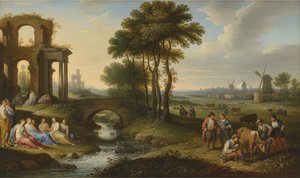
Cornelis van Poelenburch: Bridging Mannerism & the Dutch Baroque Landscape
Discover Cornelis van Poelenburch, a pivotal Dutch Baroque landscape painter bridging Mannerism & Italianate styles. Explore his life, key works, and lasting influence on 17th-century art with OriginalUniqueArt.
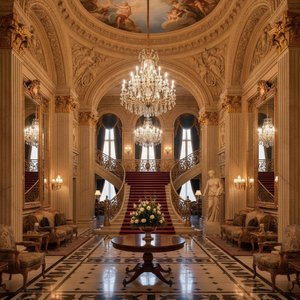
Baroque Classicism: A Professional Guide to Integrating Timeless Grandeur into Luxury Hotel Interiors
Elevate luxury hospitality with Baroque Classicism. Our guide for hotel designers explores integrating grand, classical oil reproductions into professional interiors. Discover efficient bulk procurement, custom sizing, and large-format murals to create timeless, high-impact spaces.

