
 效果预览
效果预览
 切换至手工绘画版
 分享
分享 分享
分享
 详情
详情

 下载
下载
 相似作品
相似作品 X射线
X射线 幻灯片播放
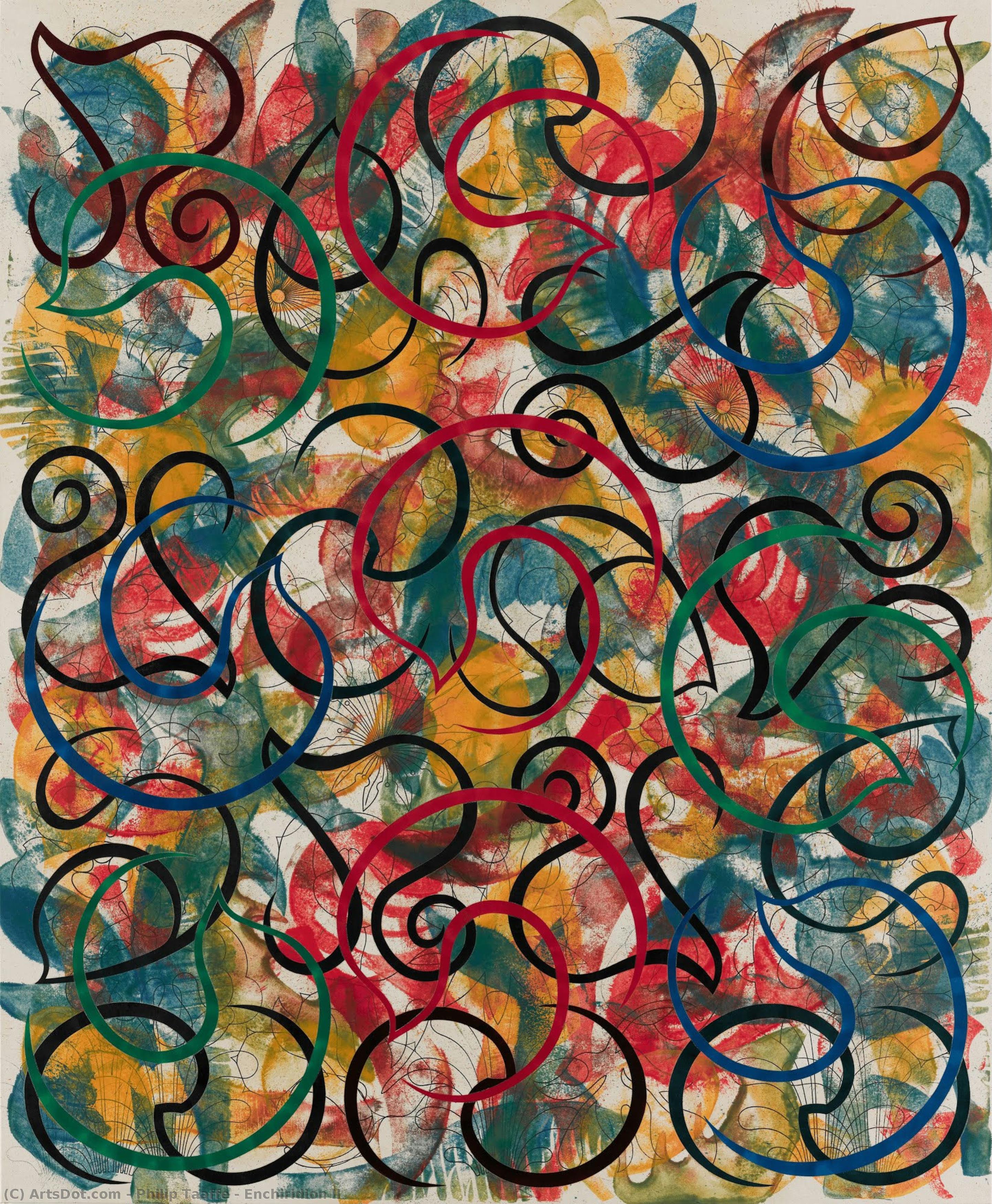
幻灯片播放Enchiridion II


 展开详情
展开详情




































从与原作比例一致的预设尺寸中进行选择。

您可以输入自定义尺寸,以适配特定的画框或空间。如果您选择的尺寸与原图比例不符,我们将对作品进行裁剪,或通过镜像填充/纯色填充边缘的方式来扩展图像。在开始制作之前,我们会向您发送一份数字效果图供您确认。
请注意,屏幕上的预览并不能反映实际的裁剪或扩展效果。只有效果图才能准确展示最终的构图。
虽然我们提供定制尺寸,但为了保持原图比例,我们建议您从预设列表中选择尺寸。


 玻璃选项仅适用于110厘米以下的尺寸。

Enchiridion II
艺术微喷/版画
复制品尺寸
-


最终总价
$ 80
藏品详情
A Symphony of Form and Color
In the mesmerizing expanse of Enchiridion II, the viewer is immediately swept into a rhythmic dance of geometry and light. Created by the contemporary American master Philip Taaffe, this work serves as a vibrant testament to the power of abstract composition. The painting unfolds as a complex tapestry of interlocking circles, swirling motifs, and intricate patterns that seem to pulse with an internal energy. Each element is meticulously placed, creating a visual dialogue between movement and stillness. The palette is nothing short of celebratory, utilizing a spectrum of vivid hues that dance across the canvas, drawing the eye into a labyrinth of color where every turn reveals a new layer of depth and complexity.
The brilliance of this piece lies in its ability to balance chaos with profound harmony. While the surface appears as a dynamic explosion of shapes, there is an underlying structural integrity that anchors the composition. The varying sizes of the circular forms create a sense of perspective and weight, guiding the observer through a curated journey of visual discovery. For the discerning collector or interior designer, this painting offers more than mere decoration; it provides a focal point of intellectual and emotional stimulation, capable of transforming a contemporary space into a sanctuary of contemplative beauty.
The Legacy of Abstraction and Technique
To understand the soul of Enchiridion II, one must look toward the rich lineage of art history that informs Taaffe’s hand. The artist’s technique is deeply rooted in the principles of Synthetic Cubism and the revolutionary color explorations of Henri Matisse. Much like the fragmentation found in Cubist works, Taaffe utilizes layered shapes to deconstruct the canvas, yet he infuses them with a fluidity that avoids rigidity. His method is a sophisticated synthesis of tradition and vision, where the layering of pigment creates a sense of translucency and light, as if the colors themselves were glowing from within.
The artist’s ability to reinterpret the legacies of giants like Barnett Newman and Bridget Riley is evident in the way he manipulates optical rhythms. In Enchiridion II, the repetition of patterns evokes a hypnotic quality, inviting a meditative state in the viewer. This mastery of process-based abstraction ensures that the work remains timeless. For those seeking to adorn a high-end residence or a professional gallery with a hand-painted reproduction, this piece represents an exquisite opportunity to possess a fragment of modern art history—a work that bridges the gap between the avant-garde movements of the twentieth century and the vibrant sensibilities of the present day.
An Emotional Resonance for Modern Spaces
Beyond its technical prowess, Enchiridion II possesses an undeniable emotional magnetism. It is a piece that breathes life into a room, acting as a catalyst for conversation and introspection. The interplay of light and shadow within the painted swirls evokes feelings of joy, curiosity, and wonder. It is an artwork that does not merely sit upon a wall but actively engages with its environment, reflecting changes in ambient light and complementing the textures of a sophisticated interior.
Whether placed in a minimalist setting to provide a burst of chromatic energy or integrated into a richly textured room to add a layer of complex pattern, this painting serves as an anchor of elegance. It is an investment in atmosphere. For the art lover, it offers a window into Taaffe’s unique ability to harmonize disparate elements into a cohesive whole; for the designer, it provides a sophisticated tool to evoke luxury and intellectual depth within any architectural context.
艺术家简介
Philip Taaffe: A Synthesis of Tradition and Vision
Philip Taaffe (born Elizabeth, New Jersey, 1955) stands as a singular figure in contemporary American painting, recognized for his distinctive approach to abstraction—a blend of meticulous technique and profound engagement with art history’s grand narratives. His artistic journey began amidst the burgeoning interest in Synthetic Cubism and Matisse's groundbreaking cut-out collages, influences that would shape his stylistic trajectory and inform his exploration of cultural iconography. Taaffe’s work isn’t merely decorative; it’s a deliberate confrontation with established artistic conventions, prompting viewers to reconsider notions of beauty and representation.- Early Influences: Matisse and Synthetic Cubism provided Taaffe with foundational visual vocabulary—the fragmentation of form and the layering of color—principles he would consistently revisit throughout his career.
- Process-Based Abstraction: Taaffe’s method distinguishes itself through a commitment to experimentation and observation. He meticulously documents his artistic process, utilizing techniques like paper marbling and pigment dispersion to generate complex textural surfaces that resist easy categorization.
- Iconographic Engagement: Recurring motifs—ranging from Roman mosaics to Byzantine altarpieces—are interwoven into Taaffe’s paintings, creating dialogues between past and present. These images aren't simply borrowed; they are transformed through his artistic vision, imbued with new meanings and resonances.
- Cooper Union Education: Studying under influential instructors instilled in Taaffe a disciplined approach to artmaking and fostered an appreciation for the legacy of European masters.
- Travel Experiences: Encounters with cultures beyond Western Europe broadened Taaffe’s artistic perspective, inspiring him to incorporate elements of Islamic art and design into his compositions.
- Newman Influence: Taaffe’s appropriation of Newman’s Zip motif signaled a deliberate engagement with art historical precedents, prompting reflection on the nature of visual experience.
- Riley Inspiration: Exploring Riley's optical illusions underscored Taaffe’s interest in disrupting viewers’ expectations and questioning assumptions about how images convey meaning.

philip taaffe
1955 -
艺术家简介
- Artistic Movement Or Style: Synthetic Cubism
- Artists Or Movements Influenced By This Artist: ['Jackson Pollock']
- Artists Who Influenced This Artist:
- Matisse
- Barnett Newman
- Date Of Birth: 1955
- Date Of Death: Living
- Full Name: Philip Taaffe
- Nationality: American
- Notable Artworks:
- Painting with Gemstones
- Entrance with Palms
- Place Of Birth: Elizabeth, New Jersey
相关文章

几何抽象艺术十大杰作:定义现代家居装饰的经典之作
探索几何抽象艺术的十大杰作!康定斯基、蒙德里安等大师作品,色彩构成与非具象之美。OriginalUniqueArt.com提供博物馆级艺术复制品,为您的家居带来现代艺术灵感。立即在线探索完整系列!

Kandinsky's Masterpieces: 25 Paintings That Define Abstract Art | OriginalUniqueArt
Journey through Wassily Kandinsky's 25 most iconic abstract paintings. Explore his revolutionary use of color, form & spiritual expressionism. Find museum-quality Kandinsky reproductions and elevate your home decor with OriginalUniqueArt.com. Discover all masterpieces on OriginalUniqueArt.com!

Neo-Abstract Art: The High-Impact Evolution of Modern Visual Energy and Geometric Sophistication
Discover the power of Neo-Abstract art. Explore how bold geometric forms and high-impact visual energy are redefining modern design. Learn to curate sophisticated, high-energy spaces with the latest trends in contemporary abstraction and structural color.

抽象表现主义:十幅定义艺术史的杰作
探索抽象表现主义的十幅经典杰作!波洛克、罗斯科等大师作品,揭秘艺术史上的重要瞬间。OriginalUniqueArt.com为您呈现高品质艺术品复制和精选家居装饰方案,感受现代艺术的力量与魅力。立即浏览全系列!

Beyond Form & Color: Geometric Abstraction's Evolution in 20th/21st Century Art
Explore the evolution of geometric abstraction from Cubism to contemporary art. Discover key artists like Malevich & Mondrian, investment insights, and expert collecting advice at OriginalUniqueArt.

