

 效果预览
效果预览
 切换至手工绘画版
 分享
分享 分享
分享
 详情
详情

 下载
下载
 相似作品
相似作品 X射线
X射线 幻灯片播放
幻灯片播放Untitled (D2X65E)
 Oil On Canvas
- WallArt
- Northern Renaissance
 1445
1445 79.0 x 66.0 cm
 大都会艺术博物馆
 展开详情
展开详情




P118B $10

P118H $10

P118W $10

P438Z $10

P508JH $12

P508YH $12

P805H $10

P805Z $10

P919BZ $10

P919G $10

P919XJ $10

P959ZH $10

P968JZ $12

W106C $8

W218G $10

W218JH $8

W218Y $10

W307PJ $10

W316G $10

W316PJ $8

W316Y $10

W398PJ $8

W4111J $10

W500HY $15

W500JH $15

W692G $12

W849H $8

W940BG $15

W953PJ $8




从与原作比例一致的预设尺寸中进行选择。

您可以输入自定义尺寸,以适配特定的画框或空间。如果您选择的尺寸与原图比例不符,我们将对作品进行裁剪,或通过镜像填充/纯色填充边缘的方式来扩展图像。在开始制作之前,我们会向您发送一份数字效果图供您确认。
请注意,屏幕上的预览并不能反映实际的裁剪或扩展效果。只有效果图才能准确展示最终的构图。
虽然我们提供定制尺寸,但为了保持原图比例,我们建议您从预设列表中选择尺寸。


 玻璃选项仅适用于110厘米以下的尺寸。

Untitled (D2X65E)
艺术微喷/版画
复制品尺寸
-


最终总价
$ 80
藏品详情
Petrus Christus’s “Head of Christ (Ecce Homo)” – A Window into Early Renaissance Devotion
The image before us—Petrus Christus’s “Head of Christ (Ecce Homo),” painted circa 1445—isn't merely a portrait; it’s a profound meditation on sacrifice, suffering, and the very essence of Christian faith. Often considered a precursor to the more fully realized depictions of Christ’s Passion that would emerge later in the Renaissance, this intimate panel offers a remarkably direct and emotionally resonant experience for the viewer. It’s a work born from a specific historical context—the burgeoning influence of oil painting in Bruges, a city rapidly becoming a center for artistic innovation—and imbued with a deeply personal devotional purpose.
The genesis of this piece is fascinating. Tradition holds that it was created as a copy of a lost “Holy Face” image by Jan van Eyck, the master who had tragically died just three years before Christus began his career. This foundational image—a depiction of Christ’s face after the crucifixion—was believed to possess miraculous powers and was frequently used in private prayer. Christus's version retains the core elements of this prototype: the stark realism of Christ’s features, the visible wounds inflicted during his ordeal, and the solemnity of his gaze. However, Christus subtly transforms the image, imbuing it with a palpable sense of anguish and vulnerability that transcends mere replication.
A Masterclass in Oil Technique and Linear Perspective
Christus’s skill as a painter is immediately apparent in the meticulous detail he applies to every aspect of the work. The oil paint, relatively new to Northern European art at this time, allows for an unprecedented level of luminosity and depth—a far cry from the tempera paints favored by earlier artists. Notice how the light catches on Christ’s brow, highlighting the lines etched by pain, and how the folds of his garment subtly suggest texture and volume. This isn't a flat, idealized representation; it’s a remarkably lifelike portrayal of human suffering.
Crucially, Christus employs a technique known as “linear perspective,” a revolutionary approach to depicting space that he likely learned from Italian artists who were increasingly influencing the Northern Renaissance. The framing device—a meticulously rendered architectural setting—creates an illusion of depth, drawing the viewer’s eye directly to Christ's face and intensifying the emotional impact of the image. This innovative use of perspective was groundbreaking for its time, demonstrating Christus’s forward-thinking approach to artistic representation.
Symbolism and Emotional Resonance
Beyond the technical mastery, “Head of Christ (Ecce Homo)” is rich in symbolic meaning. The crown of thorns, a potent symbol of suffering and sacrifice, dominates the composition, immediately conveying the gravity of Christ’s fate. The drops of blood streaming down his face are not merely depictions of physical wounds; they represent the shedding of his blood for humanity's sins—a central tenet of Christian theology. Christ’s furrowed brow and downward gaze communicate a profound sense of sorrow and resignation, inviting contemplation on themes of redemption and forgiveness.
The choice to depict only Christ’s head—a cropped portrait—further intensifies the emotional impact. It forces the viewer to confront the image directly, fostering a sense of intimacy and personal connection with the subject. This was likely intended for private devotion, a silent prayer offered in contemplation of Christ's sacrifice.
A Timeless Testament to Faith
“Head of Christ (Ecce Homo)” is more than just a beautiful painting; it’s a powerful testament to the enduring themes of faith, suffering, and redemption. Christus’s masterful technique, combined with his profound understanding of symbolism and emotional resonance, creates an image that continues to move viewers centuries after its creation. It stands as a pivotal work in the development of Northern Renaissance art—a window into the spiritual world of 15th-century Bruges and a timeless reminder of the sacrifice at the heart of Christian belief.
艺术家简介
布鲁日的艺术大师:彼得鲁斯·克里斯蒂的生平与艺术
彼得鲁斯·克里斯蒂(Petrus Christus)这个名字,或许不如他的同时代巨匠扬·凡·艾克或罗吉尔·范德魏登那样广为人知,但在早期尼德兰绘画的发展进程中,他却占据着举足轻重的地位。这位艺术家约于1465年出生于巴勒-赫托格(Baarle-Hertog),那是一个横跨今比利时与荷兰边界的小公国。在那个艺术创新空前活跃的时代,克里斯蒂脱颖而出,成为布鲁日最杰出的艺术家之一。尽管由于那个时代的普遍局限,他的生平细节仍模糊不清,但他留下的传世之作却无声地诉说着他的精湛技艺、求知欲,以及对宗教象征意义与油画媒介无限潜力的深刻理解。他并非仅仅是凡·艾克的追随者,而是一位真正的创新者,通过微妙而深远的方式拓展了写实主义与透视法的边界,在15世纪的艺术版图中留下了不可磨灭的印记。早年生涯与艺术基石
克里斯蒂的名字最早于1444年出现在布鲁日的历史记录中,当时他已是一名大师级画家,这表明他曾接受过严苛且系统的学徒训练——尽管他的恩师身份至今仍是谜团。可以肯定的是,他迅速在布鲁日繁荣的艺术圈内站稳了脚跟。1441年扬·凡·艾克逝世后,克里斯蒂填补了这一艺术真空,成为了布鲁日最炙手可热的画家之一。他的早期作品展现出对凡·艾克技法的敏锐捕捉:那细致入微的刻画、油彩呈现出的晶莹光泽,以及隐藏在平凡器物之中的丰富象征意义。然而,他并未止步于模仿前辈,而是开始发展出一种独特的风格,更加强调画面的清晰度、建筑空间的构建,以及对线性透视法日益精妙的掌控。同时,他也吸收了罗吉尔·范德向德风格的影响,尤其是在传达情感深度与精神张力方面表现得淋漓尽致。透视法与写实主义的革新
克里斯蒂最卓越的贡献在于他对线性透视法的精妙运用。虽然凡·艾克在作品中已运用了一定程度的空间退缩感,但克里斯蒂将其推向了新的高度,创作出了具有极强深度感和三维立体感的绘画。这一点在现藏于伦敦国家美术馆的《圣母与圣婴》中表现得尤为显著,画中的建筑背景以数学般的精确度向远方延伸。他不仅仅是在创造真实的物理空间,更是利用透视法将观者“拉入”画面之中,从而建立起一种与主题之间更为亲密的连接。这种技法并非单纯的技术演练,它升华了绘画的精神冲击力,引导人们进入沉思与虔诚的状态。配合他那精益求精的技艺——通过层层叠加薄薄的油彩透明色层(glazes)来达到无与伦比的光泽与细节——这种写实感得到了进一步强化。从织物的褶皱到金属的微光,每一处纹理都呈现出令人惊叹的准确度。杰作与象征语言
除了《圣母与圣婴》,克里斯蒂还创作了多部展现其艺术造诣与思想深度的重要作品。现藏于蒂森·博内米萨博物馆的《青年肖像》便是捕捉人物神韵的绝佳范例:画中人物的目光直接而动人,传递出一种智慧与自我意识。这幅画同时也揭示了克里斯蒂对象征主义的微妙运用——那一支点燃的孤烛或许象征着作为“世界之光”的基督,而窗台上的橙子则可能暗喻纯洁与美德。他经常将此类象征元素融入画作,使作品的内涵超越了视觉本身。另一部重要作品是《最后的审判》,其复杂的构图展示了他处理动态空间中多人物并存的高超技巧。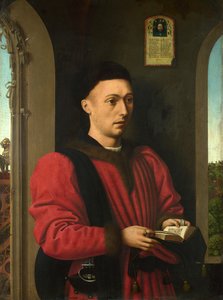
彼得·克里斯都斯
1465 - 1476 , 比利时
艺术家简介
- Artistic Movement Or Style: 早期尼德兰艺术
- Artists Or Movements Influenced By This Artist:
- 扬·凡·艾克
- 罗吉尔·范德魏登
- Artists Who Influenced This Artist:
- 扬·凡·艾克
- 罗吉尔·范德魏登
- Date Of Birth: 1465年
- Date Of Death: 1476年
- Full Name: 彼得鲁斯·克里斯蒂斯
- Nationality: 比利时
- Notable Artworks:
- 圣母与圣婴
- 青年肖像
- Place Of Birth: 比利时,巴勒-赫托格
相关文章

Celestial Messengers: A Comprehensive Exploration of Angelic Representation in Art History
Explore the captivating history of angels in art! Discover symbolism, iconic Renaissance masterpieces & renowned artists. Expert insights for art lovers & collectors at OriginalUniqueArt.

Celestial Messengers: Angels in Painting – A Historical & Artistic Exploration
Explore the captivating history of angels in painting! Discover symbolism, iconic Renaissance & Byzantine masterpieces, and renowned artists. Expert insights for art lovers & collectors at OriginalUniqueArt.
Oil on Panel Masters: 10 Paintings That Revolutionized Art |
Journey through 10 legendary 'Oil on Panel' masterpieces by Van Eyck, Bosch & Bruegel. Explore the stories behind these iconic Renaissance & Baroque paintings and find museum-quality art reproductions to elevate your home decor. Discover all masterpieces on !
From Snapshot to Legacy: The Art of Commissioning a Hand-Painted Reproduction from Photography – Preserving Memories Through Oil Painting Techniques
Transform cherished photos into timeless oil paintings with skilled artists. Trusted for bespoke portraits & heirloom art. Discover the process, styles & lasting value – a legacy preserved.
Sacred Narratives on Canvas: Exploring Religious Painting Through History
Explore the rich history of religious painting with OriginalUniqueArt.com! Discover iconic artworks, symbolism & techniques from antiquity to the Renaissance. Enhance your art appreciation today.

