

 效果预览
效果预览
 购买印刷品
购买印刷品 分享
分享 分享
分享
 详情
详情

 下载
下载
 相似作品
相似作品 X射线
X射线 幻灯片播放
幻灯片播放St Eligius in His Workshop
 Oil On Canvas
- WallArt
- Early Netherlandish Painting
 1449
1449 98.0 x 85.0 cm
 大都会艺术博物馆
 展开详情
展开详情




P118B $10

P118H $10

P118W $10

P438Z $10

P508JH $12

P508YH $12

P805H $10

P805Z $10

P919BZ $10

P919G $10

P919XJ $10

P959ZH $10

P968JZ $12

W106C $8

W218G $10

W218JH $8

W218Y $10

W307PJ $10

W316G $10

W316PJ $8

W316Y $10

W398PJ $8

W4111J $10

W500HY $15

W500JH $15

W692G $12

W849H $8

W940BG $15

W953PJ $8




从与原作比例一致的预设尺寸中进行选择。

您可以输入自定义尺寸,以适配特定的画框或空间。如果所选尺寸与原图比例不符,我们将通过裁剪作品或添加手绘元素来扩展画面。数字样稿将在制作开始前发送给您确认。
请注意,屏幕预览无法准确反映实际的裁剪或扩展效果,只有样稿才能真实呈现最终的构图。
虽然我们提供定制尺寸服务,但为了保留原作比例,建议您从预设列表中选择尺寸。
下单后,OriginalUniqueArt.com 团队将通过电子邮件联系客户获取具体要求,并提供效果预览图。


 玻璃选项仅适用于110厘米以下的尺寸。

St Eligius in His Workshop
复制材质
复制品尺寸
-


最终总价
$ 300
作品详情
A Window Into Sorrow: Petrus Christus’s “Man of Sorrows”
Petrus Christus's "Man of Sorrows," painted around 1450, isn’t merely a depiction of Christ; it’s an intimate invitation into the heart of his suffering. This small panel, now residing in the Birmingham Museum and Art Gallery, transcends its modest size to deliver a profoundly moving experience – a testament to the artist's mastery of detail and his ability to imbue a single figure with immense emotional weight. It stands as a pivotal work, bridging the gap between the meticulous realism of Jan van Eyck and the burgeoning expressiveness of the Northern Renaissance, marking a significant step in Christus’s own artistic evolution.
The painting immediately draws the viewer into a scene of quiet contemplation. Christ, stripped bare save for his flowing garments, is presented not as a triumphant savior, but as a vulnerable figure caught in the throes of agony. His face, rendered with an almost unnerving realism – pale, etched with lines of pain, and framed by the thorns of the crown – conveys a palpable sense of anguish. The wounds inflicted during his Passion are starkly visible, a brutal reminder of the sacrifice he endured. Christ’s posture, slumped slightly forward, suggests both exhaustion and a profound acceptance of his fate. It's a far cry from the idealized depictions common in earlier religious art; here, Christ is undeniably human, burdened by the weight of humanity’s sins.
The Language of Grief: Symbolism and Composition
Christus masterfully employs symbolism to deepen the painting’s emotional resonance. The dark green curtain, held open by two solemn angels, acts as a veil, hinting at the mysteries surrounding death and resurrection. The angel on the left brandishes a sword – a potent symbol of judgment and sacrifice, while his counterpart holds a bunch of lilies, representing purity, innocence, and mourning. This carefully orchestrated pairing underscores the duality of Christ’s suffering: both a punishment for sin and a pathway to redemption. The composition itself is remarkably restrained, focusing entirely on Christ's figure and the immediate surroundings. The limited palette – primarily muted browns, greens, and blues – contributes to the painting’s somber mood, amplifying the sense of grief and vulnerability.
Interestingly, Christus draws upon a long artistic tradition represented by earlier depictions of the “Man of Sorrows,” particularly those found in medieval miniatures. However, he elevates this familiar motif through his meticulous attention to detail and his subtle use of light and shadow. The way the blood streams from Christ’s wounds, the delicate texture of his garments, and the expressive quality of his face all speak to Christus's exceptional technical skill. The inclusion of the mirror in the background is a clever device, reflecting two figures – likely Mary of Guelders and James II – adding another layer of narrative complexity and suggesting that Christ’s suffering extends beyond himself.
A Masterclass in Technique: The Christus Touch
Christus's style is characterized by an extraordinary level of detail and a remarkable ability to render textures with astonishing accuracy. His use of oil paint, a relatively new medium at the time, allowed him to achieve subtle gradations of color and create a luminous quality that was previously unattainable with tempera or fresco. The painting’s surface is remarkably smooth, reflecting Christus's painstaking application of layers upon layers of thin glazes. This technique not only creates a sense of depth and realism but also contributes to the overall feeling of intimacy – as if the viewer is standing face-to-face with Christ himself.
Furthermore, Christus’s approach to perspective—a key innovation in Northern Renaissance art—is evident in the subtle distortions of the figures reflected in the mirror. This demonstrates a sophisticated understanding of spatial relationships and adds another layer of visual interest to the composition. The painting is a remarkable example of how Christus seamlessly integrated technical mastery with artistic expression, creating a work that is both visually stunning and emotionally profound.
A Timeless Reflection: Emotional Impact and Legacy
"Man of Sorrows" continues to resonate with viewers centuries after its creation. Its power lies not in grand gestures or dramatic scenes, but in its quiet contemplation of suffering and sacrifice. It’s a painting that invites reflection on themes of mortality, redemption, and the enduring nature of faith. The image is profoundly moving, prompting viewers to consider their own relationship to pain, loss, and hope.
Christus's work stands as a cornerstone in the development of Northern Renaissance art, influencing generations of painters who followed. “Man of Sorrows” serves as a poignant reminder of the artist’s genius – his ability to capture not just the outward appearance of reality but also the deepest emotions within the human heart. It remains a powerful and enduring testament to the transformative power of art.
艺术家简介
布鲁日的艺术大师:彼得鲁斯·克里斯蒂的生平与艺术
彼得鲁斯·克里斯蒂(Petrus Christus)这个名字,或许不如他的同时代巨匠扬·凡·艾克或罗吉尔·范德魏登那样广为人知,但在早期尼德兰绘画的发展进程中,他却占据着举足轻重的地位。这位艺术家约于1465年出生于巴勒-赫托格(Baarle-Hertog),那是一个横跨今比利时与荷兰边界的小公国。在那个艺术创新空前活跃的时代,克里斯蒂脱颖而出,成为布鲁日最杰出的艺术家之一。尽管由于那个时代的普遍局限,他的生平细节仍模糊不清,但他留下的传世之作却无声地诉说着他的精湛技艺、求知欲,以及对宗教象征意义与油画媒介无限潜力的深刻理解。他并非仅仅是凡·艾克的追随者,而是一位真正的创新者,通过微妙而深远的方式拓展了写实主义与透视法的边界,在15世纪的艺术版图中留下了不可磨灭的印记。早年生涯与艺术基石
克里斯蒂的名字最早于1444年出现在布鲁日的历史记录中,当时他已是一名大师级画家,这表明他曾接受过严苛且系统的学徒训练——尽管他的恩师身份至今仍是谜团。可以肯定的是,他迅速在布鲁日繁荣的艺术圈内站稳了脚跟。1441年扬·凡·艾克逝世后,克里斯蒂填补了这一艺术真空,成为了布鲁日最炙手可热的画家之一。他的早期作品展现出对凡·艾克技法的敏锐捕捉:那细致入微的刻画、油彩呈现出的晶莹光泽,以及隐藏在平凡器物之中的丰富象征意义。然而,他并未止步于模仿前辈,而是开始发展出一种独特的风格,更加强调画面的清晰度、建筑空间的构建,以及对线性透视法日益精妙的掌控。同时,他也吸收了罗吉尔·范德向德风格的影响,尤其是在传达情感深度与精神张力方面表现得淋漓尽致。透视法与写实主义的革新
克里斯蒂最卓越的贡献在于他对线性透视法的精妙运用。虽然凡·艾克在作品中已运用了一定程度的空间退缩感,但克里斯蒂将其推向了新的高度,创作出了具有极强深度感和三维立体感的绘画。这一点在现藏于伦敦国家美术馆的《圣母与圣婴》中表现得尤为显著,画中的建筑背景以数学般的精确度向远方延伸。他不仅仅是在创造真实的物理空间,更是利用透视法将观者“拉入”画面之中,从而建立起一种与主题之间更为亲密的连接。这种技法并非单纯的技术演练,它升华了绘画的精神冲击力,引导人们进入沉思与虔诚的状态。配合他那精益求精的技艺——通过层层叠加薄薄的油彩透明色层(glazes)来达到无与伦比的光泽与细节——这种写实感得到了进一步强化。从织物的褶皱到金属的微光,每一处纹理都呈现出令人惊叹的准确度。杰作与象征语言
除了《圣母与圣婴》,克里斯蒂还创作了多部展现其艺术造诣与思想深度的重要作品。现藏于蒂森·博内米萨博物馆的《青年肖像》便是捕捉人物神韵的绝佳范例:画中人物的目光直接而动人,传递出一种智慧与自我意识。这幅画同时也揭示了克里斯蒂对象征主义的微妙运用——那一支点燃的孤烛或许象征着作为“世界之光”的基督,而窗台上的橙子则可能暗喻纯洁与美德。他经常将此类象征元素融入画作,使作品的内涵超越了视觉本身。另一部重要作品是《最后的审判》,其复杂的构图展示了他处理动态空间中多人物并存的高超技巧。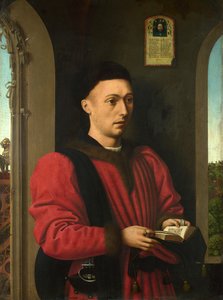
彼得·克里斯都斯
1465 - 1476 , 比利时
艺术家简介
- Artistic Movement Or Style: 早期尼德兰艺术
- Artists Or Movements Influenced By This Artist:
- 扬·凡·艾克
- 罗吉尔·范德魏登
- Artists Who Influenced This Artist:
- 扬·凡·艾克
- 罗吉尔·范德魏登
- Date Of Birth: 1465年
- Date Of Death: 1476年
- Full Name: 彼得鲁斯·克里斯蒂斯
- Nationality: 比利时
- Notable Artworks:
- 圣母与圣婴
- 青年肖像
- Place Of Birth: 比利时,巴勒-赫托格
相关文章

埃尔·格列柯25幅杰作:探索艺术大师的信仰与火焰
探索埃尔·格列柯25幅杰作,领略这位西班牙画家巴洛克风格的宗教绘画魅力。从《圣塞巴斯蒂安》到《沉思者》,感受信仰与艺术的交融。OriginalUniqueArt.com提供高品质油画复制品,为您的家居装饰增添经典之美!探索完整系列作品。

十五世纪早期尼德兰文艺复兴:光辉与细节中的现实主义探索
深入探索十五世纪早期尼德兰文艺复兴的光辉与细节!本文解读扬·凡·艾克等大师的写实主义革命、油画技法突破,分析根特祭坛画等经典作品,助您领略北方文艺复兴的独特魅力。
希罗尼穆斯·博斯:25幅大师级杰作,点亮艺术与家居空间
探索希罗尼穆斯·博斯25幅大师级杰作!深入了解这位荷兰文艺复兴画家的怪诞世界、宗教寓言与象征主义。高清艺术复制品,为您的家居空间带来永恒的艺术灵感。尽在OriginalUniqueArt.com。

Jan Gossart: Bridging Netherlandish Realism & Renaissance Humanism – A Comprehensive Exploration
Explore the captivating world of Jan Gossart, a pivotal figure bridging Netherlandish realism & Renaissance humanism. Discover his masterpieces, patronage, and lasting influence – an essential guide for discerning art collectors.

Early Netherlandish Masters: 10 Paintings That Revolutionized Art & Decor
Journey into the Early Netherlandish Renaissance! Explore 10 iconic paintings by Jan van Eyck, Rogier van der Weyden & more. Discover stunning detail, symbolism, and oil painting techniques. Find museum-quality art reproductions for your home at OriginalUniqueArt.com.

