

 效果预览
效果预览
 切换至手工绘画版
 分享
分享 分享
分享
 详情
详情

 下载
下载
 相似作品
相似作品 X射线
X射线 幻灯片播放
幻灯片播放A Donator
 Oil On Canvas
- WallArt
- Northern Renaissance
 1450
1450 42.0 x 22.0 cm
 国家美术馆
国家美术馆
 展开详情
展开详情




P118B $10

P118H $10

P118W $10

P438Z $10

P508JH $12

P508YH $12

P805H $10

P805Z $10

P919BZ $10

P919G $10

P919XJ $10

P959ZH $10

P968JZ $12

W106C $8

W218G $10

W218JH $8

W218Y $10

W307PJ $10

W316G $10

W316PJ $8

W316Y $10

W398PJ $8

W4111J $10

W500HY $15

W500JH $15

W692G $12

W849H $8

W940BG $15

W953PJ $8




从与原作比例一致的预设尺寸中进行选择。

您可以输入自定义尺寸,以适配特定的画框或空间。如果您选择的尺寸与原图比例不符,我们将对作品进行裁剪,或通过镜像填充/纯色填充边缘的方式来扩展图像。在开始制作之前,我们会向您发送一份数字效果图供您确认。
请注意,屏幕上的预览并不能反映实际的裁剪或扩展效果。只有效果图才能准确展示最终的构图。
虽然我们提供定制尺寸,但为了保持原图比例,我们建议您从预设列表中选择尺寸。


 玻璃选项仅适用于110厘米以下的尺寸。

A Donator
艺术微喷/版画
复制品尺寸
-


最终总价
$ 80
藏品详情
A Deep Dive Into Petrus Christus’ “A Donator” – A Testament to Northern Renaissance Brilliance
Petrus Christus’ “A Donator,” completed in 1450, stands as an undeniable cornerstone of the Early Netherlandish painting movement and a breathtaking demonstration of artistic innovation during its golden age. Housed with pride at the National Gallery of Art in Washington D.C., this portrait transcends mere representation; it embodies the intellectual fervor and humanist ideals that characterized Renaissance Europe.The Subject Matter: Dignified Portraiture Reflecting Status
The painting depicts a man dressed in opulent attire – a dark robe adorned with crimson accents, signifying wealth and nobility – kneeling before a brick wall bearing a window framed by a vibrant red curtain. This deliberate positioning speaks volumes about the sitter’s social standing and underscores the importance of visual hierarchy within Renaissance art. The figure's gaze is directed outwards, hinting at contemplation and perhaps conveying an unspoken message of piety or aspiration. Christus skillfully captures not just physical appearance but also psychological depth, inviting viewers to consider the man’s inner life alongside his outward presentation.Stylistic Innovation: Pioneering Linear Perspective and Detail
Christus revolutionized painting technique with his masterful application of linear perspective – a groundbreaking achievement that accurately depicts spatial relationships and creates an illusion of three dimensions. Unlike preceding artistic traditions, Christus meticulously rendered every surface with painstaking detail, utilizing oil paint to achieve unparalleled luminosity and realism. The artist’s meticulous brushwork is evident in the subtle gradations of color and texture, particularly noticeable in the drapery folds and the brick wall’s surface. This dedication to precision reflects the broader Renaissance preoccupation with observation and scientific inquiry.Symbolism: Layers of Meaning Beyond Appearance
Beyond its formal elements, “A Donator” resonates with symbolic significance. The red curtain symbolizes passion and vitality, contrasting sharply with the muted tones of the interior space. The kneeling posture represents humility and devotion—a common motif in religious art reflecting the humanist values prevalent during the period. Scholars have debated interpretations of the man’s gaze and its connection to spiritual contemplation, furthering the painting's enduring fascination. Christus subtly communicates ideas about faith, honor, and social responsibility through visual cues that demand careful consideration.Historical Context: The Renaissance Spirit in Bruges
Created in Bruges, Belgium – a thriving center of commerce and artistic patronage during the Early Renaissance – “A Donator” embodies the spirit of its time. Petrus Christus’ work aligns with the broader artistic currents circulating throughout Europe, influenced by artists like Jan van Eyck and Rogier van der Weyden who championed realism and humanist ideals. The painting exemplifies the burgeoning interest in classical learning and the desire to depict human subjects with dignity and accuracy—a pivotal shift away from medieval conventions.Emotional Resonance: Capturing Inner Reflection
Ultimately, “A Donator” succeeds in conveying a profound emotional resonance. Christus’ masterful use of light and shadow creates an atmosphere of solemn contemplation, inviting viewers to engage with the sitter's inner world. The painting speaks to themes of piety, honor, and introspection—qualities valued by Renaissance thinkers and artists alike. It remains a testament to Petrus Christus’ artistic genius and his ability to capture the essence of human experience within the framework of a meticulously crafted masterpiece.艺术家简介
布鲁日的艺术大师:彼得鲁斯·克里斯蒂的生平与艺术
彼得鲁斯·克里斯蒂(Petrus Christus)这个名字,或许不如他的同时代巨匠扬·凡·艾克或罗吉尔·范德魏登那样广为人知,但在早期尼德兰绘画的发展进程中,他却占据着举足轻重的地位。这位艺术家约于1465年出生于巴勒-赫托格(Baarle-Hertog),那是一个横跨今比利时与荷兰边界的小公国。在那个艺术创新空前活跃的时代,克里斯蒂脱颖而出,成为布鲁日最杰出的艺术家之一。尽管由于那个时代的普遍局限,他的生平细节仍模糊不清,但他留下的传世之作却无声地诉说着他的精湛技艺、求知欲,以及对宗教象征意义与油画媒介无限潜力的深刻理解。他并非仅仅是凡·艾克的追随者,而是一位真正的创新者,通过微妙而深远的方式拓展了写实主义与透视法的边界,在15世纪的艺术版图中留下了不可磨灭的印记。早年生涯与艺术基石
克里斯蒂的名字最早于1444年出现在布鲁日的历史记录中,当时他已是一名大师级画家,这表明他曾接受过严苛且系统的学徒训练——尽管他的恩师身份至今仍是谜团。可以肯定的是,他迅速在布鲁日繁荣的艺术圈内站稳了脚跟。1441年扬·凡·艾克逝世后,克里斯蒂填补了这一艺术真空,成为了布鲁日最炙手可热的画家之一。他的早期作品展现出对凡·艾克技法的敏锐捕捉:那细致入微的刻画、油彩呈现出的晶莹光泽,以及隐藏在平凡器物之中的丰富象征意义。然而,他并未止步于模仿前辈,而是开始发展出一种独特的风格,更加强调画面的清晰度、建筑空间的构建,以及对线性透视法日益精妙的掌控。同时,他也吸收了罗吉尔·范德向德风格的影响,尤其是在传达情感深度与精神张力方面表现得淋漓尽致。透视法与写实主义的革新
克里斯蒂最卓越的贡献在于他对线性透视法的精妙运用。虽然凡·艾克在作品中已运用了一定程度的空间退缩感,但克里斯蒂将其推向了新的高度,创作出了具有极强深度感和三维立体感的绘画。这一点在现藏于伦敦国家美术馆的《圣母与圣婴》中表现得尤为显著,画中的建筑背景以数学般的精确度向远方延伸。他不仅仅是在创造真实的物理空间,更是利用透视法将观者“拉入”画面之中,从而建立起一种与主题之间更为亲密的连接。这种技法并非单纯的技术演练,它升华了绘画的精神冲击力,引导人们进入沉思与虔诚的状态。配合他那精益求精的技艺——通过层层叠加薄薄的油彩透明色层(glazes)来达到无与伦比的光泽与细节——这种写实感得到了进一步强化。从织物的褶皱到金属的微光,每一处纹理都呈现出令人惊叹的准确度。杰作与象征语言
除了《圣母与圣婴》,克里斯蒂还创作了多部展现其艺术造诣与思想深度的重要作品。现藏于蒂森·博内米萨博物馆的《青年肖像》便是捕捉人物神韵的绝佳范例:画中人物的目光直接而动人,传递出一种智慧与自我意识。这幅画同时也揭示了克里斯蒂对象征主义的微妙运用——那一支点燃的孤烛或许象征着作为“世界之光”的基督,而窗台上的橙子则可能暗喻纯洁与美德。他经常将此类象征元素融入画作,使作品的内涵超越了视觉本身。另一部重要作品是《最后的审判》,其复杂的构图展示了他处理动态空间中多人物并存的高超技巧。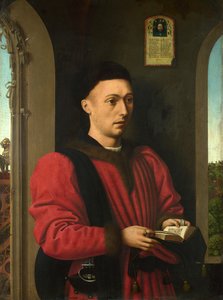
彼得·克里斯都斯
1465 - 1476 , 比利时
艺术家简介
- Artistic Movement Or Style: 早期尼德兰艺术
- Artists Or Movements Influenced By This Artist:
- 扬·凡·艾克
- 罗吉尔·范德魏登
- Artists Who Influenced This Artist:
- 扬·凡·艾克
- 罗吉尔·范德魏登
- Date Of Birth: 1465年
- Date Of Death: 1476年
- Full Name: 彼得鲁斯·克里斯蒂斯
- Nationality: 比利时
- Notable Artworks:
- 圣母与圣婴
- 青年肖像
- Place Of Birth: 比利时,巴勒-赫托格
相关文章

The Enduring Legacy of Oil on Canvas: Technique, History & Aesthetic Impact
Explore the rich history & techniques of oil painting – from Renaissance masters to Impressionism. Discover pigments, layering methods, and why this timeless medium endures. Expert insights for artists & art enthusiasts.
The Northern Renaissance: A Masterclass in Hyper-Realism, Oil Innovation, and Symbolic Depth
Explore the profound mastery of Northern Renaissance art. Discover the technical brilliance of Flemish oil painting, the intricate symbolism of Bosch and Bruegel, and the revolutionary realism that redefined European art history through an expert historical lens.

Oil on Canvas: A Historical & Technical Exploration of a Timeless Artistic Medium
Explore the rich history & enduring techniques of oil painting on canvas. Discover the science behind its longevity, conservation practices, and contemporary relevance. Expert insights for art enthusiasts.

The Enduring Power of Painting: A Historical & Contemporary Exploration of Form and Emotion
Explore the rich history & enduring techniques of oil painting with OriginalUniqueArt. Discover masterpieces, learn about art collecting, and find authentic handmade reproductions crafted by skilled artists.

画布上的流光溢彩:油画技法、历史沿革与当代实践
深入探索油画技法的历史沿革,从文艺复兴到卡拉瓦乔的革命性创新。了解多层涂布技术如何塑造色彩与光影,并洞悉当代油画实践中的传统与突破。OriginalUniqueArt为您提供专业的艺术品咨询和定制服务。

