

 实景预览
实景预览
 发送
发送 分享
分享
 详情
详情 指南
指南

 下载图片
下载图片
 相似作品
相似作品 X射线
X射线 幻灯片播放
幻灯片播放 统计数据
统计数据Caesar Dictates His Commentaries
 Oil On Canvas
- WallArt
- Neoclassical Revival
 1812
1812- 19th Century
 270.0 x 450.0 cm
 奎里纳尔宫
奎里纳尔宫
 阅读全文
阅读全文
手工油画复制品
由我们的艺术家按需定制,为您提供您所选尺寸及画框的布面手工油画。 ( 切换至版画销售渠道 切换至数字图像销售渠道)




P118B ¥10

P118H ¥10

P118W ¥10

P438Z ¥10

P508JH ¥12

P508YH ¥12

P805H ¥10

P805Z ¥10

P919BZ ¥10

P919G ¥10

P919XJ ¥10

P959ZH ¥10

P968JZ ¥12

W106C ¥8

W218G ¥10

W218JH ¥8

W218Y ¥10

W307PJ ¥10

W316G ¥10

W316PJ ¥8

W316Y ¥10

W398PJ ¥8

W4111J ¥10

W500HY ¥15

W500JH ¥15

W692G ¥12

W849H ¥8

W940BG ¥15

W953PJ ¥8




您可以从与原作比例一致的预设尺寸中进行选择。

请输入您需要的宽度和高度,以适配您的画框或墙面。由于作品为手工绘制,若您选择不同的尺寸比例,艺术家可能会在画面边缘多画一些或稍作裁剪 —— 由您决定。在开始绘画之前,我们会为您发送一份数字效果图供您确认。本页面上展示的图片并非最终实物 —— 只有效果图才能反映真实结果。
下单后,OriginalUniqueArt.com 团队将通过电子邮件联系客户获取具体要求,并提供效果预览图


 玻璃选项仅适用于110厘米以下的尺寸。

Caesar Dictates His Commentaries
复制品材质
复刻品尺寸说明
-


总计金额
¥ 2016
The Grandeur of Empire: Caesar Dictates His Commentaries
To stand before this monumental canvas is to be transported across the centuries, into the very heart of Roman intellectual power. Depicting the scene inspired by Plutarch’s biography, Caesar Dictates His Commentaries captures a moment of profound historical weight—the mind of Julius Caesar at work. The setting itself speaks volumes; confined within the intimate yet grand space of a tent that opens dramatically onto the bustling energy of the military camp beyond. This contrast between focused scholarly endeavor and martial might is palpable, drawing the viewer into the gravity of empire-building thought.
A Study in Classical Authority and Technique
The composition centers on Caesar himself, rendered with an unmistakable air of luminous authority as he sits near a tripod adorned with zoomorphic legs. Clad in a brilliant white cloak, his posture suggests both deep contemplation and absolute command. He is surrounded by scribes, their bent forms illustrating the meticulous act of recording history onto tablets, while Caesar holds the stylus—the instrument through which immortal words are shaped. The artist masterfully employs oil on canvas to achieve rich textures, from the sumptuous folds of drapery to the polished wood of the furniture and the sheen of the parchment. The sheer scale of this work, measuring 270 x 450 cm, demands attention, allowing every detail—from scattered books suggesting vast libraries of knowledge to the distant boat visible in the background—to contribute to a tapestry of ancient Roman life.
Echoes of Power: Historical Context and Symbolism
The painting is more than just a portrait; it is an allegory of historical legacy. The likeness given to Caesar evokes parallels with Napoleon, suggesting that the themes of military genius intertwined with literary record have echoed through epochs. This connection subtly nods toward Giorgio Vasari’s earlier depiction in Florence, grounding the piece within a lineage of artistic commemoration of great leaders. Symbolically, the act of dictation itself represents the eternal struggle to document and interpret human action—the moment history is fixed into permanence by genius. The presence of the scribes underscores that even the greatest minds require diligent hands to translate vision into tangible record.
An Interior Statement for the Connoisseur
For the collector or designer whose taste leans toward narratives of enduring power and classical sophistication, this reproduction offers an unparalleled focal point. Its dramatic scale ensures it will anchor any grand hall or library, lending an air of cultivated erudition to the space. It is a piece that does not merely decorate; it narrates. Owning this work means embracing a dialogue with antiquity—a celebration of intellect, military prowess, and the enduring power of the written word.
问答详情
Pelagio Palagi 的《Caesar Dictates His Commentaries》 使用的是强烈的对比,还是柔和的和谐?
Pelagio Palagi 的《Caesar Dictates His Commentaries》 的色彩分析记录了一种 Balanced 的对比与 Unified Palette 的和谐。
针对 Pelagio Palagi 的《Caesar Dictates His Commentaries》,建议采用怎样的打印尺寸与方向?
Large 尺寸,Landscape 构图:这是为 Pelagio Palagi 的《Caesar Dictates His Commentaries》 建议的打印设置。
Pelagio Palagi 的《Caesar Dictates His Commentaries》 使用了怎样的色调?
Pelagio Palagi 的《Caesar Dictates His Commentaries》 的色调被描述为 Earthy。这是对作品色彩的精炼概括。
艺术家简介
Early Life and Artistic Foundations
Pelagio Palagi, born in Bologna in 1775, embarked on an artistic journey nurtured from a remarkably young age. His formative years were profoundly shaped by Count Carlo Filippo Aldrovandi, a discerning patron who recognized and fostered the budding talent within the boy. Aldrovandi’s home was not merely a residence but a veritable academy, brimming with an extensive collection of prints and offering rigorous life drawing classes at the esteemed Accademia Clementina. This environment instilled in Palagi a deep appreciation for classical forms and techniques, providing him with a solid foundation in perspective, architecture, figurative painting, portraiture, and the art of collecting itself. It was a period of intense study and observation, laying the groundwork for his future versatility as an artist. Interestingly, these early artistic explorations coincided with the tumultuous arrival of Napoleon’s forces in Bologna, leading to unexpected commissions – designs for uniforms, medals, and emblems emblazoned with the revolutionary ideals of “Liberté, Égalité, Fraternité.” These initial projects demonstrated Palagi's adaptability and willingness to engage with the political currents of his time.From Roman Grandeur to Milanese Society
Palagi’s artistic development took a significant turn in 1806 when he journeyed to Rome, seeking further refinement at the Accademia di San Luca. It is believed that he may have studied under the tutelage of Vincenzo Camuccini, whose emphasis on historical accuracy and meticulous detail would leave an indelible mark on Palagi’s style. This Roman period proved pivotal, yielding notable works such as “Portrait of Giuseppe Guizzardi in Antique Costume” (1807) and the allegorical "Marriage of Amore and Psyche" (1808). He also undertook ambitious historical paintings like “Mario a Minturno,” showcasing his growing mastery of narrative composition. Beyond easel painting, Palagi’s talents were sought for large-scale decorative projects, including frescoes at the Palazzo del Quirinale and Palazzo Torlonia, demonstrating his ability to seamlessly blend artistic vision with architectural space. In 1815, Palagi relocated to Milan, establishing a private school that directly challenged the established authority of the Accademia di Brera. This bold move underscored his confidence in his pedagogical approach and his commitment to fostering independent artistic expression. During this Milanese chapter, he focused primarily on portraiture, capturing the likenesses of prominent figures like Giuseppe Bossi and Andrea Appiani, solidifying his reputation as a sought-after artist within elite social circles.Royal Patronage and Artistic Maturity
A new era dawned in 1832 when Palagi secured the patronage of King Carlo Alberto of Sardinia. This royal endorsement opened doors to significant commissions for various royal residences, transforming his career trajectory. He became deeply involved in ambitious enlargement projects at the Castle of Racconigi and modernization initiatives at the Palazzo Reale in Turin, showcasing not only his painting skills but also his aptitude for architectural design and interior decoration. His contributions were formally recognized with appointments as head of pictorial and decorative restoration projects and to the chair of decoration (cattedra di ornato) at the Accademia Albertina, cementing his position as a leading figure in the Italian art world. Perhaps the most magnificent testament to his artistic prowess during this period is “The Dance of the Hours,” a breathtaking ceiling painting commissioned for the ballroom at the Palazzo Reale in Turin. This work exemplifies Palagi’s ability to synthesize classical principles with a burgeoning Romantic sensibility, creating a dynamic and emotionally resonant composition that continues to captivate viewers today.A Synthesis of Styles and Enduring Legacy
Pelagio Palagi's artistic style represents a fascinating synthesis of Neoclassical rigor and emerging Romantic tendencies. His early training instilled in him a profound respect for clarity, order, and adherence to classical forms – qualities evident in his meticulously rendered portraits and historical paintings. However, influenced by artists like Francesco Hayez, he gradually incorporated elements of dramatic composition and emotional expression into his work, resulting in pieces such as “Gian Galeazzo Sforza” and “Ratto delle Sabine.” This willingness to embrace new artistic currents while remaining grounded in classical principles defines the unique character of his oeuvre. Beyond his accomplishments as a painter and sculptor, Palagi was an avid collector, amassing an impressive assemblage of Greek, Egyptian, Etruscan, and Roman sculpture, objects, and coins. Upon his death in 1860, he generously bequeathed this remarkable collection, along with his library, archive, and drawings, to the Comune di Bologna. Today, these treasures are housed at the Museo Civico Archeologico, Museo Civico Medievale, and Biblioteca Comunale dell'Archiginnasio, ensuring that Palagi’s legacy as a versatile artist, discerning collector, and influential figure in 19th-century Italian art endures for generations to come. His contributions extended beyond the canvas and chisel; he was a true polymath who left an indelible mark on the cultural landscape of his time.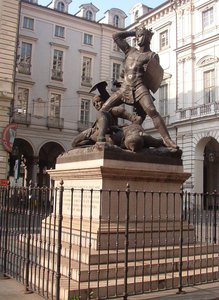
Pelagio Palagi
1775 - 1860 , Italy
快速概览
- Artistic Movement Or Style: Neoclassical, Romanticism
- Artists Who Influenced This Artist:
- Carlo Aldrovandi
- Vincenzo Camuccini
- Francesco Hayez
- Date Of Birth: 1775
- Date Of Death: 1860
- Full Name: Pelagio Palagi
- Nationality: Italian
- Notable Artworks:
- Portrait of Conte Lucini
- Self-portrait w/ friends
- The Dance of the Hours
- Mario a Minturno
- Marriage of Amore & Psyche
- Place Of Birth: Bologna, Italy
相关文章
古典主义的永恒遗产:原则、演变与西方艺术的影响
深入探索古典主义艺术的起源、演变与西方艺术史上的深远影响。OriginalUniqueArt.com提供高品质油画复制品和专业艺术咨询,助您鉴赏经典,收藏传世之作。
Timeless Resonance: Exploring Classic Vibe in Art – A Historical & Aesthetic Analysis
Explore the rich history & enduring aesthetic of Classicism art! Discover key movements, iconic artists like Raphael & David, and its lasting influence on Western art. Deepen your appreciation today.

The Enduring Legacy of Formal Portraiture: Power, Identity & Artistic Exploration
Explore the rich history of formal portraiture & its enduring power to capture identity and shape perception. Discover investment-worthy artworks, expert appraisals, and custom reproduction services at OriginalUniqueArt.
Neo-Classicism's Greatest Hits: 10 Masterpieces for Your Home |
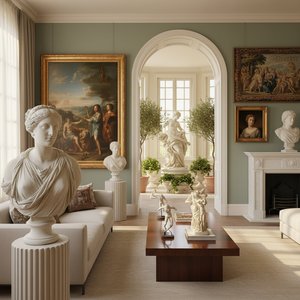
Journey through Neo-Classicism's finest! Explore 10 iconic masterpieces by David, Ingres & Canova. Discover art history, techniques & timeless beauty – perfect for inspiring your home decor. Find museum-quality reproductions at