
 分享
分享 分享
分享
 详情
详情 指南
指南

 下载作品
下载作品
 相似作品
相似作品 幻灯片播放
幻灯片播放 问答
问答 统计数据
统计数据H. Suite (XI)

- 205.0 x 250.0 cm


 展开全文
展开全文
艺术微喷/版画
博物馆级艺术微喷或帆布版画,制作高效,并提供多种饰面选择。 ( 订购纯手工绘制画作 切换至数字图像销售渠道)




































您可以从与原作比例一致的预设尺寸中进行选择。

请输入您所需的宽度和高度,以适配您的画框或墙面。由于印刷品只能进行裁剪,无法超出原图尺寸,因此若比例不一致,画面的一部分将会被裁切。在正式印刷之前,我们会为您发送一份数字效果图供您确认。本页面显示的图片并非最终裁剪后的效果——只有效果图才能展示真实的裁剪情况。


 玻璃选项仅适用于110厘米以下的尺寸。

H. Suite (XI)
艺术微喷/版画
复刻品尺寸
-


最终结算价
¥ 543
Pedro Cabrita Reis’s “H. Suite (XI)” – A Dialogue Between Geometry and Memory
The sculpture "H. Suite (XI)" by Pedro Cabrita Reis stands as a testament to the artist's profound engagement with architectural form and his exploration of memory’s enduring influence on perception. Created in 1993, commissioned by the Colecção da Caixa Geral de Depósitos, this monumental piece transcends mere materiality; it embodies a conceptual framework rooted in Reis’s meticulous observation of space and his fascination with the vestiges of time—a preoccupation that characterizes much of his oeuvre. Measuring 205 x 250 cm, the sculpture isn't simply an object to be viewed but rather an invitation to contemplate its relationship with the viewer and its connection to broader artistic traditions.- Material Composition: Reis employed wood—specifically cedar—combined with glass panes and strategically positioned lamps. This deliberate selection of materials speaks volumes about his aesthetic sensibilities, prioritizing solidity and transparency simultaneously. The cedar’s inherent grain pattern provides textural contrast against the luminous glow emanating from the glass domes, creating a visual interplay that mimics the layering of experience.
- Architectural Influence: “H. Suite (XI)” draws heavily from Reis's earlier work, notably “Das mãos dos construtores” (1992), which consisted of immense pipelines converging into enclosed brick dwellings—a project deeply influenced by Brutalist architecture and its exploration of raw materiality. This architectural lineage informs the sculpture’s geometric precision and its restrained palette, reflecting a desire to distill complex ideas into simplified forms.
- Symbolic Resonance: The sculpture's title itself – “H.” – is deliberately ambiguous, referencing both the Hebrew letter Hei (ה) signifying “life” and the artist’s own initials. This subtle nod to personal identity underscores Reis’s belief that art should grapple with fundamental questions about existence and consciousness. Furthermore, the glass domes symbolize illumination—both literal and metaphorical—representing a quest for understanding and confronting hidden truths.
Technique and Craftsmanship – Precision Meets Organic Texture
Reis's meticulous craftsmanship is evident in every aspect of “H. Suite (XI).” The cedar wood was painstakingly shaped to create interlocking structures that resemble fragmented architectural elements—a technique reminiscent of Constructivist sculpture, where geometric forms were employed to convey social ideals. However, Reis avoids a purely mechanistic approach, incorporating subtle irregularities and variations in texture that imbue the sculpture with an organic quality. These imperfections serve as reminders that even seemingly rational constructions are shaped by unpredictable forces—mirroring the artist’s preoccupation with capturing fleeting moments of perception. The careful positioning of the lamps enhances this textural contrast, casting diffused light onto the cedar surfaces and emphasizing their natural grain.Historical Context – Reis's Engagement With Artistic Legacy
Pedro Cabrita Reis’s artistic trajectory is marked by a continuous dialogue with architectural history and artistic movements from the mid-20th century. His fascination with Brutalist architecture—characterized by its monumental scale, exposed concrete, and rejection of ornamentation—is palpable in “H. Suite (XI).” This stylistic choice reflects Reis's conviction that art should confront grand narratives about humanity’s relationship to space and materiality. Simultaneously, he engages with the legacy of Constructivism, prioritizing geometric abstraction as a means of conveying conceptual ideas—a strategy evident in his earlier sculptures and publications.Emotional Impact – A Meditation on Time and Perception
Ultimately, “H. Suite (XI)” transcends its formal qualities to evoke a profound emotional response. The sculpture’s stillness invites contemplation—encouraging viewers to consider the passage of time and the ways in which memory shapes our understanding of the world. Its luminous glass domes symbolize hope—a beacon illuminating the darkness of uncertainty and prompting us to confront existential questions. Like Reis's other works, “H. Suite (XI)” speaks to a deep sensitivity to human experience—capturing the elusive beauty of fleeting moments and acknowledging the enduring power of artistic expression to grapple with complex themes.常见问题与解答
根据创作日期判断,"H. Suite (XI)" (1993) 属于 佩德罗·卡布里塔·雷斯 艺术生涯的哪个阶段?
1993 年的创作日期将《H. Suite (XI)》置于 佩德罗·卡布里塔·雷斯 艺术发展的 Mature Period 时期。
"H. Suite (XI)" 是否属于公有领域作品?
佩德罗·卡布里塔·雷斯 的《H. Suite (XI)》 属于 仍受版权保护。此版权状态决定了该作品图像的复制方式。
建议将 "H. Suite (XI)" 的 Landscape 格式作品陈列在什么位置?
佩德罗·卡布里塔·雷斯 的《H. Suite (XI)》 的 Landscape 格式推荐用于 Living Room。画幅与空间的结合,将为您提供复制品摆放的指引。
艺术家简介
空间与记忆的制图学:佩德罗·卡布里塔·雷斯的世界
1956年出生于葡萄牙里斯本的佩德罗·卡布里塔·雷斯(Pedro Cabrita Reis),已然成为当代艺术领域中举足轻重的关键人物。他不仅代表了其国家的艺术面貌,更在积极塑造着葡萄牙艺术与国际舞台之间的对话。他在里斯本那充满历史与文化底蕴的环境中度过了 formative 岁月,这深刻地影响了他的创作实践,赋予了他的作品一种对场所、记忆以及内外世界之间那份脆弱关系的敏锐感知。早在正式确立艺术家地位之前,卡布里塔·雷斯就展现出了推动艺术批判性对话的决心,他在1978年至1982年间创办并主导了极具影响力的杂志《Arte Opinião》——在那个社会与政治剧烈变革的时期,该平台为艺术讨论提供了至关重要的空间。这种早期对艺术创作理论基础的参与,预示了他日后作品中所呈现出的深邃概念性。现成物的语言与转瞬即逝的光影
卡布里ta·雷斯的艺术词汇极其丰富,涵盖了绘画、雕塑、摄影及素描,然而贯穿其创作所有维度的始终是一条统一的线索:对空间既作为物理现实又作为心理建构的探索。他并非仅仅是在占据空间,而是在解构空间、重组空间,并为其注入多层意义。其作品的一个显著特征是对工业材料的大师级运用——钢条、回收的窗户、门框——这些往往被忽视或丢弃的元素,在卡布里塔·雷斯的手中,被转化为关于记忆、过渡与时间流逝的动人象征。这并非单纯的美学选择,而代表了对存在之物质性的自觉介入,通过扎根于有形世界来锚定他更为抽象的概念探索。同样至关重要的是他对光线的创新运用,尤其是荧光灯管。光在这里不仅仅是照明,它更是构图中的活跃媒介,分割着空间,界定着边界,并投射出舞动与变幻的阴影,营造出一种强调感知之瞬时性的飘渺质感。这些现成物与人造光之间的交织,生成了一种独特的视觉语言——既带有冷峻的极简主义色彩,又蕴含着深邃的感染力。国际认可与里程碑式的展览
卡布里塔·雷斯的职业生涯轨迹伴随着日益增长的国际认可,其起点可以追溯到1981年在里斯本国家美术学会举办的早期个展《25 Desenhos》(25幅素描)。然而,真正将他推向全球艺术舞台的时刻是1992年参加卡塞尔文献展(Documenta IX)。这一关键时刻之后,他接连受邀参加了诸如2017年第十四届文献展等顶级艺术盛会,并在威尼斯双年展中多次亮相——曾于199升、2003年代表葡萄牙参展,并参与了1997年的Aperto板块。他在第21届和第24届圣保罗双年展中的入选,进一步巩固了他作为当代艺术重要发声者的地位。诸如《倾斜的绘画 #5》这类里程碑式的装置作品,通过玻璃板、霓虹灯与木材的微妙平衡,展现了他创造既具建筑感又极具个人化空间效果的能力。同样,《它绝非关乎平衡 #2》利用巨大的金属梁,探讨了时间、脆弱性以及存在本身固有的不稳定性。这些作品并非单纯的物件,它们是环境——是能够引发沉思并挑战传统空间与形式观念的沉浸式体验。公共介入与持久的艺术遗产
在画廊与博物馆的围墙之外,卡布里塔·雷斯始终致力于通过场域特定装置(site-specific installations)与公共领域进行对话。他在里斯本中央泰若(Central Tejo, 2018)和波尔图宫殿(Palácio, 2005)的艺术介入,证明了他对既有建筑语境敏锐的回应能力,将工业空间转化为艺术反思的场所。这种对公共艺术的投入,彰显了他坚信艺术应当是可触达的、并与更广泛的受众产生共鸣的信念。如今,他的作品已被世界各地的顶尖收藏机构珍藏,包括古尔本基安博物馆、泰特现代美术馆以及贝拉多博物馆——这正是其持久品质与重要性的明证。佩德罗·卡布里塔·雷斯作为葡萄牙当代艺术的领军人物,其对材料的创新运用、对光影空间的探索以及深厚的概念深度,不仅丰富了葡萄牙的艺术遗产,更在全世界观众心中激起了共鸣。他不断突破边界,在实验新方法的同时,始终坚定地致力于探索人类感知与经验核心处的根本问题——那些关于记忆、场所以及现实本质本身的问题。
佩德罗·卡布里塔·雷斯
1956 - , 葡萄牙
艺术家简介
- Artistic Movement Or Style: 观念艺术, 装置艺术
- Artists Or Movements Influenced By This Artist: ['当代葡萄牙艺术']
- Artists Who Influenced This Artist:
- 建筑理论
- 观念艺术
- Date Of Birth: 1956年9月5日
- Full Name: 佩德罗·卡布里塔·雷斯
- Nationality: 葡萄牙
- Notable Artworks:
- À propos des lieux d’origine #1
- H. Suite (XII)
- H. Suite (XI)
- The Leaning Paintings #5
- It is never about balance #2
- Place Of Birth: 葡萄牙,里斯本
相关文章

The Enduring Form: Exploring Themes & Techniques in Sculpture Across Historical Periods
Explore the rich history of sculpture from ancient masterpieces to contemporary innovations. Discover key techniques, influential artists & investment potential for discerning art collectors.

The Enduring Form: Sculpture Across History, Technique & Emotional Resonance
Explore the rich history of sculpture with OriginalUniqueArt. Discover key techniques, influential artists & investment potential for discerning collectors. Expert insights into valuing and collecting timeless masterpieces.
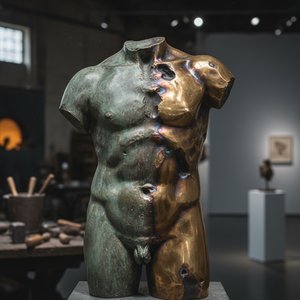
青铜雕塑艺术史:跨越千年的力量与美感,探究古代铸造工艺与现代创作的永恒魅力
探索青铜雕塑的千年魅力,本文由资深艺术史学者撰写,深入解析古代铸造技术与现代收藏价值。为高端藏家提供专业鉴定、保养指南和投资建议,让您在信任与品质中发现珍贵艺术品。

Bronze Sculptures That Defined Art History | OriginalUniqueArt
Journey through art history with our Top 10 bronze sculptures! Explore masterpieces by Rodin, Michelangelo & more. Discover stories behind iconic statues and find museum-quality reproductions for your home decor at OriginalUniqueArt.com.

Bronze Age to Modern Masters: 10 Sculptures That Redefined Art | OriginalUniqueArt
Journey through art history with 10 legendary bronze sculptures – from Michelangelo's David to Rodin’s Thinker. Explore the stories, techniques & timeless beauty of these masterpieces. Find museum-quality reproductions & elevate your home decor on OriginalUniqueArt.com.