

 实景预览
实景预览
 发送
发送 分享
分享
 详情
详情 指南
指南

 下载图片
下载图片
 相似作品
相似作品 X射线
X射线 幻灯片播放
幻灯片播放 统计数据
统计数据Still Life

 阅读全文
阅读全文
艺术微喷/版画
博物馆级艺术微喷或帆布版画,制作高效,并提供多种饰面选择。 ( 订购此收藏品的纯手工复刻画作 切换至数字图像销售渠道)




P118B ¥10

P118H ¥10

P118W ¥10

P438Z ¥10

P508JH ¥12

P508YH ¥12

P805H ¥10

P805Z ¥10

P919BZ ¥10

P919G ¥10

P919XJ ¥10

P959ZH ¥10

P968JZ ¥12

W106C ¥8

W218G ¥10

W218JH ¥8

W218Y ¥10

W307PJ ¥10

W316G ¥10

W316PJ ¥8

W316Y ¥10

W398PJ ¥8

W4111J ¥10

W500HY ¥15

W500JH ¥15

W692G ¥12

W849H ¥8

W940BG ¥15

W953PJ ¥8




您可以从与原作比例一致的预设尺寸中进行选择。

请输入您所需的宽度和高度,以适配您的画框或墙面。由于印刷品只能进行裁剪,无法超出原图尺寸,因此若比例不一致,画面的一部分将会被裁切。在正式印刷之前,我们会为您发送一份数字效果图供您确认。本页面显示的图片并非最终裁剪后的效果——只有效果图才能展示真实的裁剪情况。


 玻璃选项仅适用于110厘米以下的尺寸。

Still Life
艺术微喷/版画
复刻品尺寸说明
-


总计金额
¥ 537
A Symphony of Color and Form: Exploring Paul Klee’s Still Life
Paul Klee's "Still Life" stands as a testament to the artist’s singular vision—a deceptively simple arrangement of objects transformed into a complex tapestry of emotion and abstraction. Painted sometime between 1930 and 1940, during his prolific period in Murnau, Bavaria, this artwork embodies Klee's unwavering commitment to exploring the interplay between visual perception and psychological experience. It’s not merely a depiction of utensils; it’s an invitation into Klee’s inner world, rendered with meticulous care and infused with profound symbolic resonance.- Subject Matter: The composition centers around commonplace items – a knife, spoon, fork – yet these familiar tools are presented not as objects of everyday practicality but as conduits for artistic contemplation. Klee deliberately eschewed realism, prioritizing instead the expressive potential of form and color to convey deeper meanings.
- Style: Klee’s style is undeniably rooted in Expressionism's exploration of subjective emotion, albeit filtered through a distinctly geometric lens. Influenced by Cubism’s fragmentation of perspective and Surrealist impulses toward dreamlike imagery, he developed a unique visual vocabulary characterized by tessellated planes, overlapping shapes, and subtle tonal variations.
Technique and Material Considerations
Klee employed watercolor and gouache on paper—a combination that lends itself beautifully to capturing the ethereal quality of his vision. The delicate washes of blue create a luminous backdrop against which the angular forms of the knife, spoon, and fork emerge with striking clarity. Careful layering of pigments ensures depth and richness, demonstrating Klee’s mastery of color mixing and textural manipulation. This technique allows for an understated yet powerful expression of mood—a quiet contemplation punctuated by bursts of vibrant hue.- Color Palette: The dominant hues are muted blues and reds, skillfully juxtaposed to generate visual tension and convey a sense of melancholy. These colors aren’t merely decorative; they operate symbolically, hinting at themes of solitude, introspection, and perhaps even the fragility of existence—concepts frequently explored in Klee's oeuvre.
- Geometric Abstraction: The prominent red triangle is not simply an accidental element but a deliberate compositional device. Geometric abstraction was central to Klee’s artistic philosophy, representing a rejection of representational illusion and embracing instead the purity of form as a vehicle for conveying spiritual ideas.
Historical Context and Artistic Significance
“Still Life” emerged during Klee's time in Murnau, Bavaria—a region profoundly impacted by the burgeoning Surrealist movement. However, Klee’s approach diverged significantly from its more overtly fantastical tendencies. Instead, he sought to distill emotion into its most fundamental elements—color and shape—creating a work that speaks to the human condition with remarkable subtlety. It exemplifies Klee's belief that art should transcend mere visual representation, engaging viewers on an emotional level and prompting contemplation about universal themes.- Symbolism: The inclusion of birds – one positioned on the left and another on the right – adds another layer of symbolic interpretation. Birds often represent freedom, aspiration, and spiritual transcendence—concepts that resonate powerfully within Klee’s artistic worldview.
- Emotional Impact: Ultimately, “Still Life” evokes a feeling of serene contemplation mingled with quiet sadness. It invites viewers to consider the beauty inherent in simplicity and the profound depths of human emotion—a legacy that continues to inspire artists and collectors alike.
问答详情
克莱 是否还有其他别名或曾用名?
克莱 也被称为 保罗·克莱, Paul Klee (全名)。
克莱 的《Still Life》 传达了怎样的情感?
克莱 的《Still Life》 所记录的情感基调为 Reflective。它概括了作品所传达的情绪。
哪里可以买到克莱 的《Still Life》的手绘复制品?
您可以通过亚麻画布手工绘制油画复制品来订购《Still Life》的手绘复制品。您可以前往其手工油画复刻页面进行下单,并根据需求选择不同的尺寸。
艺术家简介
色彩与形式的生命:保罗·克莱
保罗·克莱,一个与玩味抽象和深刻情感深度紧密相连的名字,在二十世纪艺术的天地中占据着独一无二的位置。1879年12月18日出生于瑞士뮌헨부흐제(Münchenbuchsee),他的艺术之旅是一段不断探索的旅程,无视于容易归类的限制,开创了一条融合了表现主义、立体主义和超现实主义影响的独特视觉语言。克莱的成长培养了他对艺术的早期欣赏;他的父亲,一位德国音乐教师,而母亲,一位瑞士歌手,在他心中灌输了一种对听觉和视觉和谐的敏感性。这种基础性的音乐与绘画之间的联系将成为他作品的定义特征,不仅塑造了他的构图方法,也塑造了他对艺术作为一种抽象表达形式的理论理解,类似于音乐编排。最初被素描吸引,克莱很快放弃了对现实主义表现的追求,认识到它的局限性在于无法传达他所寻求表达的内在情感和思想的世界。他在1898年至1901年间慕尼黑艺术学院学习,这是一个充满实验和发展其独特艺术声音的时期。艺术视角的塑造
克莱早期的作品反映了新艺术运动和象征主义的影响,然而即使在这些框架内,他未来风格的暗示也开始显现。他在1914年的一次旅程对他的艺术发展具有关键意义。北非强烈的光线和充满活力的氛围深刻地影响了他的色彩运用,激励他超越柔和色调,转向更鲜艳、更具表现力的调色板。这一经历标志着一个转折点,巩固了他将抽象作为捕捉感知本质而非仅仅复制其表面外观的一种手段的承诺。他不仅仅*看到*突尼斯;他正在将它的情感共鸣转化为视觉形式。在整个这段时期,克莱与各种艺术运动互动,吸收了它们的原则,同时又抵制完全遵守任何单一意识形态。他对音乐的兴趣仍然至关重要,他经常谈论绘画作为一种类似于创作音乐作品的过程——精心安排元素以创造和谐的整体。这种共感觉到的方法体现在他的线条的节奏感、色彩微妙的平衡以及许多作品中普遍存在的运动感中。包豪斯及其他:蓬勃发展的时期
从1931年到1933年,克莱接受了德国艺术、设计和建筑学院(Bauhaus)的教职,与瓦西里·康定斯基并肩工作。这段时期对他艺术的发展来说是极具成效的。在创新思想家和艺术家们的包围中,他在一个鼓励实验和理论探究的环境中蓬勃发展。在他这些年的作品深入研究了色彩理论和形式关系,探索了抽象形式与情感表达之间的相互作用。然而,随着纳粹主义在德国的兴起,这个富有创造力的天堂被打破了。1933年,由于他的艺术被纳粹政权视为“堕落”,克莱被解雇出包豪斯。被迫返回瑞士,他继续绘画,但由于日益加剧的政治动荡和个人困境,他的健康状况恶化。尽管面临这些挑战,克莱仍然致力于他的艺术愿景,创作了反映时代焦虑和他对艺术超越逆境力量坚定信念的作品。《哈马默特》、《兄弟姐妹》和《在六个阈值中》仅仅是几个例子,展示了他对色彩和形式的掌握。1940年6月29日,克莱在瑞士穆拉托(Muralto)去世,留下了一份遗产,这份遗产继续激励着艺术家并吸引着世界各地的观众。他理应被认为是二十世纪最重要的艺术人物之一,弥合了具象和抽象表现之间的鸿沟,巩固了他作为一位标志性创新者的地位,他的作品至今仍具有永恒的相关性。主题、风格与持久的遗产
保罗·克莱的作品以一种引人入胜的趣味性和深刻沉思感的迷人融合为特征。他经常采用童般的形象和异想天开的构图,并赋予它们多层次的象征意义。他的艺术中反复出现的主题包括花园、风景、肖像和抽象排列——每种都作为探索人类经验复杂性的载体。在他去世后出版的《保罗·克莱笔记本》为学者提供了对其广泛理论调查色彩和设计的宝贵见解,揭示了一种对艺术创作采取一丝不苟和智力化的方法。他不仅仅是在绘画;他正在构建一种基于和谐、平衡和情感共鸣原则的视觉语言。博物馆与进一步探索
- Zentrum Paul Klee (伯尔尼): 拥有克莱作品最多的地方,提供了对艺术家艺术之旅的全面概述。
- 伯尔尼美术馆: 除了毕加索和霍德勒等大师的作品外,还展示了克莱的重要作品。
- 伯尔尼艺术博物馆: 瑞士最古老的艺术博物馆之一,收藏了包括克莱和其他现代大师的作品。

克莱
1879 - 1940 , 瑞士
快速概览
- Artistic Movement Or Style: 表现主义、立体主义、超现实主义
- Artists Or Movements Influenced By This Artist: ['现代艺术']
- Artists Who Influenced This Artist: ['瓦西里·康定斯基']
- Date Of Birth: 1879年12月18日
- Date Of Death: 1940年6月29日
- Full Name: 保罗·克利
- Nationality: 瑞士-德国
- Notable Artworks:
- 哈马默特
- 兄弟
- 在六个阈值中
- Place Of Birth: 瑞士慕夏堡
相关文章
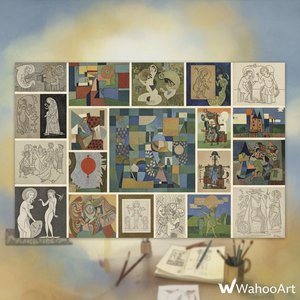
保罗·克利25幅杰作:色彩与形式的艺术之旅 | OriginalUniqueArt
探索保罗·克利25幅杰作,领略抽象艺术的魅力!深入了解克利作品背后的故事、色彩构成与艺术灵感。OriginalUniqueArt.com提供高清油画复制品,为您的家居装饰增添艺术气息。立即在线探索完整系列!

Paul Klee: A Poetics of Form and Color – Exploring the Inner Landscape of a Modern Master
Explore the captivating world of Paul Klee! Discover his innovative art, Bauhaus influence, & unique symbolic language. Expert analysis & high-quality reproductions at OriginalUniqueArt.

几何抽象艺术十大杰作:定义现代家居装饰的经典之作
探索几何抽象艺术的十大杰作!康定斯基、蒙德里安等大师作品,色彩构成与非具象之美。OriginalUniqueArt.com提供博物馆级艺术复制品,为您的家居带来现代艺术灵感。立即在线探索完整系列!

保罗·塞尚:25幅大师杰作,重塑现代艺术与家居美学 | OriginalUniqueArt
探索保罗·塞尚25幅经典杰作!深入了解后印象派大师的艺术生涯、独特技法与色彩运用。OriginalUniqueArt提供高清油画复制品,为您的家居带来博物馆级艺术体验。立即发现更多名画,点亮生活空间!

Kandinsky's Masterpieces: 25 Paintings That Define Abstract Art | OriginalUniqueArt
Journey through Wassily Kandinsky's 25 most iconic abstract paintings. Explore his revolutionary use of color, form & spiritual expressionism. Find museum-quality Kandinsky reproductions and elevate your home decor with OriginalUniqueArt.com. Discover all masterpieces on OriginalUniqueArt.com!


