切换至版画销售渠道
 展开全文
展开全文







































 对于任何边长超过 105 厘米(约 41 英寸)的艺术品或复制品,画框将以拆解后的组件形式发货。此方法可确保安全送达并防止运输过程中的损坏。


A Fragment of Hope Amidst Uncertainty
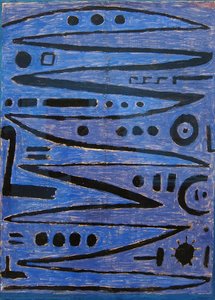
- Subject Matter: The painting depicts a solitary human face rendered in an abstracted form against a serene blue backdrop. This deliberate simplification prioritizes emotional resonance over precise anatomical detail, inviting viewers to contemplate the essence of human experience.
- Style: Klee’s work embodies the spirit of Surrealism and Expressionism simultaneously. While retaining elements of Cubist fragmentation—particularly evident in the geometric shapes subtly interwoven within the face—the overall aesthetic leans towards lyrical abstraction, characteristic of his mature style. It's a visual language that eschews literal representation for conveying feeling.
- Technique: Executed in watercolor on paper, “Little Hope” showcases Klee’s masterful control over color and texture. Watercolor pigments blend seamlessly to create luminous washes and delicate gradations, capturing the ethereal quality of light and atmosphere. The artist employs a technique known as ‘masking,’ strategically covering portions of the paper with adhesive tape to ensure consistent pigment distribution and achieve precise tonal harmonies.
- Historical Context: Created in 1938 during the tumultuous period of World War II, “Little Hope” reflects the anxieties and aspirations of its time. Klee’s artistic output during this era was marked by a preoccupation with themes of fragility, resilience, and spiritual contemplation—responses to the pervasive fear of destruction that gripped Europe.
- Symbolism: The blue hue dominating the background is not merely decorative; it symbolizes tranquility and introspection – a deliberate counterpoint to the external pressures of war. Furthermore, the distorted face itself can be interpreted as representing vulnerability and inner turmoil, yet simultaneously conveying an unwavering spirit of hope—a subtle affirmation of human perseverance in the face of adversity.
Exploring Klee’s Artistic Vision
Paul Klee's artistic philosophy revolved around a belief that art should transcend mere imitation of nature. Instead, he sought to capture inner states and emotions through visual symbols—a method deeply rooted in Jungian psychology and influenced by Eastern philosophies. His approach championed spontaneity and intuition, rejecting rigid academic conventions in favor of embracing chance and experimentation.Watercolor’s Delicate Embrace
The choice of watercolor as the medium was crucial to Klee's artistic intent. Watercolor pigments possess remarkable transparency and luminosity—qualities that allowed him to achieve breathtaking effects of color and light. Unlike oil paints, which require layering and blending over extended periods, watercolor dries quickly, permitting artists to capture fleeting impressions and imbue their canvases with immediacy.A Legacy of Emotional Resonance
“Little Hope” stands as a testament to Klee’s enduring legacy—a painting that continues to captivate viewers with its understated beauty and profound psychological depth. Its evocative imagery speaks to universal themes of human emotion, reminding us that even amidst darkness and uncertainty, the possibility of solace and renewal persists.常见问题与解答
在克莱的创作生涯中,"Little Hope"处于怎样的地位?
"Little Hope" 是 克莱 Abstract Expressionism 时期的代表作,其创作主题涵盖了 expressionist roots, swiss identity, emotional depth, geometric abstraction, klee legacy。
"Little Hope" 的作者是谁?
《Little Hope》被归为克莱的作品。
针对我的房间,"Little Hope" 应该打印成什么尺寸?
针对 Living Room,建议将 克莱 的《Little Hope》 打印为 Large。
 实景预览
实景预览
 分享
分享 分享
分享
 详情
详情 指南
指南

 下载作品
下载作品
 相似作品
相似作品 X射线
X射线 幻灯片播放
幻灯片播放 问答
问答 统计数据
统计数据