
 实景预览
实景预览
 分享
分享 分享
分享
 详情
详情 指南
指南

 下载作品
下载作品
 相似作品
相似作品 X射线
X射线 幻灯片播放
幻灯片播放 问答
问答 统计数据
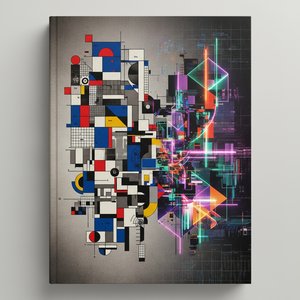
统计数据Untitled

- 35.0 x 23.0 cm

 展开全文
展开全文
艺术微喷/版画
博物馆级艺术微喷或帆布版画,制作高效,并提供多种饰面选择。 ( 订购纯手工绘制画作 切换至数字图像销售渠道)




































您可以从与原作比例一致的预设尺寸中进行选择。

请输入您所需的宽度和高度,以适配您的画框或墙面。由于印刷品只能进行裁剪,无法超出原图尺寸,因此若比例不一致,画面的一部分将会被裁切。在正式印刷之前,我们会为您发送一份数字效果图供您确认。本页面显示的图片并非最终裁剪后的效果——只有效果图才能展示真实的裁剪情况。


 玻璃选项仅适用于110厘米以下的尺寸。

Untitled
艺术微喷/版画
复刻品尺寸
-


最终结算价
¥ 543
艺术家简介
A Pioneer of American Abstraction: The Life and Art of Paul Kelpe
Paul Kelpe, born in Minden, Germany in 1902, emerged as a pivotal figure in the development of abstract art within the United States. His journey, spanning both continents and artistic movements, was marked by an unwavering commitment to geometric abstraction and innovative experimentation. Initially drawn to music, Kelpe’s path dramatically shifted after encountering the burgeoning world of abstract painting, igniting a passion that would define his life's work. He embarked on formal training at the Academy of Arts in Hanover, immersing himself in art history and architecture while simultaneously absorbing the revolutionary ideas circulating within the European avant-garde. This period proved formative, as Kelpe came under the influence of luminaries like Wassily Kandinsky and László Moholy-Nagy, and encountered the groundbreaking work of artists such as Kurt Schwitters, Naum Gabo, and El Lissitzky. The tenets of Suprematism and Constructivism resonated deeply with him, shaping his aesthetic sensibilities and providing a foundation for his future explorations. While acknowledging Schwitters’ impact, Kelpe deliberately diverged from what he perceived as the German artist's chaotic style, opting instead for meticulous precision and rigorously defined geometric forms. He envisioned his paintings not as representations of nature, but as carefully orchestrated “organizations of forms,” devoid of superfluous brushwork and imbued with a sense of structural clarity.From Found Objects to Geometric Constructions
Kelpe’s early artistic endeavors were characterized by a daring willingness to challenge conventional boundaries. Dissatisfied with traditional painting techniques, he pioneered the integration of found objects into his compositions, creating groundbreaking “combine” paintings that predated similar explorations by American artists. These works, born from a playful yet intellectually rigorous approach, seamlessly blended two- and three-dimensional elements, blurring the lines between painting and sculpture. This innovative technique showcased Kelpe’s keen formal understanding and inventive spirit. However, he soon transitioned away from literal assemblage, instead choosing to depict mechanical components—wheels, gears, and other industrial motifs—within his abstract compositions. These paintings celebrated a harmonious relationship between humanity and technology, reflecting the optimism of the machine age while maintaining a distinctly geometric aesthetic. In 1925, seeking artistic freedom and new opportunities, Kelpe immigrated to the United States, initially settling in New Jersey and then moving on to New York City.Navigating Realism and Abstraction: The WPA Years
The early 1930s found Kelpe in Chicago, a city where the art scene remained largely anchored in realism. Despite this prevailing artistic climate, he resolutely pursued his abstract vision, becoming something of an anomaly within the local community. He secured employment as a muralist with the Works Progress Administration (WPA), but faced challenges reconciling his aesthetic principles with the program’s emphasis on representational imagery. Forced to incorporate recognizable elements into his designs, Kelpe cleverly infused them with his signature geometric sensibility, depicting factories and industrial landscapes as “Bauhaus-inspired arrangements of geometric machinery.” Even these concessions were met with criticism from those who deemed his work too abstract, highlighting the resistance towards non-representational art during that era. Nevertheless, he persevered, creating murals for the Chicago branch of the Public Works of Art Project and later a representational American Scene mural for Southern Illinois University Library, depicting the region’s industrial, agricultural, and commercial history. These projects demonstrated his versatility while subtly asserting his unique artistic voice.The Williamsburg Murals and Lasting Legacy
In 1936, Kelpe relocated to New York City, a move that proved pivotal in his career. He was selected by Burgoyne Diller for the WPA’s mural program at the Williamsburg Housing Project in Brooklyn, alongside artists such as Ilya Bolotowsky and Albert Swinden. This commission provided him with an unprecedented opportunity to create large-scale abstract murals—the first of their kind in the United States. Kelpe's two contributions to the project are distinguished by their intricate geometric compositions, vibrant color juxtapositions, and unique surface textures. His masterful use of triangles, rectangles, trapezoids, and circles, arranged in striped, gridded, or bubbled patterns, created a dynamic interplay of form and color that captivated viewers. A critic for New York magazine lauded his work as “masterly,” praising its subtle balance of oranges and greens and its evocation of “jazz-age exuberance.” These murals, now on loan to the Brooklyn Museum, stand as enduring testaments to Kelpe’s artistic vision and his pioneering role in establishing abstract art within the American landscape. Paul Kelpe continued to paint, teach, and exhibit throughout his life, leaving behind a rich body of work that continues to inspire and challenge audiences today. He died in 1985, but his legacy as a true innovator remains firmly cemented in the history of American abstraction. His unwavering dedication to geometric form, combined with his willingness to experiment and push boundaries, paved the way for future generations of abstract artists.
Paul Kelpe
1902 - 1985 , Germany
艺术家简介
- Full Name: Paul Kelpe
- Nationality: German-American
- Date Of Birth: 1902
- Date Of Death: 1985
- Place Of Birth: Minden, Germany
- Notable Artworks:
- Williamsburg Murals
- Untitled
- Artistic Movement Or Style: Abstract Art, Constructivism
- Artists Who Influenced This Artist:
- Kandinsky
- Moholy-Nagy
- Schwitters
- Artists Or Movements Influenced By This Artist: ['American Abstract Art']
相关文章
Beyond Form & Color: Geometric Abstraction's Evolution in 20th/21st Century Art
Explore the evolution of geometric abstraction from Cubism to contemporary art. Discover key artists like Malevich & Mondrian, investment insights, and expert collecting advice at OriginalUniqueArt.

Watercolor Wonders: 10 Masterpieces That Redefined Art History | OriginalUniqueArt
Journey through 10 legendary watercolor masterpieces by Sargent, Turner & Homer! Explore iconic landscapes, portraits & floral art that redefined history. Find museum-quality reproductions and curated decor ideas at OriginalUniqueArt.com.

几何抽象艺术十大杰作:定义现代家居装饰的经典之作
探索几何抽象艺术的十大杰作!康定斯基、蒙德里安等大师作品,色彩构成与非具象之美。OriginalUniqueArt.com提供博物馆级艺术复制品,为您的家居带来现代艺术灵感。立即在线探索完整系列!

抽象表现主义:十幅定义艺术史的杰作
探索抽象表现主义的十幅经典杰作!波洛克、罗斯科等大师作品,揭秘艺术史上的重要瞬间。OriginalUniqueArt.com为您呈现高品质艺术品复制和精选家居装饰方案,感受现代艺术的力量与魅力。立即浏览全系列!

保罗·克利25幅杰作:色彩与形式的艺术之旅 | OriginalUniqueArt
探索保罗·克利25幅杰作,领略抽象艺术的魅力!深入了解克利作品背后的故事、色彩构成与艺术灵感。OriginalUniqueArt.com提供高清油画复制品,为您的家居装饰增添艺术气息。立即在线探索完整系列!