切换至版画销售渠道
 展开全文
展开全文







































 对于任何边长超过 105 厘米(约 41 英寸)的艺术品或复制品,画框将以拆解后的组件形式发货。此方法可确保安全送达并防止运输过程中的损坏。


A Symphony of Chaos: Exploring Jackson Pollock’s ‘Yellow Islands’
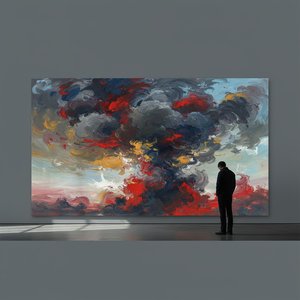
Jackson Pollock's ‘Yellow Islands’, painted in 1952, stands as a pivotal work within the Abstract Expressionist movement – a period that dramatically shifted the center of the art world to post-war America. This painting isn’t about *what* it depicts, but rather *how* it is depicted, and what emotional resonance that evokes. It embodies the rebellious spirit of a generation grappling with existential questions in a rapidly changing world.Deconstructing the Technique: The Allure of ‘Drip Painting’
‘Yellow Islands’ exemplifies Pollock's revolutionary “drip” technique. Abandoning traditional easel painting, he laid his canvas on the floor and, using sticks, hardened brushes, or even pouring directly from cans, allowed paint to flow onto the surface in a dynamic, uncontrolled manner. This wasn’t simply about randomness; it was a carefully orchestrated process of gesture and control. The resulting composition is a dense network of lines, splatters, and pools of color – primarily yellows, whites, blacks, and reds – creating a textured, multi-layered visual experience. This technique, often referred to as ‘action painting’, prioritized the physical act of creation itself, making the process as important as the final product.Navigating the Abstract Landscape: Symbolism & Interpretation
The title, ‘Yellow Islands’, offers a subtle hint towards possible interpretations. The vibrant yellows *could* suggest landmasses emerging from an abstract sea, evoking notions of hope or isolation. However, Pollock intentionally resisted definitive explanations of his work, preferring viewers to engage with the painting on a deeply personal level. There is no single “correct” reading. Instead, ‘Yellow Islands’ invites contemplation about themes of nature, chaos, energy, and the subconscious mind. The interplay between light and dark, order and disorder, creates a visual tension that mirrors the complexities of human emotion.Historical Context: Abstract Expressionism & Post-War America
Abstract Expressionism arose in the aftermath of World War II, reflecting a sense of disillusionment and anxiety prevalent at the time. Artists like Pollock sought to break away from representational art, exploring new ways to express inner experiences and universal truths. This movement wasn’t merely an aesthetic shift; it was a cultural statement – a rejection of established norms and a celebration of individual expression. ‘Yellow Islands’, with its raw energy and unconventional technique, perfectly encapsulates this spirit of innovation and rebellion.Emotional Resonance & Lasting Impact
‘Yellow Islands’ is not a painting to be passively observed; it demands engagement. The sheer scale and complexity of the composition can be overwhelming, yet simultaneously captivating. It evokes feelings of both exhilaration and unease, mirroring the turbulent emotions of the human condition. Pollock's work continues to inspire artists today, influencing generations with its bold experimentation and unwavering commitment to artistic freedom.Integrating ‘Yellow Islands’ into Your Space
- For Collectors: A cornerstone piece representing a pivotal moment in art history.
- For Interior Designers: A statement artwork that adds depth, texture, and intellectual weight to any modern or contemporary space. Its dynamic composition works well in large rooms with neutral color palettes.
- For Art Lovers: A visually stimulating piece that invites ongoing contemplation and personal interpretation.
常见问题与解答
杰克逊·波洛克 (Jié K逊·Bōluòkè) 的《Yellow Islands》 的亮度如何?
"Yellow Islands" 的色彩呈现出 Soft Shadow 的亮度。
什么样的摆放方式最适合 杰克逊·波洛克 (Jié K逊·Bōluòkè) 的《Yellow Islands》 的画幅?
凭借其Landscape的形态,建议将《Yellow Islands》复制品用于装饰Living Room。
如何以幻灯片形式查看杰克逊·波洛克 (Jié K逊·Bōluòkè) 的《Yellow Islands》?
您可以在作品的幻灯片展示页面上观看“Yellow Islands”的幻灯片展示。
 实景预览
实景预览
 分享
分享 分享
分享
 详情
详情 指南
指南

 下载作品
下载作品
 相似作品
相似作品 X射线
X射线 幻灯片播放
幻灯片播放 Q&A
Q&A 统计数据
统计数据