切换至版画销售渠道
 展开全文
展开全文







































 对于任何边长超过 105 厘米(约 41 英寸)的艺术品或复制品,画框将以拆解后的组件形式发货。此方法可确保安全送达并防止运输过程中的损坏。


Number 6 by Jackson Pollock: A Deep Dive
- Title: Number 6
- Artist: Jackson Pollock
- Year: 1949
- Dimensions: 112 x 137 cm
- Medium: Oil on Canvas
The Essence of Abstract Expressionism
Number 6 stands as a pivotal work within Jackson Pollock's oeuvre and the broader movement of Abstract Expressionism. Emerging in post-World War II America, this style rejected traditional representational art, instead prioritizing spontaneous gesture and emotional expression. Abstract Expressionists sought to convey profound human experiences through non-figurative forms, reflecting a sense of anxiety, liberation, and existential questioning prevalent during that era. Pollock's contribution was particularly revolutionary, moving away from the easel and embracing a radical new technique.
Pollock’s Drip Technique: Action Painting in Motion
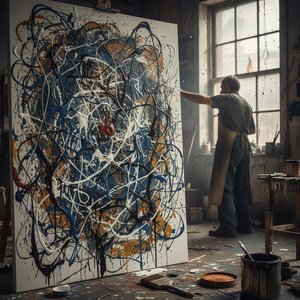
What truly sets Number 6 apart is Pollock’s groundbreaking “drip” or "pouring" technique. Rather than using brushes on an upright canvas, he laid the canvas flat on the floor and dripped, poured, and flung paint from above. This method allowed for a complete immersion in the creative process – Pollock literally moved around the canvas, engaging his entire body in the act of painting. This approach is often referred to as "action painting," emphasizing the physical energy and spontaneity inherent in the creation. The resulting composition isn't planned; it emerges organically from the interaction between paint, gravity, and the artist’s movements. Number 6 exemplifies this perfectly – a complex web of interwoven lines and colors that seem to pulsate with kinetic energy.
Symbolism and Emotional Resonance
While seemingly chaotic at first glance, Number 6 possesses an underlying structure and rhythm. The dense network of lines creates a sense of depth and complexity, drawing the viewer into its intricate details. The colors—ranging from blacks and whites to subtle shades of brown and gray—evoke a mood of introspection and contemplation. Some art historians interpret Pollock’s work as reflecting psychological states – the tangled web representing subconscious thoughts or emotions. Others see it as an exploration of pure form and color, divorced from any representational meaning. Regardless of interpretation, Number 6 evokes a powerful emotional response—a feeling of both exhilaration and unease, mirroring the complexities of the human condition.
Legacy and Enduring Appeal
Number 6 is more than just a painting; it’s a symbol of artistic innovation and a testament to Pollock's enduring influence. It challenged conventional notions of art-making and paved the way for future generations of artists to explore abstraction and expressive gesture. Its dynamic composition and emotional depth continue to captivate audiences worldwide, making it a highly sought-after artwork and a compelling subject for reproduction.
常见问题与解答
"Number 6" 的材质是什么,采用了哪种风格?
在“Number 6”中,Oil On Canvas技法与Abstract Expressionism运动交相辉映。
杰克逊·波洛克 (Jié K逊·Bōluòkè) 的《Number 6》 的亮度如何?
杰克逊·波洛克 (Jié K逊·Bōluòkè) 的《Number 6》 的亮度为 Dark。亮度描述了色彩呈现出的反射光量。
 实景预览
实景预览
 分享
分享 分享
分享
 详情
详情 指南
指南

 下载作品
下载作品
 相似作品
相似作品 X射线
X射线 幻灯片播放
幻灯片播放 Q&A
Q&A 统计数据
统计数据