切换至版画销售渠道
 展开全文
展开全文







































 对于任何边长超过 105 厘米(约 41 英寸)的艺术品或复制品,画框将以拆解后的组件形式发货。此方法可确保安全送达并防止运输过程中的损坏。


Subject and Composition of "Bathers (Hermitage)"
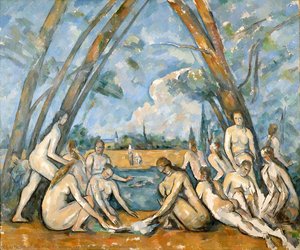
"Bathers (Hermitage)," painted by Paul Cézanne around 1891-1892, depicts a group of nude male figures relaxing in a natural setting. The composition is characterized by its deliberate arrangement of forms rather than a realistic portrayal of the scene. Five bathers are present: one standing prominently on the left, another on the right, and three seated or reclining between them. Cézanne's focus isn’t on narrative; instead, he explores the interplay of shapes, volumes, and planes within the landscape. The figures are integrated into the environment—trees rise behind them, birds fly overhead, and a sense of tranquility pervades the scene.
Style and Technique: Post-Impressionism's Geometric Approach
This artwork exemplifies Cézanne’s distinctive style within the Post-Impressionist movement. Departing from Impressionism’s emphasis on fleeting moments and optical effects, Cézanne sought to represent underlying structures and forms. He employed a technique of building up the image through short, visible brushstrokes, creating a textured surface that emphasizes the materiality of paint. The colors are not blended smoothly but rather applied in distinct planes, contributing to the painting’s geometric quality. Cézanne's approach can be seen as a precursor to Cubism, influencing artists like Picasso and Braque who would further deconstruct forms into abstract shapes.
Historical Context: Bridging Impressionism and Modern Art
“Bathers (Hermitage)” was created during a pivotal period in art history. The late 19th century witnessed the decline of traditional academic painting and the rise of new artistic movements challenging established conventions. Cézanne, along with artists like Van Gogh and Gauguin, pushed beyond Impressionism’s focus on capturing light and color to explore more subjective and expressive forms of representation. This work reflects a shift towards abstraction and a greater emphasis on the artist's individual vision—a key characteristic of modern art. The series of "Bathers" paintings was Cézanne's attempt to create a monumental, timeless depiction of human figures in nature, inspired by classical sculpture but reinterpreted through his unique lens.
Symbolism and Emotional Impact
While seemingly straightforward in its subject matter, “Bathers (Hermitage)” carries layers of symbolic meaning. The nude male figures evoke themes of vitality, physicality, and the connection between humanity and nature. Cézanne’s deliberate distortion of perspective and his emphasis on geometric forms create a sense of timelessness and universality. The painting's emotional impact is subtle yet profound—it invites viewers to contemplate the relationship between form and feeling, representation and reality. It evokes a sense of calm contemplation and appreciation for the beauty of the natural world.
常见问题与解答
哪些色调与主导色彩定义了“Bathers (Hermitage)”?
塞尚 的《Bathers (Hermitage)》 的色彩特征:Dark 色调,以 Khaki (#e2c78c) 为主导。
“Bathers (Hermitage)”的主题是什么?
塞尚 的《Bathers (Hermitage)》 中呈现的主题包括 nude figures, forest setting, hermitage museum, paul cezanne, post-impressionism, bathers, outdoor scene, composition,这些主题共同构成了该艺术作品的主旨。
"Bathers (Hermitage)" 的艺术风格与其创作时代有何关联?
"Bathers (Hermitage)" 属于 Post-Impressionism 流派,其创作者活跃于 19世纪 时期。
 实景预览
实景预览
 分享
分享 分享
分享
 详情
详情 指南
指南

 下载作品
下载作品
 相似作品
相似作品 X射线
X射线 幻灯片播放
幻灯片播放 问答
问答 统计数据
统计数据