

 效果预览
效果预览
 购买印刷品
购买印刷品 分享
分享 分享
分享
 详情
详情

 下载
下载
 相似作品
相似作品 X射线
X射线 幻灯片播放
幻灯片播放Morphine Addicts
 Acrylic On Canvas
- WallArt
- Impressionism
 1887
1887 24.0 x 37.0 cm
 大都会艺术博物馆
 展开详情
展开详情




P118B $10

P118H $10

P118W $10

P438Z $10

P508JH $12

P508YH $12

P805H $10

P805Z $10

P919BZ $10

P919G $10

P919XJ $10

P959ZH $10

P968JZ $12

W106C $8

W218G $10

W218JH $8

W218Y $10

W307PJ $10

W316G $10

W316PJ $8

W316Y $10

W398PJ $8

W4111J $10

W500HY $15

W500JH $15

W692G $12

W849H $8

W940BG $15

W953PJ $8




从与原作比例一致的预设尺寸中进行选择。

您可以输入自定义尺寸,以适配特定的画框或空间。如果所选尺寸与原图比例不符,我们将通过裁剪作品或添加手绘元素来扩展画面。数字样稿将在制作开始前发送给您确认。
请注意,屏幕预览无法准确反映实际的裁剪或扩展效果,只有样稿才能真实呈现最终的构图。
虽然我们提供定制尺寸服务,但为了保留原作比例,建议您从预设列表中选择尺寸。
下单后,OriginalUniqueArt.com 团队将通过电子邮件联系客户获取具体要求,并提供效果预览图。


 玻璃选项仅适用于110厘米以下的尺寸。

Morphine Addicts
复制材质
复制品尺寸
-


最终总价
$ 325
Paul Albert Besnard - Morphine Addicts
Paul Albert Besnard (1849-1934) stands as a singular figure in French art of the late nineteenth and early twentieth centuries—a painter who stubbornly resisted categorization while simultaneously achieving remarkable success across diverse artistic mediums. Born in Paris, he possessed an innate talent nurtured by formal training at the École des Beaux-Arts under Jean Bremond and profoundly shaped by the pioneering spirit of Alexandre Cabanel, whose meticulous realism served as a cornerstone for Besnard’s initial artistic explorations. His academic grounding provided a disciplined foundation upon which he would later forge his own distinctive path, one characterized by an unwavering fascination with color and light—concepts championed by the Impressionists. Despite eschewing the overtly dramatic aesthetic favored by his contemporaries, Besnard skillfully adapted Impressionistic techniques to monumental decorative pro Besnard’s oeuvre is marked by a profound sensitivity to human emotion and psychological nuance, particularly evident in his portraits of women – figures rendered with exquisite detail and imbued with an aura of melancholy. “Morphine Addicts,” completed in 1887, exemplifies this artistic approach, presenting two women presented in a starkly lit laboratory setting—a juxtaposition that immediately invites contemplation on themes of illness, addiction, and the complexities of human experience. The artist’s masterful command of etching technique contributes significantly to the artwork's expressive power, capturing subtle tonal variations and textural nuances with remarkable precision. The composition itself is deliberately restrained, focusing intently on the faces and upper bodies of the subjects—a stylistic choice that underscores Besnard’s commitment to realism while simultaneously conveying a sense of intimacy. The figures are positioned slightly off-center, creating visual balance and drawing the viewer's gaze towards their expressive eyes. A table laden with scientific glassware serves as a grounding element, anchoring the scene within its clinical context and subtly hinting at the underlying narrative. Besnard’s meticulous hatching and crosshatching techniques—inherited from Cabanel’s influence—are employed to build up areas of shadow, enhancing depth and creating an atmosphere of quiet contemplation. Color plays a crucial role in conveying emotion, though Besnard eschews vibrant hues characteristic of Impressionism, opting instead for a monochrome palette dominated by shades of grey and white. This tonal scheme amplifies the artwork’s melancholic mood, emphasizing the vulnerability of the subjects and fostering a connection with the viewer on an emotional level. The artist skillfully utilizes light and shadow to sculpt the forms of the women's faces, highlighting their expressions and conveying subtle nuances of emotion—a testament to Besnard’s artistic prowess. Ultimately, “Morphine Addicts” transcends mere visual representation; it functions as a poignant meditation on human suffering and resilience. Besnard’s stylistic blend of academic realism with Impressionistic sensibilities captures the essence of his era—a period marked by intellectual curiosity and an exploration of psychological states. The artwork's enduring appeal lies in its ability to provoke reflection on themes of addiction, vulnerability, and the profound beauty found within moments of quiet introspection. It remains a compelling example of Besnard’s artistic vision and a testament to the power of art to communicate complex emotions with grace and subtlety.艺术家简介
保罗·阿尔伯特·贝斯纳德的光辉传承
在法国艺术的璀璨织锦中,保罗·阿尔伯特·贝斯纳德(Paul Albert Besnard, 1849-1934)是一位独一无二的人物。作为一名画家,他以一种独特且难以归类的优雅姿态,穿梭于十九世纪末至二十世纪初变幻莫测的时代浪潮之中。这位出生于巴黎的艺术家,其艺术生涯始于美术学院(École des Beaux-Arts)严谨的殿堂,并在让·布雷蒙(Jean Bremond)的指导下深造。在他早期的艺术成长中,亚历山大·卡巴内尔(Alexandre Cabanel)那细致入微的现实主义风格留下了深刻印记,为贝斯纳德奠定了扎实的学院派基础。然而,在这一古典训练的底色之下,却跳动着一颗追求现代的心——他最终决定超越传统的刻板边界,去拥抱光影与大气中那转瞬即逝的美感。
随着艺术造诣的日臻成熟,贝斯纳德开始在结构严谨的学院派绘画与充满活力、感官驱动的印象派探索之间架起桥梁。尽管他并未为了纯粹的抽象而彻底抛弃形式,但他却成为了色彩的大师,运用着既明亮通透又蕴含深厚情感的调色盘。他的作品展现出一种对光影与物体表面交互作用的执着痴迷,无论是肖像画中细腻的肌肤,还是他宏大委托作品中辽阔的建筑空间,皆能捕捉到光的律动。这种将宏伟叙事与亲密情感完美融合的能力,使他得以超越时代的标签,创造出一种既永恒经典又具有鲜明现代感的艺术风格。
尺度与灵魂的大师
贝斯纳德真正的天才之处,或许最直观地体现在他将现代审美转化为宏大装饰性规模的能力上。他不仅仅是在创作绘画,更是在重塑空间。他那些雄心勃勃的湿壁画点缀着法国一些最负盛名的机构,见证了他将艺术视为一种公共且沉浸式体验的远见。这些杰作散落在如下地点:
- 索邦大学,在那里,他的笔触为学术殿堂的庄严注入了生命力。
- 药学院,展示了他将艺术与功能性建筑融为一体的非凡才华。
- 法兰西喜剧院的科学厅,是一场装饰性叙事艺术的胜利。
- 巴黎市政厅,映射出巴黎的城市自豪感与审美高度。
- 贝尔克医院礼拜堂,其创作的苦路像通过现代且人文主义的视角,重新诠释了宗教图像学。
在这些宏大的工程中,贝斯纳德避开了许多同时代艺术家所青睐的那种过度戏剧化或剧场化的美学风格。相反,他采用了一种更为含蓄、更具氛围感的手法,让光线自然地引导观众的视线,确保即使是最庞大的构图也能保留一份诗意的亲密感与精神深度。
肖像画与形式的亲密性
除了湿壁画中那波澜壮阔的视野,贝斯纳德也是更为私人化作品的丰硕创作者。他拥有非凡的能力,能通过油画、水彩、粉彩和蚀刻版画捕捉受众的心理本质。他的肖像画之所以备受赞誉,不仅在于其技术上的精准,更在于其深邃的情感共鸣。在他对乔治·罗登巴赫夫人(Madame Georges Rodenbach)的描绘中,我们可以发现一种对美的大胆探索,这种探索挑战了传统规范,展现了他以同样的热忱去刻画纹理与性格的精湛技艺。
作为一名版画家和素描家的多才多艺,使他能够在更为细腻的尺度上实验光影的交织。无论是捕捉比利时国王与王后那尊贵的仪态,还是表现风景中的宁静,贝斯纳德的作品始终根植于一种令人联想起托马斯·庚斯博罗(Thomas Gainsborough)的影响——那是一种高雅且富有节奏感的流动感,升华了题材本身。归根结底,保罗·阿尔伯特·贝斯纳德的伟大之处正在于这种双重性:他既能驾驭法国最宏伟的大厅,又能同时捕捉到光影中最轻盈、最细腻的低语。
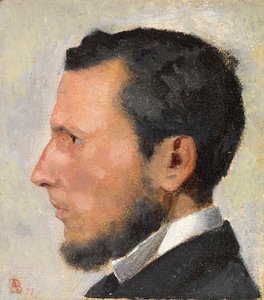
保罗·阿尔贝·贝斯纳德
1849 - 1934 , 法国
艺术家简介
- Artistic Movement Or Style: 印象派
- Artists Or Movements Influenced By This Artist: ['学院派绘画']
- Artists Who Influenced This Artist:
- 亚历山大·卡巴内尔
- 托马斯·庚斯博罗
- Date Of Birth: 法国巴黎 (1849)
- Date Of Death: 1934
- Full Name: 保罗·阿尔贝·贝斯纳德
- Nationality: 法国
- Notable Artworks:
- 《提莫法内斯的死亡》
- 《通过仲裁实现和平》
- 《乔治·罗登巴赫夫人肖像》
- Place Of Birth: 巴黎
相关文章

保罗·克利25幅杰作:色彩与形式的艺术之旅 | OriginalUniqueArt
探索保罗·克利25幅杰作,领略抽象艺术的魅力!深入了解克利作品背后的故事、色彩构成与艺术灵感。OriginalUniqueArt.com提供高清油画复制品,为您的家居装饰增添艺术气息。立即在线探索完整系列!

保罗·塞尚:25幅大师杰作,重塑现代艺术与家居美学 | OriginalUniqueArt
探索保罗·塞尚25幅经典杰作!深入了解后印象派大师的艺术生涯、独特技法与色彩运用。OriginalUniqueArt提供高清油画复制品,为您的家居带来博物馆级艺术体验。立即发现更多名画,点亮生活空间!
Etching Masters: 10 Legendary Prints That Revolutionized Art | OriginalUniqueArt
Journey through 10 legendary etching masterpieces by Rembrandt, Dürer & Goya. Explore the history of printmaking and discover timeless art for your home. Find museum-quality reproductions at OriginalUniqueArt.com.

Romantic Realism's Finest: 10 Masterpieces for Your Home | OriginalUniqueArt
Explore 10 defining masterpieces of Romantic Realism! Discover Courbet, Millet & Daumier's powerful paintings—capturing emotion and social realities. Find museum-quality reproductions for your home at OriginalUniqueArt.com.

蝕刻艺术的历史巡礼:技法、美学特征与持久的艺术意义
深入探索蚀刻艺术的历史、技法与大师之作。专业分析光影线条美学,了解伦勃朗、丢勒等大师的创作秘诀。OriginalUniqueArt.com为您提供高品质油画复制和定制服务,重现经典艺术!