切换至版画销售渠道
 展开全文







































 对于任何边长超过 105 厘米(约 41 英寸)的艺术品或复制品,画框将以拆解后的组件形式发货。此方法可确保安全送达并防止运输过程中的损坏。


A Study in Monochrome: Exploring Picasso’s Rostro
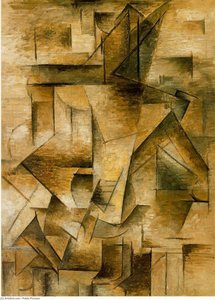
Pablo Picasso's “Rostro,” a deceptively simple graphite drawing executed around 1920, transcends its minimalist aesthetic to deliver a profound meditation on human emotion and artistic exploration. This piece exemplifies Picasso’s mastery of dry media—specifically charcoal—and represents a pivotal moment in his oeuvre, marking a shift towards greater introspection and stylistic refinement following the initial burst of Cubist experimentation.
- Subject Matter: The artwork centers on a portrait of a man's face in profile. Its stark simplicity belies its depth; Picasso deliberately eschews color to focus entirely on capturing the essence of human expression through tonal variation and meticulous line work.
- Style & Technique: “Rostro” embodies Picasso’s signature style—a blend of realism and expressive abstraction—characteristic of his later years. The artist employs dense hatching and cross-hatching techniques, meticulously layering graphite to achieve remarkable textural detail and conveying a palpable sense of melancholy.
- Composition: The composition is strikingly focused, cropping tightly around the facial features – nose, eye, mouth, and beard – creating an immediate connection with the viewer. Picasso skillfully utilizes directional lighting from the upper right to sculpt the contours of the face and accentuate shadows, enhancing depth and drama.
Decoding Symbolism: Beyond Surface Appearance
While seemingly devoid of overt narrative content, “Rostro” resonates with symbolic significance rooted in Picasso’s broader artistic concerns. The monochromatic palette—primarily shades of gray—reflects a preoccupation with psychological states and the exploration of inner landscapes. Furthermore, the intense gaze captured in the eye suggests contemplation and perhaps vulnerability, inviting viewers to consider themes of solitude and self-awareness.
- Emotional Impact: Picasso’s masterful rendering of facial musculature communicates an unspoken emotion—a quiet sadness—that lingers beyond the visual surface. The drawing's textural quality contributes to this emotional resonance, mirroring the complexities of human experience.
- Historical Context: Produced during Picasso’s period of artistic maturation, “Rostro” aligns with his ongoing investigation into portraiture and psychological realism. It stands as a testament to his ability to distill profound ideas into deceptively understated visual forms—a hallmark of his enduring legacy.
Technical Mastery: The Art of Graphite Rendering
Picasso’s technique in “Rostro” demonstrates an unparalleled command of graphite rendering. He achieves remarkable tonal gradation through the strategic application of hatching and cross-hatching, creating a rich surface texture that contrasts sharply with subtle highlights. This meticulous attention to detail underscores Picasso's dedication to capturing not merely likeness but also feeling—a feat accomplished with unwavering precision.
- Materials Used: The artwork utilizes graphite pencils on paper – a choice reflecting Picasso’s preference for understated materials that allow the artist’s vision to shine through.
- Perspective & Depth: Subtle shading and overlapping forms contribute to an illusion of depth, guiding the viewer's eye across the portrait and reinforcing its emotional impact.
“Rostro” remains a compelling exemplar of Picasso’s artistic genius—a testament to his ability to transform simple materials into expressions of profound human emotion and intellectual contemplation.
常见问题与解答
巴勃羅·畢卡索 的《Rostro》 的主导色是什么?
在“Rostro”中,最引人注目的颜色是Putty (#d9d9d9)。了解作品的主色调有助于将其与室内装饰进行搭配。
巴勃羅·畢卡索 的《Rostro》 描绘了什么内容?
巴勃羅·畢卡索 的《Rostro》 中呈现的主题包括 profile portrait, monochromatic drawing, facial detail, cubist style, texture study, shadow play, human figure,这些主题共同构成了该艺术作品的主旨。
 实景预览

 分享
 分享
 详情
 指南


 下载作品
 相似作品
 X射线
 幻灯片播放
 问答
 统计数据