订购纯手工绘制画作
 展开全文







































 对于任何边长超过 105 厘米(约 41 英寸)的艺术品或复制品,画框将以拆解后的组件形式发货。此方法可确保安全送达并防止运输过程中的损坏。


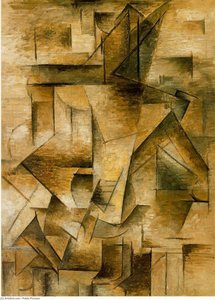
A Dance of Shadows and Secrets: Unpacking Pablo Picasso’s “Reading”
Pablo Picasso's "Reading," painted in 1932 during a period of intense creative exploration, isn’t merely a depiction of two women; it’s an invitation into a realm where reality bends to the will of the subconscious. This surrealist oil on canvas, measuring a substantial 130 x 97 cm, pulsates with a quiet intensity—a testament to Picasso's masterful ability to distill complex emotions and ideas onto a single plane. The painting immediately draws the eye, not through overt drama, but through an unsettling harmony of fragmented forms and subtly charged interactions. It’s a work that rewards prolonged contemplation, revealing layers of meaning with each return visit.
The Cubist Foundation and Surrealist Drift
“Reading” firmly establishes Picasso's ongoing dialogue with the revolutionary ideas of Cubism, yet it ventures beyond its purely analytical roots. The influence is palpable in the fractured perspectives and overlapping planes that define the figures and their surroundings. Picasso, alongside Georges Braque, had dismantled traditional representation, presenting objects from multiple viewpoints simultaneously – a technique designed to challenge our perception of reality. However, here, this fragmentation isn’t simply an exercise in geometric deconstruction; it serves to create a dreamlike atmosphere, mirroring the subjective experience of memory and emotion. The painting subtly drifts into Surrealism, embracing the illogical juxtapositions and symbolic imagery that characterize the movement, suggesting a world unbound by rational constraints.
Figures of Intimacy: Symbolism in Form and Gesture
The two women seated within the chairs are undeniably the focal point. Their large breasts, rendered with Picasso’s characteristic boldness, immediately invite interpretation. While often subject to misinterpretation, they can be understood as symbols of nurturing, fertility, or perhaps simply a celebration of female physicality – elements that resonate deeply within the context of 1930s Europe. Their open mouths, poised between speech and song, create an aura of shared intimacy, suggesting a conversation brimming with unspoken thoughts and desires. The positioning of the chairs—one closer to the viewer, the other receding into the background—further emphasizes this dynamic, creating a sense of spatial tension and inviting us to become active participants in their imagined exchange. The necklaces they wear, simple yet elegant, could represent adornment, cultural identity, or even a shared secret.
A Window into Picasso’s World: Context and Legacy
Painted during a period of personal upheaval for Picasso – marked by the loss of his beloved companion Dora Maar – “Reading” offers a poignant glimpse into the artist's emotional landscape. The painting reflects a broader shift in artistic sensibilities occurring at the time, moving away from purely representational art towards explorations of psychology and subjective experience. Picasso’s exploration of female figures during this period is particularly noteworthy, often imbued with both sensuality and melancholy. “Reading” stands as a powerful example of his ability to capture not just physical likeness but also the intangible essence of human connection. It's a work that continues to resonate today, inviting viewers to contemplate the complexities of communication, intimacy, and the enduring power of art to reveal hidden truths about ourselves and the world around us. A reproduction of this captivating piece offers a unique opportunity to bring Picasso’s evocative vision into any space, sparking conversation and contemplation for years to come.
常见问题与解答
Reading是手绘的还是印刷的?
手工绘制:由受过专业训练的画家在亚麻画布上,以油画形式临摹 Reading。
Reading 我该选择什么尺寸?
原作尺寸为 130 x 97 cm。 尺寸范围从 36.2 x 27.6 cm (¥1332) 到 241.3 x 183.7 cm (¥10924);本页表格列出了主要步骤及其价格。
物流需要多长时间?
送货时间为 4 至 5 周,并提供全球免费快递服务;本页面还提供加急制作选项。您可以在 100 天内无条件退货并获得全额退款。
巴勃羅·畢卡索 在创作《Reading》时使用了什么媒介?
Oil On Canvas
 实景预览

 分享
 分享
 详情
 指南


 下载作品
 相似作品
 X射线
 幻灯片播放
 问答

 统计数据