 切换至版画销售渠道
 展开全文
展开全文







































 对于任何边长超过 105 厘米(约 41 英寸)的艺术品或复制品,画框将以拆解后的组件形式发货。此方法可确保安全送达并防止运输过程中的损坏。


A Fragmented Portrait of Intimacy: Exploring Picasso’s “El Osario (Versión 3)”
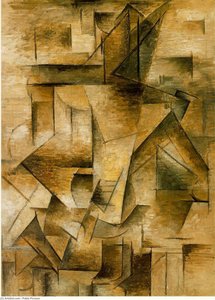
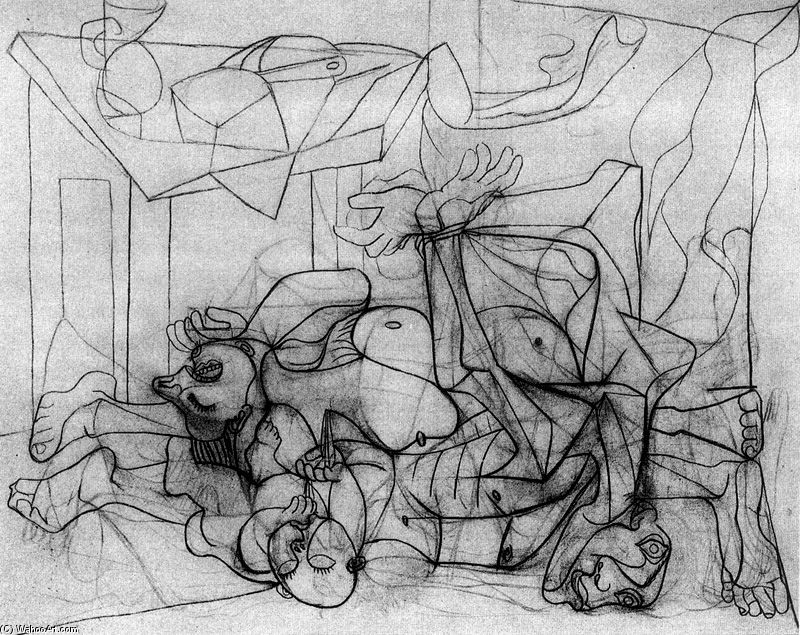
Pablo Picasso's "El osario (Versión 3)" stands as a cornerstone of Cubist art, embodying the movement’s radical departure from traditional representation and delving into profound psychological complexities. Created in 1928, this drawing—one of several iterations exploring similar themes—captures a moment frozen in time: two figures intertwined amidst an unsettlingly geometric interior space. It's more than just a visual puzzle; it’s a meditation on relationships, grief, and the fractured nature of perception itself.The Cubist Vision – Deconstructing Reality
Picasso’s stylistic approach is immediately recognizable through its characteristic fragmentation. Rejecting single-point perspective, he presents each figure from multiple viewpoints simultaneously—a technique pioneered by Georges Braque and fundamentally altering how artists approached depicting subjects. Planes overlap and intersect at oblique angles, creating a flattened surface that disrupts our habitual way of seeing the world. The architectural elements surrounding the figures – reminiscent of a table or shelf – further contribute to this sense of disorientation, mirroring the artist’s exploration of spatial ambiguity. This deliberate distortion isn't merely stylistic; it reflects Picasso’s preoccupation with capturing inner emotional states rather than simply reproducing external appearances.Technique and Materiality: Pencil Strokes That Speak Volumes
Executed in graphite on paper, “El osario” showcases Picasso’s masterful command of drawing technique. The artist employed meticulous hatching and cross-hatching to achieve tonal variations that convey texture and depth—despite the absence of traditional shading. These delicate lines, painstakingly rendered, reveal the materiality of the medium itself, highlighting the subtle nuances of charcoal and paper. The resulting image possesses a palpable stillness, inviting contemplation on the figures’ posture and the unspoken connection between them. Careful observation reveals the artist's deliberate manipulation of line weight to emphasize certain areas and create visual hierarchy.Symbolism Within Geometric Form
The title itself – “El osario” – refers to an ossuary, a container for bones—a poignant symbol of mortality and remembrance. This juxtaposition with the intertwined figures speaks to themes of loss, vulnerability, and the enduring presence of memory within grief. The geometric forms don’t simply serve as aesthetic devices; they actively contribute to the artwork's emotional impact. They represent the fragmentation of experience, mirroring the psychological state of those grappling with sorrow or trauma. Picasso skillfully utilizes abstraction to convey emotion—a testament to his ability to transcend literal representation and communicate profound ideas through visual language.A Legacy of Emotional Depth
“El osario (Versión 3)” exemplifies Picasso’s enduring legacy as an artist who prioritized emotional resonance over technical precision. It remains a compelling study in Cubist aesthetics, demonstrating how geometric abstraction can be harnessed to explore complex psychological themes. For interior designers seeking inspiration or collectors desiring a piece that embodies artistic innovation and intellectual depth, this drawing offers a powerful reminder of Picasso's ability to transform visual form into a conduit for profound emotion—a timeless exploration of intimacy and the human condition.常见问题与解答
我能否更详细地查看“El osario (versión 3)”?
毕加索 的《El osario (versión 3)》 的 X射线透视 页面是一个交互式查看器,您可以逐层滑动浏览作品图像的十一层光学图层,其中还包含 X 光风格的视图。
毕加索 的《El osario (versión 3)》 的色彩饱和度与强度如何?
毕加索 的《El osario (versión 3)》 的色彩饱和度为 Muted,色彩强度为 Monochromatic。
毕加索 的《El osario (versión 3)》 属于哪种艺术流派?
“El osario (versión 3)”是一件Cubist Style时期的作品。该艺术流派体现了作品所属的艺术传统。
 实景预览
实景预览
 分享
分享 分享
分享
 详情
详情 指南
指南

 下载作品
下载作品
 相似作品
相似作品 X射线
X射线 幻灯片播放
幻灯片播放 Q&A
Q&A 统计数据
统计数据