

 效果预览
效果预览
 购买手绘画作
 分享
分享 分享
分享
 详情
详情

 下载
下载
 相似作品
相似作品 X射线
X射线 幻灯片播放
幻灯片播放June
 Contemporary Realism
 1935
1935 53.0 x 46.0 cm
 Harris Museum - Art Gallery
 展开详情
展开详情




































从与原作比例一致的预设尺寸中进行选择。

您可以输入自定义尺寸,以适配特定的画框或空间。如果您选择的尺寸与原图比例不符,我们将对作品进行裁剪,或通过镜像填充/纯色填充边缘的方式来扩展图像。在开始制作之前,我们会向您发送一份数字效果图供您确认。
请注意,屏幕上的预览并不能反映实际的裁剪或扩展效果。只有效果图才能准确展示最终的构图。
虽然我们提供定制尺寸,但为了保持原图比例,我们建议您从预设列表中选择尺寸。


 玻璃选项仅适用于110厘米以下的尺寸。

June
艺术微喷/版画
复制品尺寸
-


最终总价
$ 80
艺术家简介
Orlando Greenwood: A Painter of Rural England’s Soul
Orlando Greenwood (1892 – 1989) remains a quietly significant figure in British realist painting, a master of capturing the weathered beauty and poignant simplicity of rural life. Born in Nelson, Lancashire, his artistic journey began not within formal art academies but amidst the industrial landscape of his childhood—a stark contrast to the luminous landscapes he would later become renowned for. Greenwood’s early years were spent working in his uncle's cotton mill, an experience that instilled a deep appreciation for honest labor and the rhythms of everyday existence – themes that would permeate much of his work. This grounding in the realities of rural life profoundly shaped his artistic vision, informing a style characterized by meticulous detail, subtle color palettes, and a profound empathy for his subjects.Early Influences and Artistic Development
Greenwood’s formal art training commenced at Goldsmiths' College School of Art in London, where he honed his skills in drawing and painting. However, it was the influence of Impressionism, particularly Monet’s masterful use of light and color, that truly ignited his artistic passion. He embraced the Impressionist philosophy of capturing fleeting moments and atmospheric effects, translating this approach to the familiar landscapes of his native Lancashire. Crucially, Greenwood wasn't merely replicating what he saw; he was imbuing his paintings with a sense of memory and emotion, drawing upon personal experiences and observations. His early works demonstrate a deliberate shift away from purely representational art, favoring instead a more subjective interpretation of the world around him. The impact of this period is evident in his later work, where light and shadow are used to evoke mood and atmosphere rather than simply depict form.The “Card” and the Rise to Recognition
Greenwood’s breakthrough piece, "The Card," painted around 1930, exemplifies his distinctive style and thematic concerns. The painting depicts a solitary figure seated at a table, contemplating a playing card – a seemingly simple subject that belies a deeper layer of meaning. Many interpret the image as representing the loneliness and quiet contemplation inherent in rural life, or perhaps the weight of responsibility borne by those who toiled in the fields. This work garnered critical attention and established Greenwood’s reputation as an artist capable of conveying complex emotions through deceptively straightforward imagery. Following "The Card," he continued to produce a series of evocative landscapes, often featuring farmhouses, fields, and livestock – scenes that resonated with viewers' sense of nostalgia for a disappearing way of life.Technique and Style: A Master of Detail
Greenwood’s artistic technique was characterized by an extraordinary level of detail and precision. He employed a meticulous approach to rendering textures—the rough bark of trees, the weathered surfaces of farm buildings, the folds of clothing – creating paintings that possess a remarkable tactile quality. His color palette was generally subdued, favoring earthy tones and muted greens and browns, reflecting the natural hues of his subjects. However, he skillfully used subtle variations in tone and shade to create depth and atmosphere, particularly in his depictions of light filtering through trees or casting shadows across fields. He wasn’t interested in dramatic contrasts; instead, he favored a nuanced approach that allowed him to capture the quiet beauty of the English countryside with remarkable subtlety.Legacy and Historical Significance
Orlando Greenwood's work is often overlooked compared to some of his contemporaries, yet it holds significant historical value. He represents a vital link between British realism and Impressionism, capturing a specific moment in time—the decline of rural England and the changing social landscape of the 20th century. His paintings offer a poignant glimpse into the lives of ordinary people who worked the land, reflecting both their hardships and their resilience. His influence can be seen in later generations of British artists who continued to explore themes of rural life and social commentary. Today, Greenwood’s work is held in several collections, including the Red Rose Collections at Lancashire County Council, ensuring that his quietly powerful paintings continue to resonate with audiences seeking a deeper understanding of British art and culture. His legacy lies not in grand pronouncements or revolutionary techniques, but in the quiet dignity and enduring beauty of his depictions of rural England’s soul.
orlando greenwood
1892 - 1989
艺术家简介
- Artistic Movement Or Style: Rural Landscape Painting
- Artists Or Movements Influenced By This Artist: ['Post-Impressionism']
- Artists Who Influenced This Artist: ['Monet']
- Date Of Birth: 1892
- Date Of Death: 1989
- Full Name: Orlando Greenwood
- Nationality: British
- Notable Artworks:
- The Card
- Pendle
- Place Of Birth: WahooArt, USA
相关文章

The Enduring Legacy of Oil on Canvas: Technique, History & Aesthetic Impact
Explore the rich history & techniques of oil painting – from Renaissance masters to Impressionism. Discover pigments, layering methods, and why this timeless medium endures. Expert insights for artists & art enthusiasts.

Silent Narratives: Exploring the Enduring Appeal of Still Life Painting Across Centuries
Explore the rich history of still life painting with OriginalUniqueArt. Discover Dutch Masters, decode vanitas symbolism & learn about collecting timeless art. Expert insights and museum-quality reproductions.

Oil on Canvas: A Historical & Technical Exploration of a Timeless Artistic Medium
Explore the rich history & enduring techniques of oil painting on canvas. Discover the science behind its longevity, conservation practices, and contemporary relevance. Expert insights for art enthusiasts.

The Enduring Power of Painting: A Historical & Contemporary Exploration of Form and Emotion
Explore the rich history & enduring techniques of oil painting with OriginalUniqueArt. Discover masterpieces, learn about art collecting, and find authentic handmade reproductions crafted by skilled artists.
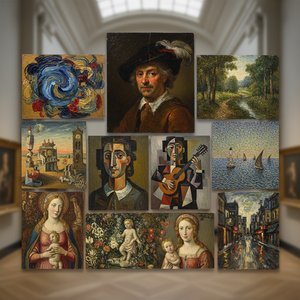
Oil on Board Masters: 10 Paintings That Redefined Art | OriginalUniqueArt
Explore 10 legendary 'Oil on Board' masterpieces by Van Gogh, Monet & more! Discover art history, iconic styles like Impressionism, and find museum-quality reproductions to elevate your home decor. Explore the full collection online at OriginalUniqueArt.com.

