
 切换至版画销售渠道
 分享
分享 分享
分享
 详情
详情 指南
指南

 下载作品
下载作品
 相似作品
相似作品 幻灯片播放
幻灯片播放 问答
问答 统计数据
统计数据Aquaduct 1564 I


 展开全文
展开全文
获取远超网页预览效果的印刷级文件。我们销售的每一张数字图像均源自库存数据库中的高分辨率母版——宽度通常在 5,000 至 15,000 像素之间——因此您可以放心地进行大幅打印、局部裁剪或还原细腻的细节。
每一件作品在离开我们的工作室前都经过了精心的处理。数字影像专家会对照原作核对色彩,并在必要时进行校正,随后利用专业修图工具提升清晰度与细节表现——且始终忠实于艺术家的笔触与风格。最终呈现的图像宛如原作本身,而非仅仅是一张加了滤镜的扫描件。
您可以在最终定稿前进行审核:我们的专家将在 72 小时内通过电子邮件向您发送图像以供审阅。如果不满意?您可以要求改进或修正;若质量未达预期,亦可申请退款。
这也是出版商、设计工作室、画廊及印刷厂所信赖的品质。
每份数字图像订单均包含的内容
专业级数字交付,品质保障
选择 OriginalUniqueArt.com,您获得的不仅仅是一张图像——您收到的是经过专业级增强、精雕细琢的数字艺术作品,并享有满意保证。以下是您的订单中自动包含的所有内容:

邮件即时送达
您的高分辨率数字图像文件将在下单后 72 小时内通过电子邮件发送给您 —— 即可立即使用。

AI 增强型数字文件
您的艺术品经过专业优化,结合先进的 AI 技术与人工修饰,确保呈现极致的细节、清晰度与色彩准确度。

终身免费重发服务
不小心删除了文件或找不到了?没关系——我们将随时为您免费重发。

无需进口税费,始终如一
即刻拥有您的艺术作品,无需支付任何关税、税费或运费——数字下载始终免税。

色彩精准保障
我们通过专业工具与色彩管理技术,确保您的数字图像尽可能真实地还原原作色彩。

100天满意保证
如果您对所购数字图像不满意,我们将在100天内为您进行修改或提供100%的全额退款——无需任何理由。

100% 退款保证
不满意?在收到数字文件后的100天内,您可以申请全额退款——无需任何理由。

批量订购优惠
购买 3 张享 10% 折扣 - 购买 5 张享 15% 折扣 - 购买 10 张以上享 20% 折扣。非常适合创意项目、画廊及机构使用。
The Architecture of Abstraction
In the mesmerizing realm of contemporary photography, Ola Kolehmainen stands as a master of the unseen, a visionary who finds profound complexity within the most structured environments. His work Aquaduct 1564 I serves as a breathtaking testament to this ability, transforming a monumental feat of engineering into a poetic meditation on form and light. At first glance, the viewer is confronted with a striking interplay of geometry and shadow, where the heavy, historical weight of an aqueduct is distilled into a seriesed of rhythmic arches and fluid silhouettes. The piece does not merely document an architectural landmark; it deconstructs it, inviting the observer to look past the stone and mortar to discover the underlying pulse of design that governs our built world.
The aesthetic language of this work is deeply rooted in the traditions of Minimalism and Color Field painting. Kolehmainen utilizes a sophisticated approach to composition, where the boundaries between architecture and abstraction begin to dissolve. By focusing on specific segments of the aqueduct, he creates a visual rhythm that guides the eye through a landscape of repeating curves and stark contrasts. The interplay of light and shadow acts as a secondary medium, carving out depth and texture from what might otherwise be a flat surface. This technique allows the photograph to function almost like an abstract painting, where the subject matter is less about the physical structure itself and more about the emotional resonance of balance, symmetry, and the ephemeral nature of light hitting stone.
A Symphony of Light and Structure
Technically, Aquaduct 1564 I is a triumph of precision. Kolehmainen’s mastery over the photographic medium allows him to capture the subtle gradations of tone that define the edges of each archway. The composition is meticulously balanced, utilizing the repetition of the aqueduct's spans to create a sense of infinite progression. This repetition evokes a hypnotic quality, drawing the viewer into a contemplative state where time seems to slow down. For the discerning collector or interior designer, this piece offers a unique versatility; its monochromatic elegance and structural clarity allow it to anchor a room with a sense of quiet authority, making it an ideal centerpiece for modern, minimalist, or even classical interiors seeking a touch of contemporary sophistication.
Beyond its formal beauty, the artwork carries a profound emotional weight. There is a certain nostalgia embedded in the way Kolehmainen captures these ancient forms—a reminder of human ingenuity and the enduring legacy of historical infrastructure. Yet, by stripping away the literal context through abstraction, he breathes new life into the subject, making the ancient feel strikingly modern. To possess a reproduction of this work is to invite a sense of architectural wonder into one's space, providing a window into a world where the rigid lines of man-made structures meet the fluid, organic beauty of light and shadow. It is an invitation to find the extraordinary within the ordinary, and to appreciate the silent, powerful poetry written in the shadows of our history.
常见问题与解答
奥拉·科莱海宁 的《Aquaduct 1564 I》 的对比度有多强?
"Aquaduct 1564 I" 的明暗对比度记录为 Statement。对比度描述了亮部与暗部之间的差异强度。
"Aquaduct 1564 I" 的色彩饱和度如何?
"Aquaduct 1564 I" 的色彩饱和度为 Balanced Soft。
“Aquaduct 1564 I”的主题是什么?
奥拉·科莱海宁 的《Aquaduct 1564 I》 中呈现的主题包括 bridge, arches, water, architecture, black and white,这些主题共同构成了该艺术作品的主旨。
艺术家简介
The Architecture of Abstraction
Born in Helsinki, Finland, Ola Kolehmainen has carved a unique niche within the realm of contemporary photography by transforming the rigid structures of the modern world into fluid, poetic abstractions. His journey through the lens is one of deconstruction, where the heavy permanence of stone and steel is surrendered to the ephemeral dance of light and shadow. After graduating with a masters in photography at the Helsinki University of and Design in 1999, Kolehmainen moved his practice to Berlin, Germany, a city that serves as a profound backdrop for his explorations of urban geometry and architectural rhythm.
Kolehmainen’s work is deeply rooted in the study of contemporary architecture. Rather than documenting buildings as static monuments, he utilizes interiors and facades to create compositions that challenge our perception of space. Through a sophisticated interplay of reflections and light, he strips away the traditional boundaries of architecture, inviting the viewer into a world where the familiar becomes beautifully unrecognizable. His photographic eye seeks out the geometric allure found in the mundane, turning corridors, windows, and urban surfaces into intricate puzzles of form and color.
A Vision of Light and Form
The technical mastery of Kolehmainen lies in his ability to manipulate perspective and light to achieve a sense of profound meditation. In works such as Selimiye 1575 III, he deconstructs the interior space into fragmented quadrants, creating a visual tension that demands a lingering gaze. His palette often moves between the austere and the vibrant; while much of his work utilizes muted, earthy tones like deep browns, somber grays, and warm ochres to ground the composition, these moments of stillness are frequently punctuated by sudden, intense bursts of color that act as a visual heartbeat within the frame.
His explorations extend to the hyperrealistic and the surreal, as seen in his digital works that capture the opulent grandeur of historical landmarks. Whether he is focusing on the intricate details of illuminated chandeliers or the striking, grid-like facades of modern urban structures, Kolehmainen maintains a consistent focus on the following elements:
- Geometric Abstraction: The use of architectural lines to create complex, non-representational patterns.
- Light and Reflection: Utilizing natural and artificial light to dissolve solid forms into shimmering textures.
- Spatial Deconstruction: Challenging the viewer's sense of depth and stability through skewed perspectives.
Exhibition and Legacy
Throughout his career, Kolehmainen has been recognized through numerous solo exhibitions across Europe, establishing himself as a significant voice in contemporary photographic abstraction. His work has been showcased in prestigious venues such as the Alvar Aalto Museum in Jyväskylä, Finland, and the Kiasma in Helsinki. From the galleries of Oslo to the cultural hubs of Barcelona and Berlin, his ability to find beauty in the structural essence of our environment has resonated deeply with both critics and collectors alike.
By bridging the gap between the tangible reality of architecture and the intangible beauty of abstract art, Kolehmainen continues to push the boundaries of what photography can achieve. His legacy is found in the way he teaches us to look past the surface of our built environment, discovering a hidden language of light, shadow, and infinite geometric possibility.
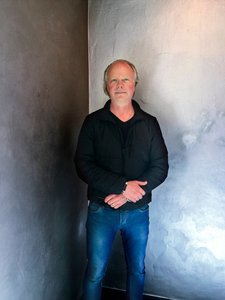
奥拉·科莱海宁
1964 - , 芬兰