
 购买版画
购买版画 分享
分享 分享
分享
 详情
详情

 下载
下载
 相似作品
相似作品 X射线
X射线 幻灯片播放
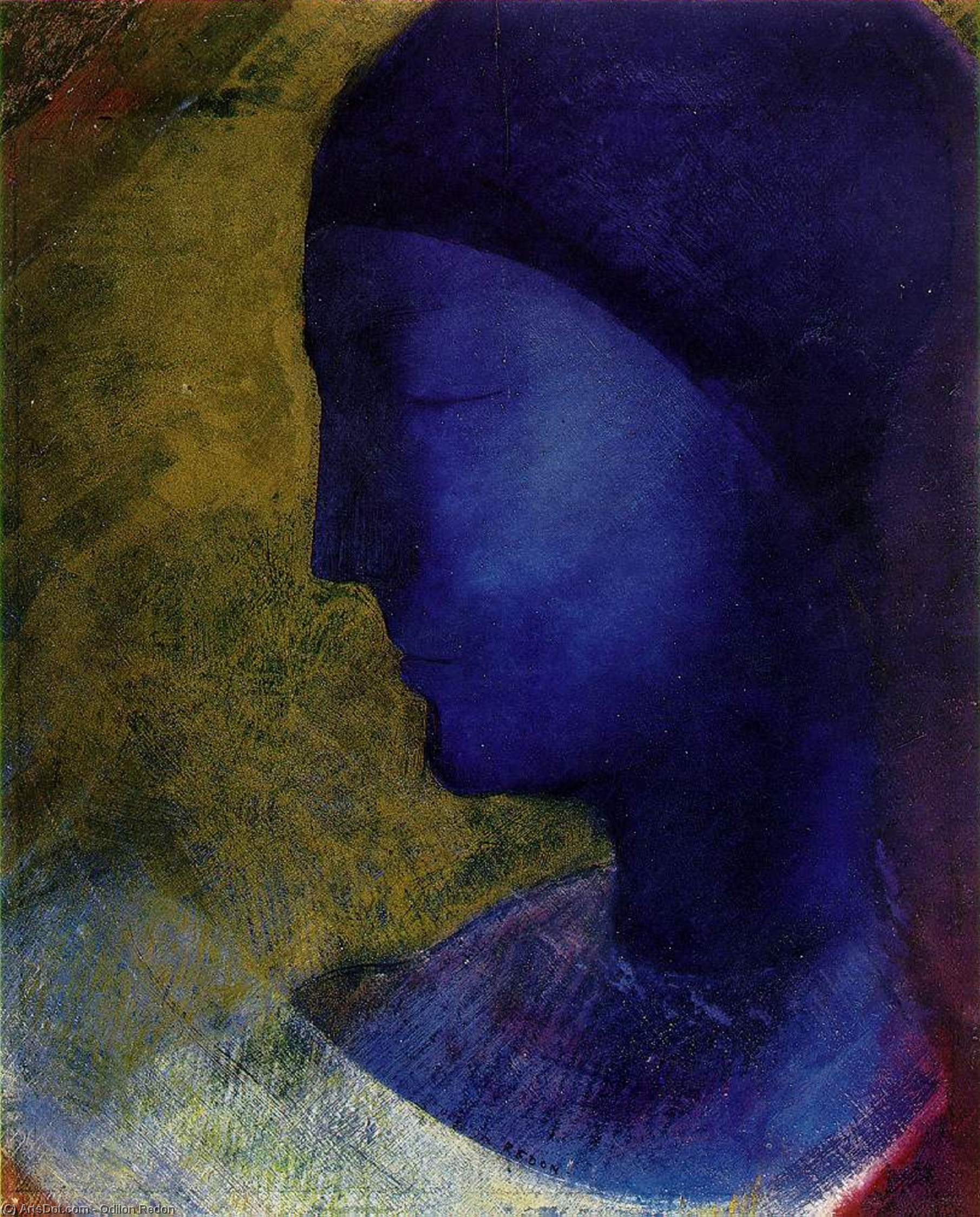
幻灯片播放The Golden Cell


 展开详情
展开详情




P118B $10

P118H $10

P118W $10

P438Z $10

P508JH $12

P508YH $12

P805H $10

P805Z $10

P919BZ $10

P919G $10

P919XJ $10

P959ZH $10

P968JZ $12

W106C $8

W218G $10

W218JH $8

W218Y $10

W307PJ $10

W316G $10

W316PJ $8

W316Y $10

W398PJ $8

W4111J $10

W500HY $15

W500JH $15

W692G $12

W849H $8

W940BG $15

W953PJ $8




从与原作比例一致的预设尺寸中进行选择。

您可以输入自定义尺寸,以适配特定的画框或空间。如果所选尺寸与原图比例不符,我们将通过裁剪作品或添加手绘元素来扩展画面。数字样稿将在制作开始前发送给您确认。
请注意,屏幕预览无法准确反映实际的裁剪或扩展效果,只有样稿才能真实呈现最终的构图。
虽然我们提供定制尺寸服务,但为了保留原作比例,建议您从预设列表中选择尺寸。
下单后,OriginalUniqueArt.com 团队将通过电子邮件联系客户获取具体要求,并提供效果预览图。


 玻璃选项仅适用于110厘米以下的尺寸。

The Golden Cell
复制材质
复制品尺寸
-


最终总价
-
作品详情
A Glimpse into the Subconscious Mind
Odilon Redon’s The Golden Cell, painted in 1892, is not merely a portrait; it is an invitation into the labyrinthine corridors of the human psyche. The subject—a woman rendered with striking blue tones against a luminous, almost ethereal yellow background—captures a moment suspended between deep thought and quiet revelation. Her downward gaze suggests introspection, as if she is contemplating secrets only visible in the stillness of her own mind. Redon, forever drawn to the unseen realms of imagination, uses this composition to transport the viewer beyond the tangible reality into a space rich with symbolic weight.
Symbolism and the Allure of Blue
The interplay of color is central to the painting's mesmerizing effect. The vibrant blue dominating the woman’s attire and features contrasts sharply yet harmoniously with the radiant yellow ground, creating an immediate visual tension that draws the eye inward. In Symbolist art, such colors often carry profound emotional resonance. Blue frequently speaks to melancholy, spirituality, or mystery, while gold tones suggest enlightenment or a sacred enclosure—the titular "Golden Cell." This juxtaposition hints at a soul contained within a moment of brilliant, yet perhaps isolating, contemplation. The elongated neck adds an almost sculptural quality to the figure, emphasizing her thoughtful detachment from the bustling world outside the canvas.
Mastery in Technique and Style
As a key exponent of Symbolism, Redon eschewed the straightforward narratives of academic art for something more suggestive and dreamlike. While his early work explored etching and lithography, The Golden Cell showcases his painterly ability to evoke atmosphere. The technique allows the edges to soften, blurring the line between solid form and surrounding ether. It is a masterful handling of light against shadow, giving the entire piece an almost phosphorescent quality. For those who appreciate art that whispers rather than shouts its meaning, this work exemplifies the delicate balance between detailed portraiture and pure emotional abstraction.
Creating an Atmosphere for Modern Spaces
For collectors and interior designers alike, The Golden Cell offers more than just aesthetic beauty; it provides a focal point of profound contemplation. Its rich, jewel-toned palette—the deep blues against the warm gold—makes it exceptionally versatile. Imagine this piece anchoring a drawing-room or a study, where its enigmatic presence encourages conversation and quiet reflection. Owning a high-quality reproduction allows one to bring this specific mood of sophisticated mystery into your personal sanctuary, transforming a mere wall into a portal to Redon’s imaginative world.
艺术家简介
Odilon Redon (1840-1916): Between Shadow and Light
Odilon Redon, born Bertrand Jean Redon in Bordeaux, France, on April 20, 1840, was an artist whose profound engagement with the subconscious and his masterful manipulation of monochrome and color established him as a pivotal figure in Symbolism—a movement that anticipated the Surrealist explorations of dreams and fantasy. From humble beginnings marked by childhood illness and familial expectations for architectural pursuits, Redon’s artistic destiny unfolded through meticulous observation of nature and an unwavering fascination with literature and mythology, shaping his distinctive visual language. ## Early Life & Artistic Formation: The Seeds of Imagination Redon's formative years were steeped in a contemplative atmosphere fostered by his uncle’s rural estate near Bordeaux—a landscape that would serve as an unending source of inspiration for his artistic endeavors. At the age of ten, he secured a drawing prize at school—a serendipitous event foreshadowing his innate visual sensitivity and signaling the beginning of his artistic journey. Despite familial pressures favoring architecture, Redon's true passion resided in art, nurtured by instruction from Jean-Léon Gérôme and Rodolphe Bresdin, who imparted invaluable skills in etching and lithography—techniques that would become foundational to his early explorations into a world of shadowy figures and ambiguous forms rejecting academic realism. The interruption of the Franco-Prussian War briefly compelled him to serve in the military, yet it was upon his return to Paris that Redon’s artistic vision truly began to coalesce amidst a vibrant intellectual milieu. He studied under Jean Leon Gerome at École des Beaux-Arts where he failed the entrance exam but continued his artistic development. ## The Birth of Symbolism: ‘Noirs’ and Early Visions – Monochrome Mastery Redon's artistic breakthrough arrived in 1879 with the publication of *Dans le rêve* (In the Dream)—his first album of lithographs, a series that immediately captivated critics and solidified his reputation as a pioneer of Symbolist aesthetics. These monochrome compositions—known as “noirs”—were not mere studies in darkness; they represented profound explorations of the subconscious mind, populated by unsettling creatures, disembodied eyes, and haunting figures emerging from swirling mists. The influence of writers like Edgar Allan Poe and Charles Baudelaire is palpable here—a shared preoccupation with the macabre, the mysterious, and the transformative power of suggestion. Redon’s meticulous attention to detail and his masterful use of tonal gradation achieved an unparalleled expressive effect, capturing the essence of psychological states and evoking a sense of otherworldly beauty. His early works demonstrated a remarkable ability to convey emotion through form and texture—a characteristic that would define his artistic style throughout his career. ## Expanding Horizons: Color and Influence – Embracing Japonism & Beyond Following the success of *Dans le rêve*, Redon gradually broadened his palette, incorporating pastel and oil paints into his repertoire—a stylistic shift that reflected a deepening engagement with natural beauty and a fascination for Eastern aesthetics, particularly *Japonism*. He experimented with flattened planes and decorative patterns inspired by Japanese prints, injecting vibrancy and dynamism into his compositions. His participation in the Nabis group—a collective of artists who championed Impressionistic techniques while retaining Symbolist sensibilities—further enriched his artistic dialogue and propelled him to international recognition. Exhibitions at the New York Armory Show in 1913 cemented Redon’s place as a visionary artist whose work anticipated the Surrealist movement, influencing generations of painters and cementing his legacy as one of the most original voices of Symbolism. ## Legacy & Significance – A Visionary Ahead of His Time Odilon Redon's enduring influence stems from his unwavering commitment to exploring the inner landscape of human experience—a pursuit that transcended stylistic conventions and challenged prevailing artistic norms. He wasn’t merely depicting what he saw; he was visualizing what he felt, striving to communicate profound psychological truths through evocative imagery and masterful technique. His exploration of dreams, mythology, and the subconscious continues to inspire artists today, demonstrating the timeless relevance of his vision—a testament to his enduring contribution to the history of art and a beacon for those seeking to unlock the mysteries of the human psyche. Redon’s legacy resides in his courageous embrace of ambiguity and his unwavering belief in the transformative power of artistic expression.
奥迪龙·雷东
1840 - 1916 , 法國
艺术家简介
- Artistic Movement Or Style: 象征主義
- Artists Or Movements Influenced By This Artist: ['超現實主義']
- Artists Who Influenced This Artist:
- 讓· LEON·傑羅姆
- 羅杜夫·布雷斯丁
- Date Of Birth: 1840年4月20日
- Date Of Death: 1916年7月6日
- Full Name: Odilon Redon
- Nationality: 法國
- Notable Artworks: ['聖靈的水']
- Place Of Birth: 法國波蘭德
相关文章
纽约大都会艺术博物馆25幅必赏杰作:艺术、历史与家居灵感
探索纽约大都会艺术博物馆25幅传世杰作!从梵高、莫奈到达芬奇,深入了解艺术大师的故事与创作灵感。精美油画复制品,为您的家居带来艺术气息。立即在OriginalUniqueArt.com发现更多经典作品。

惠斯勒大师25幅杰作:艺术、家居与永恒之美 | OriginalUniqueArt
探索詹姆斯·惠斯勒25幅杰作!深入了解夜曲、静谧和谐等经典油画背后的故事与艺术魅力。OriginalUniqueArt.com提供博物馆级复制品,为您的家居带来永恒之美。立即在线探索完整系列!
美国国家艺术馆精选:25幅大师级杰作,点亮您的艺术生活 | OriginalUniqueArt
探索美国国家艺术馆的25幅大师级杰作!深入了解塞尚、马蒂斯等艺术家的故事,感受印象派与现代艺术的魅力。OriginalUniqueArt.com提供高品质油画复制品,点亮您的家居空间。立即在线探索完整系列!
马蒂斯大师25幅杰作:色彩与光影的艺术传奇 | OriginalUniqueArt
探索亨利·马蒂斯25幅杰作,感受野兽派色彩的魅力!从《舞蹈》到《红色和谐》,揭秘大师背后的故事与艺术灵感。OriginalUniqueArt.com提供博物馆级高质量油画复制品,为您的家居增添奢华艺术气息。立即在线探索完整系列!
埃贡·席勒:25幅震撼人心的杰作,艺术与灵魂的深度探索 | OriginalUniqueArt
探索埃贡·席勒25幅震撼人心的杰作!深入了解这位表现主义大师的绘画技巧、情感表达与生命哲思。OriginalUniqueArt.com提供高品质艺术复制品,为您的室内设计带来经典之美。立即在线探索完整系列!


