

 效果预览
效果预览
 分享
分享 分享
分享
 详情
详情

 下载
下载
 相似作品
相似作品 X射线
X射线 幻灯片播放
幻灯片播放 统计数据
统计数据EGLE ET SILENE

 展开详情
展开详情
艺术微喷/版画
博物馆级艺术微喷或帆布版画,制作高效,并提供多种饰面选择。 ( 购买手绘画作 切换至数字图像销售渠道)




































从与原作比例一致的预设尺寸中进行选择。

您可以输入自定义尺寸,以适配特定的画框或空间。如果您选择的尺寸与原图比例不符,我们将对作品进行裁剪,或通过镜像填充/纯色填充边缘的方式来扩展图像。在开始制作之前,我们会向您发送一份数字效果图供您确认。
请注意,屏幕上的预览并不能反映实际的裁剪或扩展效果。只有效果图才能准确展示最终的构图。
虽然我们提供定制尺寸,但为了保持原图比例,我们建议您从预设列表中选择尺寸。


 玻璃选项仅适用于110厘米以下的尺寸。

EGLE ET SILENE
艺术微喷/版画
复制品尺寸
-


最终总价
$ 80
艺术家简介
A Legacy of Grandeur: The Life and Art of Noël Hallé
In the luminous landscape of 18th-century French painting, few names evoke the intersection of classical reverence and royal splendor quite like Noël Hallé. Born in Paris in 1711 into a family steeped in the traditions of the brush, Hallé was destined for a life defined by the pursuit of aesthetic perfection. As the son of the painter Claude-Guy Hallé, his early years were an immersion in the nuances of color and composition, providing him with a foundational mastery that would later allow him to navigate the complex demands of the French court. His journey was not merely one of inherited skill, but of profound intellectual expansion, driven by a desire to capture the monumental weight of history through the delicate lens of the Baroque style.
The defining chapter of Hallé’s artistic development began with his triumph in 1736, when he secured the prestigious Prix de Rome. This achievement served as his gateway to the eternal city, where from 1737 until 1744, he resided within the hallowed halls of the Académie Royale Française. It was in Rome that Hallé’s artistic soul truly encountered its greatest inspirations. The sheer scale of Roman architecture and the dramatic tension found in classical sculpture left an indelible mark upon his psyche. Under the guidance of masters like Jean-François de Troy, he learned to synthesize the rigorous discipline of classical technique with a burgeoning sense of theatricality. His works from this period reflect a deep fascination with mythological narratives and historical epochs, rendered with a meticulous attention to detail that breathes life into ancient stone and legend.
Mastery of Technique and Royal Patronage
Upon his return to France, Hallé’s reputation preceded him, leading to an illustrious career characterized by high-stakes commissions and royal recognition. During the reign of Louis XV, he became a sought-after talent for the most prestigious institutions in Europe. His ability to weave complex historical narratives into visually arresting compositions made him an ideal choice for the Gobelins Manufactory and the opulent halls of Versailles. Hallé possessed a rare gift for portraying the grandeur of aristocratic life, capturing the quiet dignity of the elite amidst settings of unparalleled luxury. Whether decorating the Grand Trianon or the Petit Trianon, his brushwork served to reinforce the prestige of the French monarchy, blending the monumental with the intimate.
The technical brilliance of Hallé’s oeuvre lies in his sophisticated use of light and color. He did not merely paint scenes; he constructed atmospheres. His palettes were often vibrant yet controlled, capable of conveying both the intellectual rigor required by academic standards and the emotional intensity necessary to engage the viewer's heart. In his historical paintings, one can observe a seamless integration of:
- Classical Precision: A dedication to anatomical accuracy and architectural integrity derived from his Roman studies.
- Baroque Drama: The use of chiaroscuro and dynamic movement to elevate historical events into epic spectacles.
- Narrative Depth: An ability to imbue even the smallest figure with a sense of purpose and emotional resonance.
Historical Significance and Enduring Impression
As the 18th century progressed, Hallé’s work stood as a testament to the enduring power of classical ideals in an era of shifting tastes. While the art world began to move toward new sensibilities, his commitment to the grandeur of the past provided a sense of continuity and cultural stability for the French state. His contributions to the decorative arts and historical painting helped define the visual identity of the Louis XV era, leaving behind a legacy that celebrates the marriage of scholarly knowledge and artistic intuition.
Today, the works of Noël Hallé remain vital windows into a lost world of elegance and epic storytelling. He remains a pivotal figure for scholars and art enthusiasts alike, representing a moment in history when the brush was used to bridge the gap between the ancient glories of Rome and the contemporary splendor of Paris. His life, spanning from his birth in 1711 to his passing in 1781, serves as a complete arc of an artist who mastered the art of making history live again on canvas.

noël hallé
1711 - 1781 , France
艺术家简介
- Artistic Movement Or Style: Baroque
- Artists Or Movements Influenced By This Artist: ['Classical Paintings']
- Artists Who Influenced This Artist: ['Jean-François de Troy']
- Date Of Birth: September 2, 1711
- Full Name: Noël Hallé
- Nationality: French
- Notable Artworks:
- The Death of Seneca
- Cornelia, Mother of the Gracchi
- Justice of Trajan
- Place Of Birth: Paris, France
相关文章

Baroque Classicism: The Grandeur of Order and Drama in 17th-Century Art History
Explore the profound elegance of Baroque Classicism. Discover how 17th-century masters synthesized dramatic emotion with classical order through the lens of the Counter-Reformation and the works of legends like Carlo Maratta and Andrea Sacchi.
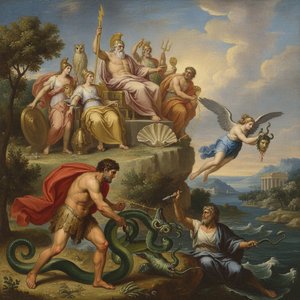
Gods and Heroes: A Definitive Guide to the Eternal Masterpieces of Greek Mythology
Explore the profound beauty of Greek mythology through art history. From Baroque masterpieces to Renaissance classics, discover how gods and heroes have inspired the world's greatest painters in this expert guide for collectors and history lovers.
Baroque Classicism: A Professional Guide to Integrating Timeless Grandeur into Luxury Hotel Interiors
Elevate luxury hospitality with Baroque Classicism. Our guide for hotel designers explores integrating grand, classical oil reproductions into professional interiors. Discover efficient bulk procurement, custom sizing, and large-format murals to create timeless, high-impact spaces.

The Enduring Allure of the Nude: A Historical & Artistic Exploration of the Human Form
Explore the captivating history of nude art! Discover iconic paintings & artists from classical to modern eras. Uncover symbolism, techniques & find museum-quality reproductions at OriginalUniqueArt.
巴洛克古典主义:十七世纪艺术中的戏剧性与秩序融合
深入探索17世纪巴洛克古典主义艺术的戏剧性与秩序之美。卡拉瓦乔、鲁本斯等大师作品解析,揭秘宗教改革下的艺术策略,并了解凡尔赛宫的辉煌历史。OriginalUniqueArt.com为您提供专业的艺术鉴赏与定制服务。