

 效果预览
效果预览
 购买印刷品
购买印刷品 分享
分享 分享
分享
 详情
详情

 下载
下载
 相似作品
相似作品 X射线
X射线 幻灯片播放
幻灯片播放Self-Portrait
 Pastel
- Baroque
 1714
1714- Early Modern
 271.0 x 211.0 cm
 卢浮宫
卢浮宫
 展开详情
展开详情




P118B $10

P118H $10

P118W $10

P438Z $10

P508JH $12

P508YH $12

P805H $10

P805Z $10

P919BZ $10

P919G $10

P919XJ $10

P959ZH $10

P968JZ $12

W106C $8

W218G $10

W218JH $8

W218Y $10

W307PJ $10

W316G $10

W316PJ $8

W316Y $10

W398PJ $8

W4111J $10

W500HY $15

W500JH $15

W692G $12

W849H $8

W940BG $15

W953PJ $8




从与原作比例一致的预设尺寸中进行选择。

您可以输入自定义尺寸,以适配特定的画框或空间。如果所选尺寸与原图比例不符,我们将通过裁剪作品或添加手绘元素来扩展画面。数字样稿将在制作开始前发送给您确认。
请注意,屏幕预览无法准确反映实际的裁剪或扩展效果,只有样稿才能真实呈现最终的构图。
虽然我们提供定制尺寸服务,但为了保留原作比例,建议您从预设列表中选择尺寸。
下单后,OriginalUniqueArt.com 团队将通过电子邮件联系客户获取具体要求,并提供效果预览图。


 玻璃选项仅适用于110厘米以下的尺寸。

Self-Portrait
复制材质
复制品尺寸
-


最终总价
$ 300
作品详情
A Window Into Baroque Dignity: Nicolas Vleughels’ Self-Portrait
Nicolas Vleughels's "Self-Portrait," completed in 1714, stands as a quintessential example of Rococo artistry—a movement characterized by opulent ornamentation and refined elegance that sought to capture the spirit of aristocratic life. More than just a depiction of an individual’s likeness, it embodies the broader cultural values of its time: intellectual curiosity coupled with serene composure.
Subject & Composition: The painting presents Vleughels himself seated before a draped curtain, bathed in soft light that illuminates his face and upper torso. This deliberate positioning emphasizes introspection and contemplation—a hallmark of Baroque portraiture’s preoccupation with psychological depth. Unlike the dramatic poses favored by earlier masters like Rembrandt, Vleughels adopts a posture conveying quiet dignity and restraint.
Style & Technique: Executed in pastel on paper, “Self-Portrait” exemplifies the Rococo penchant for delicate color palettes and subtle tonal variations. The artist skillfully employs shading to sculpt the contours of his face, creating a remarkably realistic portrayal while simultaneously avoiding harshness. Precise detailing—particularly in capturing the texture of skin and hair—demonstrates Vleughels’ mastery of pastel technique.
Historical Context: Created during Vleughels's formative years in Rome – where he honed his skills under influential artists like Pietro Francesco Bortolozzi – the portrait reflects the artistic fervor of the Baroque period. It aligns with the broader trend toward portraying subjects as idealized figures, reflecting humanist ideals and celebrating intellectual achievement. The painting’s muted colors and serene expression resonate with the aesthetic sensibilities of a society striving for balance and refinement.
Symbolism & Emotional Impact: The draped curtain serves as a visual metaphor for privacy and contemplation—suggesting that Vleughels seeks to convey not merely his physical appearance but also his inner state. The artist’s gaze directly confronts the viewer, fostering a sense of intimacy and inviting reflection on themes of identity and self-awareness. Ultimately, “Self-Portrait” communicates an aura of quiet confidence and intellectual serenity—a testament to Vleughels's artistic skill and the enduring power of Baroque portraiture.
Further Exploration: For a deeper understanding of Nicolas Vleughels’ oeuvre and the stylistic influences shaping his work, consider visiting Self-Portrait by VLEUGHELS, Nicolas in the Web Gallery of Art. You can also discover similar artists like Pietro Francesco Bortolozzi and Nicolas de Largillière on Nicolas de Largillière’s page.
艺术家简介
The Convergence of Flemish Heritage and Venetian Grandeur
Nicolas Vleughels stands as a pivotal figure in the artistic landscape of the early Baroque era, embodying a magnificent confluence of Flemish artistic heritage and the burgeoning influence of Venetian painting. Born in Paris in 1668, his very identity was rooted in a lineage of excellence; he was the son of Philippe Vleughels, a renowned Flemish painter who had emigrated from Antwerp. This connection to the great traditions of the North provided Nicolas with a foundation steeped in technical precision and a vibrant community of expatriate artists residing in the French capital.
His formative years were defined by rigorous instruction under the watchful eye of Pierre Mignard, a prominent portraitist whose meticulous realism would leave an indelible mark on Vle.ueghels’ stylistic sensibilities. Yet, it was his profound dedication to mastering the masters that truly shaped his hand. He spent countless hours diligently copying the works of Rubens, the titan of Baroque art, absorbing the expressive power and dynamic energy that characterized the Flemish tradition. This deep reverence for Rubens allowed him to weave a sense of muscularity and life into his compositions, even as he sought new horizons.
A Transformative Journey Through Italy
Despite early recognition—including securing the second prize in the Académie royale de peinture et de sculpture’s competition in 1694—Vleughels faced the inevitable challenges of establishing a singular voice in a crowded Parisian scene. Driven by an unquenchable ambition, he embarked on a transformative journey to Rome in 1703. This pilgrimage was not merely a change of scenery but a profound artistic awakening. In Italy, he encountered the works of Casper van Wittel, a celebrated vedute painter whose panoramic depictions of landscapes captivated him with their light and spatial depth.
The influence of Venice, however, would become the true cornerstone of his evolution. As he immersed himself in the Venetian atmosphere, the dramatic compositions of Veronese began to resonate deeply within his soul. This encounter catalyzed a stylistic shift toward an opulent color palette and a sense of theatrical staging. His work began to breathe with the warmth and grandeur of the Venetian Baroque, blending the structural integrity of his Flemish roots with a new, luminous splendor that celebrated light and movement.
Legacy and Artistic Maturity
Upon returning to Paris around 1709, Vleughels emerged as an artist of significant prestige, eventually serving as a director at the French Academy in Rome. His later years were marked by a fascinating intersection with the emerging Rococo movement; he forged a profound friendship with Jean-Antoine Watteau, whose delicate and playful style offered a striking contrast to Vleughels’ more classical and dramatic tendencies. This period of his life saw him navigating the transition between the heavy grandeur of the Baroque and the refined elegance of the coming age.
The enduring significance of Nicolas Vleughels lies in his ability to bridge disparate worlds. His oeuvre remains a testament to a life spent synthesizing diverse influences, from the meticulous detail of his Flemish ancestors to the sweeping, colorful drama of the Italian masters. Whether through the serene beauty found in his Study for the Head of Campaspe or the theatrical narrative of Apelles Painting Campaspe, Vleughels continues to captivate the viewer with a unique vision that remains eternally elegant and profoundly classical.

Nicolas Vleughels
1668 - 1737 , France
艺术家简介
- Artistic Movement Or Style: Baroque
- Artists Or Movements Influenced By This Artist: ['Jean-Antoine Watteau']
- Artists Who Influenced This Artist:
- Pierre Mignard
- Rubens
- Date Of Birth: Paris, France (1668)
- Date Of Death: 1737
- Full Name: Nicolas Vleughels
- Nationality: French
- Notable Artworks:
- Study for the Legs of Campaspe
- Young Woman with a Nude Back Presenting a Bowl
- Place Of Birth: Paris
相关文章

Baroque vs. Rococo: A Definitive Guide to the Drama of Grandeur and the Elegance of Grace
Explore the profound differences between Baroque drama and Rococo elegance. Our expert guide delves into art history, chiaroscuro, and the evolution of European masterpieces for collectors and enthusiasts seeking deep historical context.
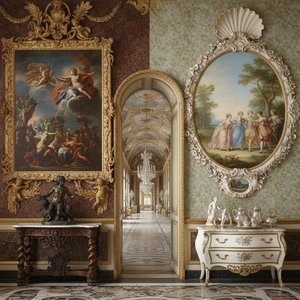
Drama & Delight: A Journey Through the Grandeur of Baroque and Rococo Art
Embark on a cultural journey through the dramatic grandeur of Baroque and the delicate grace of Rococo art. Discover the history, techniques, and timeless beauty of these magnificent eras with our expert-led exploration of European masterpieces.

从宏伟到优雅:巴洛克与洛可可艺术的演变之旅
深入探索巴洛克与洛可可艺术的辉煌历程!从卡拉瓦乔的光影到华托的优雅,解读欧洲绘画大师的经典作品。OriginalUniqueArt提供专业艺术分析、高清画作欣赏及定制服务。

The Elegance of Rococo: A Journey Through Pastel Dreams and Ornate Splendor
Embark on an elegant journey through the Rococo era. Discover the delicate beauty of pastel masterpieces, the intricate artistry of 18th-century French masters, and how this era of ornate splendor continues to inspire timeless luxury in fine art collecting.

高檔藝術品複製技術:Giclée微噴的檔案品質與鑑賞細節
深入了解Giclée微噴技術:檔案品質、色彩還原的專業解析。探索高檔藝術品複製的細節與保存技巧,為您的收藏提供博物館級別的選擇。專家指導,確保完美呈現原作神韻。

